
DOMINANT ANGLE
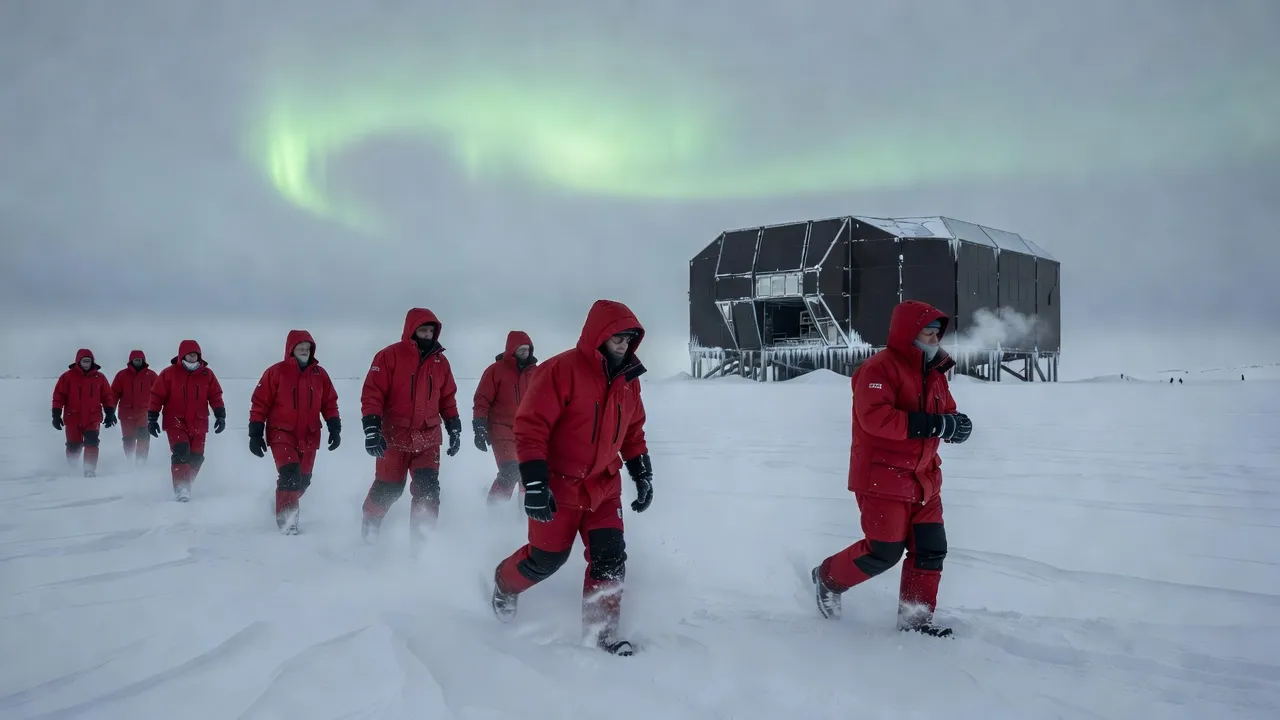
Mexico City is particularly impressed by the ingenuity of the device: a block of ice from the South Pole turned into a telescope, reported by the Mexican press as the hunt for "ghost particles".
Dominant angle identified — does not reflect unanimity of this country’s media
KEY POINTS
- 01
The prize was announced on Tuesday, October 6, by the Royal Swedish Academy of Sciences for Halzen's contributions to IceCube and the discovery of high-energy neutrinos of astrophysical origin.
- 02
Halzen presented the idea of using South Pole ice in 1988; IceCube, completed in 2011, occupies a cubic kilometre of ice equipped with light sensors.
- 03
Vanguardia headlines about "ghost particles" capable of crossing the Earth and the human body almost without interacting.
ANALYSIS
Mexico, October 7, 2026. Mexican media outlets reported on the announcement made on Tuesday, October 6, by the Royal Swedish Academy of Sciences: the 2026 Nobel Prize in Physics was awarded to Belgian physicist Francis Halzen "for his decisive contributions to the IceCube Neutrino Observatory and the discovery of high-energy astrophysical neutrinos," according to the citation quoted by El Informador.
Vanguardia immediately placed the image at the center of its title: Halzen was rewarded for finding "ghost particles" of high energy. The newspaper explains that these particles can pass through large amounts of matter, including the Earth and the human body, practically without interacting, and that this property makes them valuable for studying distant phenomena.
The Mexican account then follows a pedagogical progression. The idea of using Antarctic ice was born to Halzen in 1988. When a neutrino collides with an atomic nucleus, it produces a flash of light that sensors placed in the transparent ice can detect. The South Pole offers, according to the two articles, a geologically stable area, without earthquakes, and exempt from several sources of interference.
El Informador details the necessary size: cosmic neutrinos of very high energy are rare, hence the need for an enormous volume of ice. IceCube, completed in 2011, occupies a cubic kilometer of ice equipped with light sensors. Researchers quickly detected the first high-energy neutrinos, then published proof of an origin far beyond the solar system, which launched the search for their sources.
The two texts largely stick to the Swedish Academy's press release and the description of the instrument. They do not develop the financing of the observatory, international cooperation, or the question of the laureate's nationality, Belgian by birth. No reaction from Mexican scientists is included in the provided passages. The Nobel Prize is treated as an accessible science story, where the ice of the South Pole becomes a "telescope" and the logic of the experiment is followed step by step.