
DOMINANT ANGLE
Paris sees this Nobel as the birth of a new astronomy: an Antarctic ice cube turned into the largest neutrino telescope, told through its "ghost particles".
Dominant angle identified — does not reflect unanimity of this country’s media
KEY POINTS
- 01
The 2026 Nobel Prize in Physics is awarded on Tuesday, October 6, to Francis Halzen, 82, for IceCube and the discovery of high-energy astrophysical neutrinos.
- 02
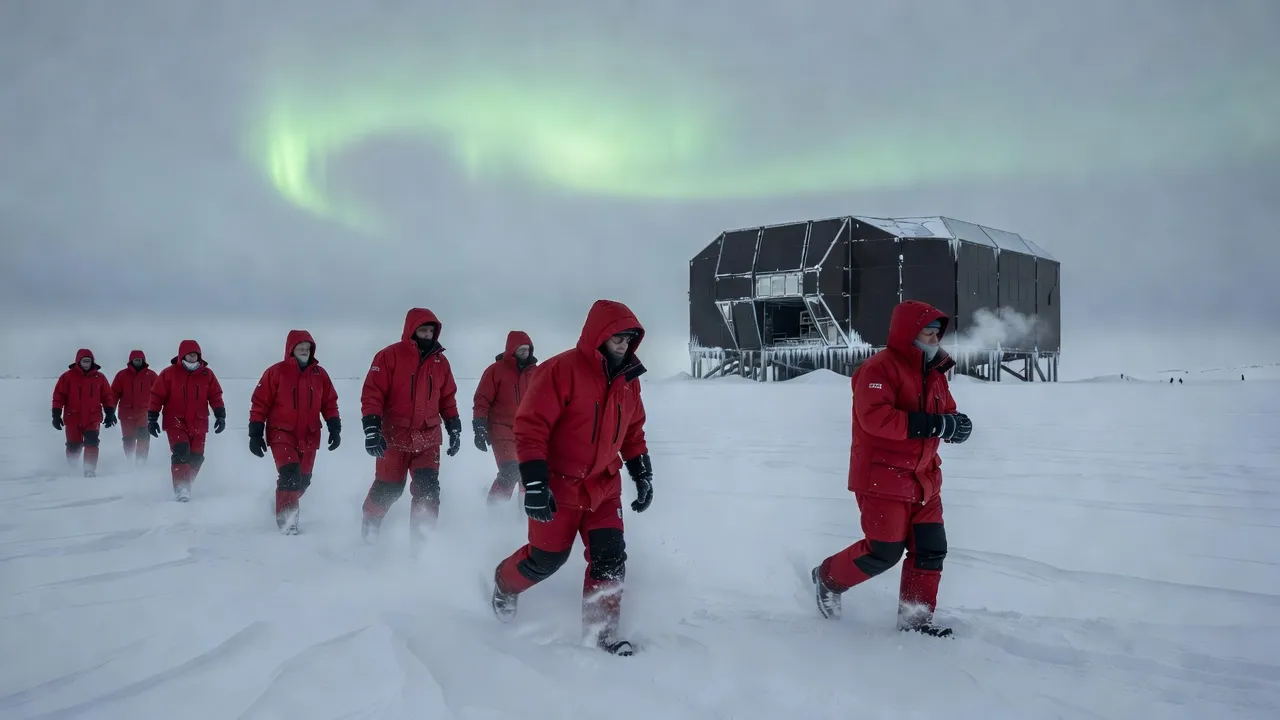
IceCube, a cube of ice at the South Pole in service since 2011, has more than 5,000 sensors according to HuffPost France.
- 03
Mark Pearce, chairman of the Nobel Committee for Physics, speaks of a "scientific vision" that has "paved the way for a new form of astronomy".
ANALYSIS
Paris, October 7, 2026. The 2026 Nobel Prize in Physics was awarded on Tuesday, October 6, to Belgian Francis Halzen, 82, "for his decisive contributions to the IceCube neutrino observatory and the discovery of high-energy astrophysical neutrinos," announced the committee gathered in Stockholm. Le Monde presents the laureate as the initiator of the IceCube project, "the largest neutrino telescope on the planet."
The French press first focuses on the instrument. L'Express recalls that the observatory, founded in Antarctica, captures neutrinos from the most distant regions of the universe, and that Francis Halzen understood that the ice at the South Pole could be used to track them. The HuffPost France talks about a "gigantic cube of ice" that has been in service since 2011, equipped with more than 5,000 sensors. Le Monde, RFI, and Sud Ouest repeat the committee's phrase: the neutrino "is the most discreet particle in the Universe" and passes "through matter without being noticed."
The tone is educational. L'Express explains that these particles are sometimes called "ghost particles" because they pass through the Earth and our bodies without leaving a trace. It quotes Eva Olsson, from the Royal Swedish Academy of Sciences: "These messengers bring us information from the cosmos," and they "inform us about the explosion processes of stars." Mark Pearce, president of the physics committee, praises "tenacity" and "scientific vision" that have "paved the way for a new form of astronomy."
The reaction of the laureate is relayed by The HuffPost France and Ouest-France: "It's a great surprise, I certainly didn't expect it," he said, reached by phone by the Nobel Foundation. The HuffPost also quotes Belgian Foreign Minister Maxime Prévot, who sees it as "a remarkable scientific achievement and a powerful reminder of what international cooperation can accomplish."
The French national dimension remains discreet but present: Ouest-France and Le Monde recall that the 2025 Nobel Prize distinguished British John Clarke, American John Martinis, and Frenchman Michel Devoret for their work in quantum physics. RFI and Sud Ouest finally put the distinction into the calendar: the second prize of the season, after medicine, awarded on Monday to German and American researchers for optogenetics, before chemistry on Wednesday, literature on Thursday, and peace on Friday, already at the center of speculation.
SOURCES (5)
- Sud OuestMEDIUM
- HuffPost FranceMEDIUM
- L'ExpressMEDIUM