
DOMINANT ANGLE
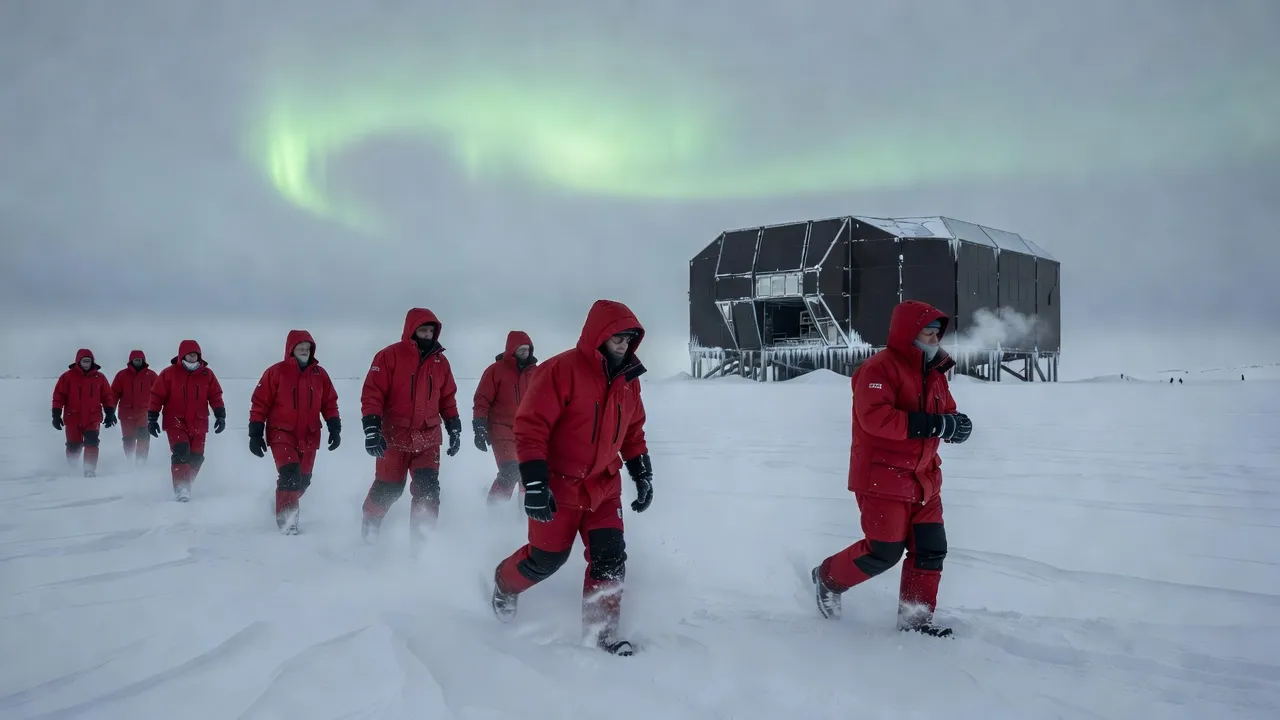
Berlin interprets this Nobel as the birth of a new astronomy: the German press details the ice detector at the South Pole and explains neutrinos, these "ghost particles", without dwelling on the nationality of the laureate.
Dominant angle identified — does not reflect unanimity of this country’s media
KEY POINTS
- 01
Mark Pearce, committee president: Halzen's "tenacity and scientific vision" have "paved the way for a new astronomy" (Tagesschau, DW).
- 02
IceCube: a cubic kilometer of ice equipped with sensors, completed in 2011, with over 450 people from 14 countries; Halzen presented his plans in 1988 (Tagesschau).
- 03
In 2013, IceCube detected the first 28 high-energy neutrinos of cosmic origin; Kathrin Valerius (KIT) explains their difficulty in detection (Tagesschau).
ANALYSIS
Berlin, October 7, 2026. The 2026 Nobel Prize in Physics, announced on Tuesday, October 6, in Stockholm, goes to Francis Halzen, 82, who the Tagesschau presents as a Belgian-American researcher at the University of Wisconsin-Madison. The distinction recognizes his "decisive contributions" to the discovery of high-energy astrophysical neutrinos. The German press initially reports on the scientific aspect of the story.
The Tagesschau and Deutsche Welle quote the committee president, Mark Pearce, saying that Halzen's "tenacity" and "scientific vision" have "paved the way for a new astronomy." The two media outlets describe IceCube as a kilometer cube of Antarctic ice equipped with sensors, completed in 2011, which brings together over 450 people from 14 countries. Halzen had first presented his plans in 1988.
The Tagesschau adds a more personal touch from a telephone interview during the announcement. The laureate admits: "kein respektabler, konservativer Physiker hätte sich mir am Anfang angeschlossen," meaning that no respectable, conservative physicist would have followed him at the beginning. He thanks the many people who believed in the project. In 2013, the text recalls, IceCube detected its first 28 high-energy neutrinos of cosmic origin.
To explain the object to the general public, the public channel gives the floor to Kathrin Valerius, from the Astroparticle Institute of the KIT in Karlsruhe, who works on neutrinos herself. She recalls that they are the lightest of the known elementary particles and that a beam can cross the entire Earth with barely any weakening, which is why they are difficult to detect: a very large detector is needed. The first observation dates back to 1956, near a nuclear reactor.
The DW emphasizes the astrophysical interest. Neutrinos, nicknamed "Geisterteilchen," are neither deflected nor slowed down and therefore provide information about cosmic accelerators. It also puts the prize into German history: the first physics laureate, in 1901, was the German Wilhelm Conrad Röntgen, 125 years ago.
The coverage remains factual and educational. Belgium, the United States, and the question of which country the prize belongs to take a back seat. The financing of the instrument is not addressed in the available excerpts.