
DOMINANT ANGLE
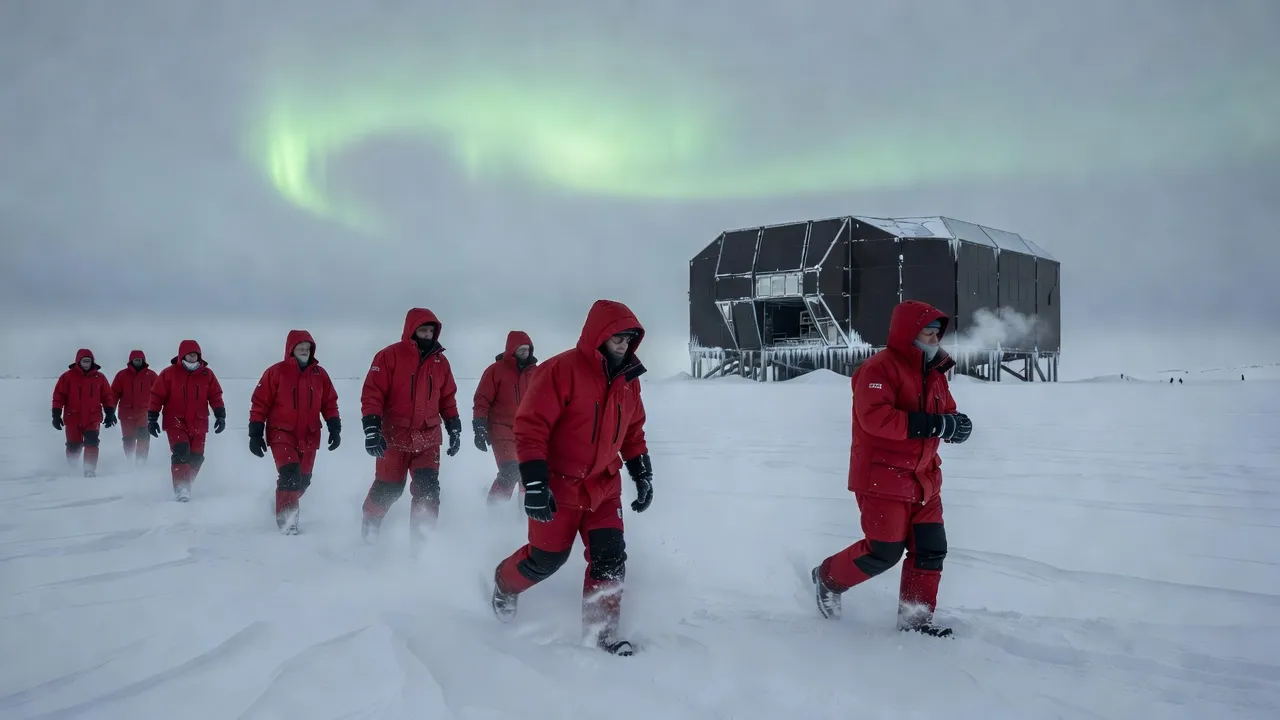
Kathmandu particularly remembers the image of "ghost particles": the Nepalese press tells the story of the Nobel Prize to Francis Halzen as an adventure of Antarctic ice and messengers from the cosmos.
Dominant angle identified — does not reflect unanimity of this country’s media
KEY POINTS
- 01
Francis Halzen, 82 years old, received the 2026 Nobel Prize in Physics for the IceCube Observatory and the detection of high-energy neutrinos from space (Online Khabar, The Kathmandu Post).
- 02
IceCube features over 5,000 sensors in a cubic kilometre of Antarctic ice, up to 2,500 metres deep; the idea dates back to 1988, with completion in 2011 (The Kathmandu Post).
- 03
Neutrinos are nicknamed "ghost particles" because they pass through the Earth and the human body without leaving a trace; Smithsonian had nicknamed Halzen "Neutrino Man" in 2014 (The Kathmandu Post).
ANALYSIS
Katmandou, October 7, 2026. Nepal's press announced as early as Tuesday, October 6, the awarding of the 2026 Nobel Prize in Physics to Francis Halzen. Online Khabar, in a dispatch dated Katmandou, indicates that the Royal Swedish Academy of Sciences is rewarding the scientist for having established the IceCube Neutrino Observatory and detected high-energy neutrinos from space.
The account highlights the principle of the device. Halzen designed the use of South Pole ice to track these particles, an idea he presented in 1988. Neutrinos, Online Khabar recalls, easily cross the Earth and the human body; they only occasionally collide with an atomic nucleus. When this happens, sensors placed in clear ice record the flash of light produced. The observatory, a kilometer cube, was built at the South Pole in 2011.
The Kathmandu Post, which reprints a text from the Reuters agency, gives more relief to the human and visual dimension. It presents "the Belgian-American" Francis Halzen, 82, a professor at the University of Wisconsin-Madison, and explains that neutrinos are sometimes nicknamed "ghost particles" because they pass through the Earth and our bodies without leaving a trace. The detector has more than 5,000 sensors distributed in a kilometer cube of Antarctic ice, up to 2,500 meters deep near the Amundsen-Scott station. The project was only completed in 2011, although the idea dated back to 1988.
The daily quotes Eva Olsson, from the Royal Swedish Academy of Sciences: "The messengers bring information from the cosmos", which "opens the door" to distant galaxies and informs about the explosion of stars. It also recalls that in 2014 the American magazine Smithsonian had nicknamed Halzen "Neutrino Man" and published a comic strip about his life, hailing an experience that announces "the beginning of a new era in astronomy".
Nepalese coverage remains brief and descriptive: it does not revisit the financing of the instrument or international collaboration, and the nationality of the laureate is mentioned without controversy, in the form "Belgian-American". The emphasis is on the ability of the general public to represent invisible particles, more than on debates about science policy.
SOURCES (2)
- The Kathmandu PostMEDIUM
- Online KhabarMEDIUM