
DOMINANT ANGLE
Stockholm recounts the Nobel awarded to Halzen as the culmination of a "crazy idea" that became astronomy, recalling the role of the universities of Stockholm and Uppsala in IceCube.
Dominant angle identified — does not reflect unanimity of this country’s media
KEY POINTS
- 01
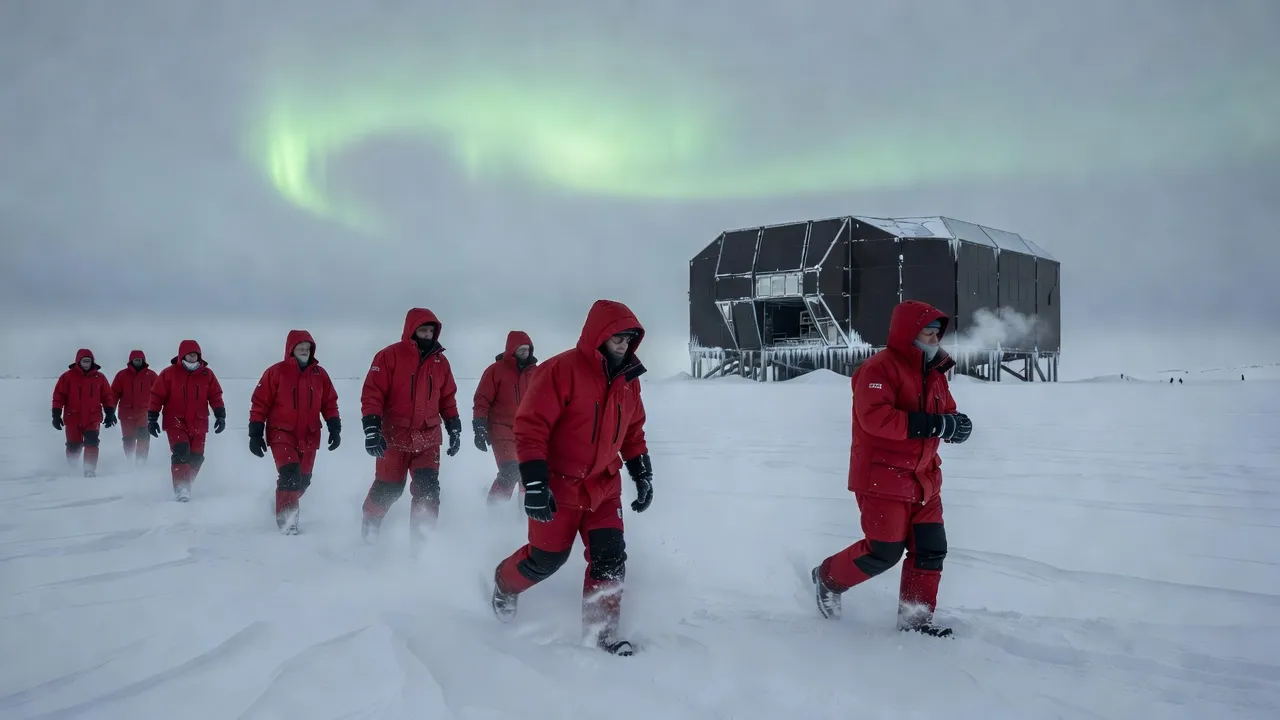
Eva Lindroth, of the Nobel Committee, says the prize rewards "the grand idea" of a detector of a cubic kilometre of ice at the South Pole (SvD, Expressen).
- 02
According to Klas Hultqvist, the 5,000 light detectors of IceCube were built at Stockholm University and tested in Uppsala (Aftonbladet).
- 03
Mark Pearce claims that more than a billion solar neutrinos pass through his hand every second (Dagens Nyheter).
ANALYSIS
Stockholm, October 7, 2026. The Royal Swedish Academy of Sciences announced on Tuesday, October 6, that the Nobel Prize in Physics went to Belgian Francis Halzen, a professor at the University of Wisconsin-Madison, "for decisive contributions to the IceCube observatory and the discovery of high-energy astrophysical neutrinos." The Swedish press, which is hosting the laureate, is telling a story: that of an idea deemed extravagant that ultimately opened up a new astronomy.
Dagens Nyheter headlines with a "cool" way to trap "ghost particles" and reports the words of committee president Mark Pearce, who raises his hand in front of the press: more than a billion solar neutrinos pass through it every second. High-energy neutrinos from elsewhere in space are much rarer. Halzen understood as early as the 1980s that a large block of Antarctic ice, free from many disturbances, could capture enough to trace their distant origin.
Svenska Dagbladet and Expressen emphasize the "crazy idea". Eva Lindroth, a professor at the University of Stockholm and a member of the committee, explains that the prize rewards "the grand idea" of a one-kilometer cube ice detector at the South Pole, and that Halzen gets it "almost because he is so stubborn": over 30 years of work, initially almost alone. The laureate, reached by phone during the press conference, says it was "strange", having heard the previous week at a scientific festival that he would get it.
The national angle takes a clear place. Halzen was keen to recall that the universities of Uppsala and Stockholm were among the first to join the project, while "no respectable physicist" wanted to associate with it. Aftonbladet gives the floor to Klas Hultqvist, an emeritus professor in Stockholm, who describes a "bundle of energy" as vivid as the neutrinos and specifies that the 5,000 light detectors of IceCube were built at the University of Stockholm and then tested in Uppsala, in the wake of the Amanda project in the early 1990s. He adds that "all those involved" consider Halzen's choice obvious.
The dailies also slip in a touch of humor about the calendar: Hultqvist jokes that the Swedes would have been "a bit offended" if Halzen had forgotten them, and he is counting on his visit to Stockholm in December, despite his age. The amount of the prize, the financial dimension of the project, or the Belgian reaction are not at the center of these articles: the emphasis is on the story, the people, and the local contribution.