
DOMINANT ANGLE
Buenos Aires is measuring the fourteenth flight of Starship by the faulty engine overcome live, before a planned landing off the coast of Chile, on the edge of the Southern Cone.
Dominant angle identified — does not reflect unanimity of this country’s media
KEY POINTS
- 01
Starship reached orbit for the first time on its 14th test flight, despite a malfunction affecting one of the 33 Raptor engines on the first stage (Infobae).
- 02
SpaceX spokesperson Dan Huot initially announced that Starship would not attempt orbital insertion after a premature engine shutdown, before correcting himself minutes later (Infobae).
- 03
The mission planned approximately ten hours of flight, six orbits around the Earth at 275 km altitude, a splashdown off the coast of Chile, and the deployment of 26 next-generation Starlink satellites (Clarín).
ANALYSIS
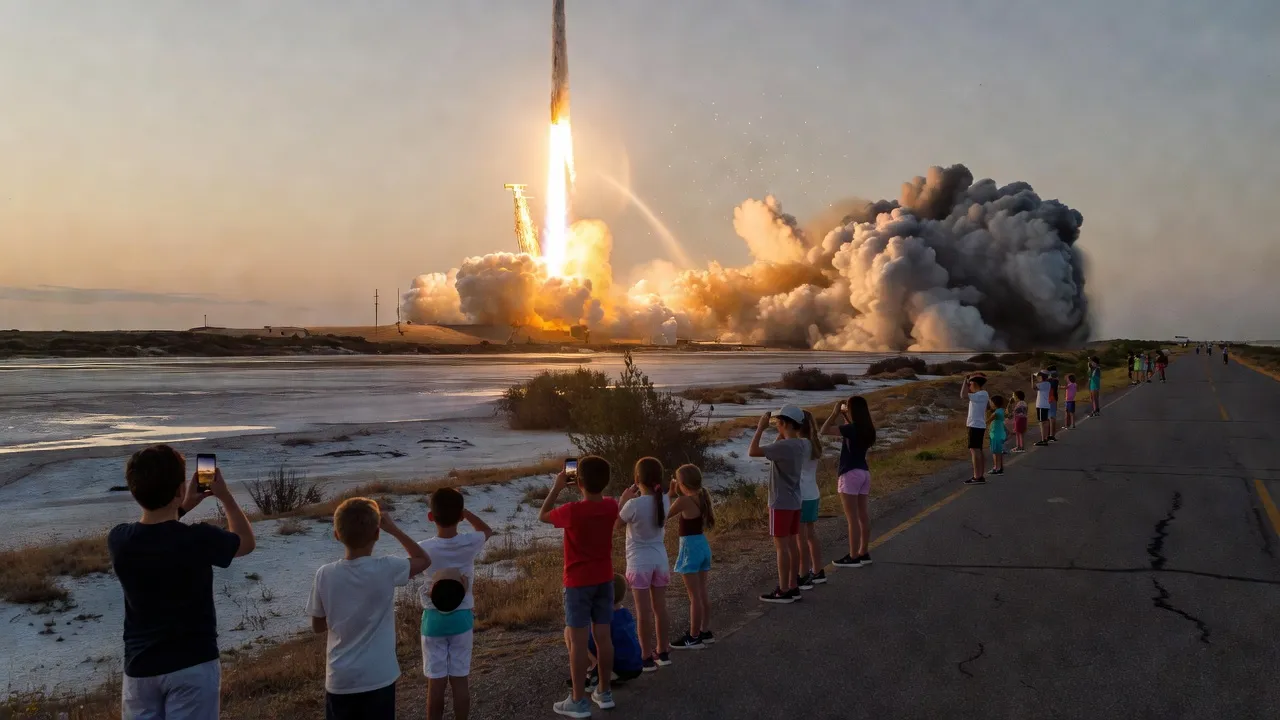
Buenos Aires, September 29, 2026. The Argentine press first highlights the technical performance: Starship, Elon Musk's space megodon, reached Earth's orbit for the first time on Monday, September 28, during its fourteenth test flight from Starbase, in Texas, despite a malfunction affecting one of the 33 Raptor engines of its first stage, reports Infobae. SpaceX spokesperson Dan Huot initially announced live that Starship would not attempt orbital insertion after the premature shutdown of an engine, before correcting himself minutes later, as engineers deemed the ship still had the necessary conditions for the required ignition.
The vessel took off at 7:46 Texas time (12:46 GMT) from the Starbase complex, near Brownsville, on the Gulf of Mexico. The mission planned for approximately ten hours of flight and six orbits of the Earth at an altitude of 275 kilometers, before a controlled splashdown in the Pacific Ocean, off the coast of Chile, and thus at the gates of the Southern Cone, according to Clarín. The newspaper recalls that this flight follows SpaceX's successful IPO in June, with the company betting on an accelerated pace of ambitious tests.
Starship was to deploy 26 next-generation Starlink satellites, which would be added to a constellation already in orbit. Starship's senior launch director, Justin Styer, compared the power of the takeoff to a machine gun capable of firing eleven vans per second rather than projectiles, an image picked up by Infobae to emphasize the magnitude of the first stage, which is 123 meters high and propelled by its 33 Raptor engines.
Argentine articles insist on the path that remains to be traveled: despite this milestone, enormous technical challenges persist before Starship, which Elon Musk wants to be totally reusable, is ready for commercial flights or missions to the Moon and Mars, according to Clarín. The newspaper also emphasizes that previous tests have sometimes ended in spectacular explosions, recalling the fragility of the program despite the advances.
None of the articles consulted mention the NASA's Artemis program or the reaction of its administrator Jared Isaacman, or the reason for the shortening of the flight after about three hours instead of the planned ten, a silence that recenters the Argentine narrative on the engineering feat rather than its geopolitical or institutional stakes.