
DOMINANT ANGLE
Ottawa notes a technical achievement with reservations: orbit has been reached, but a lost engine and a shortened flight without explanation recall that Starship has not yet proven everything.
Dominant angle identified — does not reflect unanimity of this country’s media
KEY POINTS
- 01
26 new-generation Starlink satellites deployed, joining the approximately 11,000 already in service
- 02
An engine shut down too early after liftoff; controllers decided to continue the mission nonetheless
- 03
The flight, expected to last about ten hours and six orbits of the Earth, was cut short after a little over three hours without any reason being given
ANALYSIS
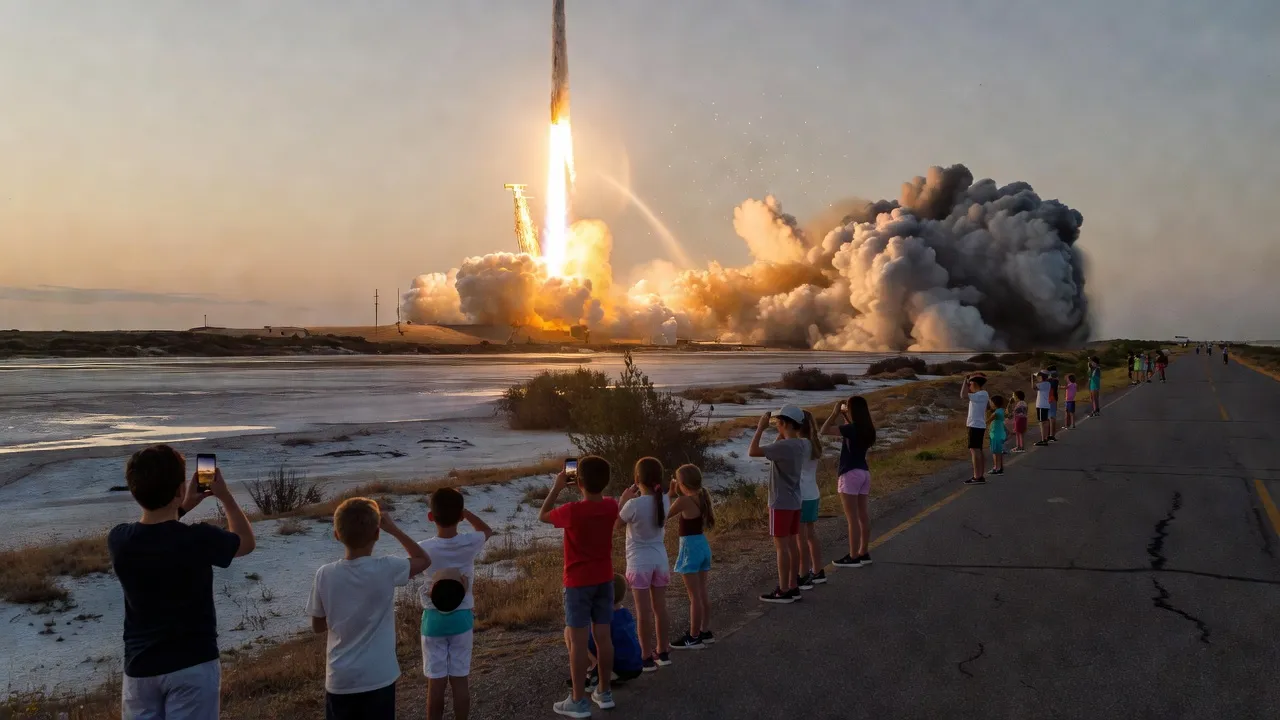
Ottawa, September 29, 2026. For the Canadian press, the technical feat of September 28 is measured by its reserves. Starship, SpaceX's rocket, reached orbit for the first time during its fourteenth test flight from Starbase, Texas, report CBC News and the Globe and Mail. "Starship is in orbit," the control center announced, to applause, according to the two dailies.
The vessel nonetheless almost missed its objective: one of its engines shut down too early after takeoff. The flight controllers nevertheless chose, after several minutes of tension, to continue the mission since the rest of the system was functioning normally and the faulty engine was no longer necessary.
Twenty-six new-generation Starlink satellites, the most advanced to date, were then deployed one by one, joining the approximately 11,000 already in service, specifies CBC News. SpaceX aimed for a flight of nearly ten hours and six complete orbits of the Earth at 275 kilometers altitude, in order to demonstrate its preparation for NASA's Artemis lunar program. The mission was nevertheless cut short after a little over three hours, the vessel splashing down in the Pacific near Chile. "No reason was given," notes CBC News. The first stage, on the other hand, fell back as planned into the Gulf of Mexico, without attempting to return to the base.
NASA Administrator Jared Isaacman congratulated SpaceX for having "managed each stage in a safe, responsible, and particularly inspiring manner," according to the words reported by CBC News. The Globe and Mail recalls that the next step, if this flight is deemed conclusive, will consist of bringing the next Starship back to land on the launch tower, seized by giant mechanical arms — a maneuver to which Elon Musk gives "equal or slightly higher chances" of succeeding.
The founder of SpaceX justifies the caution due to the risk represented by a vessel disintegrating over inhabited areas: "our popularity would drop very quickly," he declared during an economic summit, cited by the Globe and Mail. For the Canadian press, the test marks a real technical milestone, but leaves it incomplete: orbit reached, engine lost, flight shortened without public explanation — as many areas of uncertainty that the next recovery attempt will have to dispel before the complete reuse of Starship is taken for granted.