
DOMINANT ANGLE
Warsaw is focusing on the technical achievement rather than the incident: despite an engine failure, Starship reached orbit and deployed its new-generation Starlink satellites, a key step towards the Artemis lunar program.
Dominant angle identified — does not reflect unanimity of this country’s media
KEY POINTS
- 01
Starship reached Earth's orbit 25 minutes after liftoff and deployed 26 Starlink V3 satellites, each providing 1 Tbps of bandwidth, totaling 26 Tbps for this launch (RMF24).
- 02
One of Starship's six engines, one of the three vacuum Raptor engines, failed shortly after liftoff; SpaceX engineers decided to continue the mission despite this failure (RMF24, Wirtualne Media).
- 03
Unlike previous flights, the Super Heavy booster did not attempt to land this time: it simulated a maneuver over the Gulf of Mexico before splashing down (Wirtualne Media).
ANALYSIS
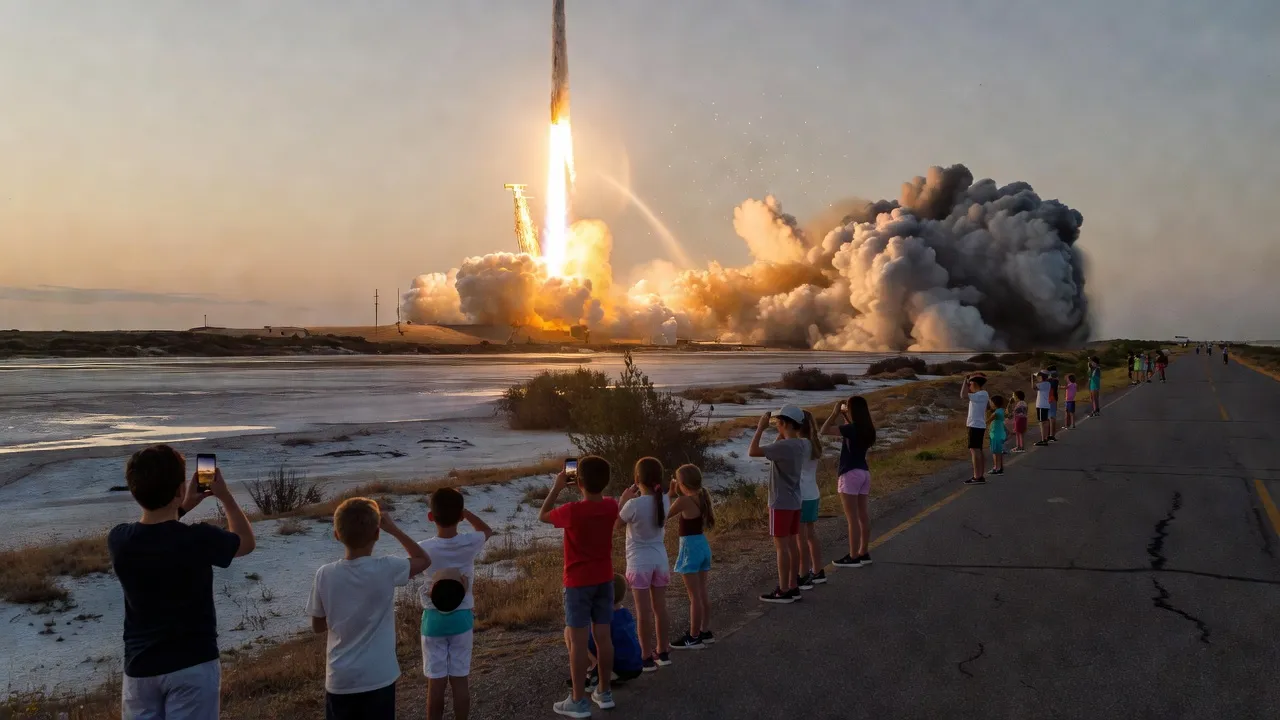
Warsaw, September 29, 2026. The Polish press followed the fourteenth test flight of Starship on Monday as a separate event, hailing a success despite a scare along the way. Twenty-five minutes after takeoff from Starbase, in Texas, the vessel powered by the first-stage Super Heavy reached Earth's orbit, a first for the program. It was at this point that Starship carried out the first deployment of 26 new-generation Starlink satellites, version V3. SpaceX confirmed that it had established contact with the first of these.
The most commented-on technical fact remains the engine failure that occurred shortly after takeoff: one of Starship's six engines, one of the three Raptor vacuum engines, failed. RMF24 reports that SpaceX engineers initially considered canceling the attempt to reach orbit, before deciding to continue the mission. Wirtualne Media, citing the PAP agency, summarizes that "the mission was close to failure." The vessel was then to complete six orbits of the Earth in about ten hours before splashing down in the Pacific, off the coast of Chile, a flight plan that pool articles describe without indicating that it was shortened during the mission.
Another notable difference from previous flights: this time, the Super Heavy booster did not attempt to land. It simulated a return maneuver over the Gulf of Mexico before splashing down, without trying to land on the launch pad.
Polish media directly link this test to the Artemis program to return astronauts to the Moon, and further, to a potential manned flight to Mars. Starship, presented as the most powerful launch system in the world, is seen as the key to less expensive access to orbit for more cargo and passengers. Each Starlink V3 satellite would provide 1 Tbps of bandwidth to the constellation, or 26 Tbps in total for this single launch, ten times more than a single launch of previous-generation satellites with a Falcon 9 rocket, according to RMF24.
The dominant tone remains that of a technological success validated despite the engine incident, rather than that of a flight interrupted before the scheduled time.