
DOMINANT ANGLE
Germany views this flight as having a dual verdict: the orbit was finally reached for the first time, but the mission was cut short without explanation after the premature shutdown of an engine, proof that the reliability of the system remains to be proven.
Dominant angle identified — does not reflect unanimity of this country’s media
KEY POINTS
- 01
Starship reached orbit for the first time during its 14th test flight, launched Monday morning from Starbase (Texas)
- 02
The mission was cut short to about three hours instead of the planned ten hours and six orbits of Earth, after a premature engine shutdown; the spacecraft splashed down in the Pacific
- 03
New-generation Starlink V3 satellites were deployed for the first time during this flight, according to SpaceX
ANALYSIS
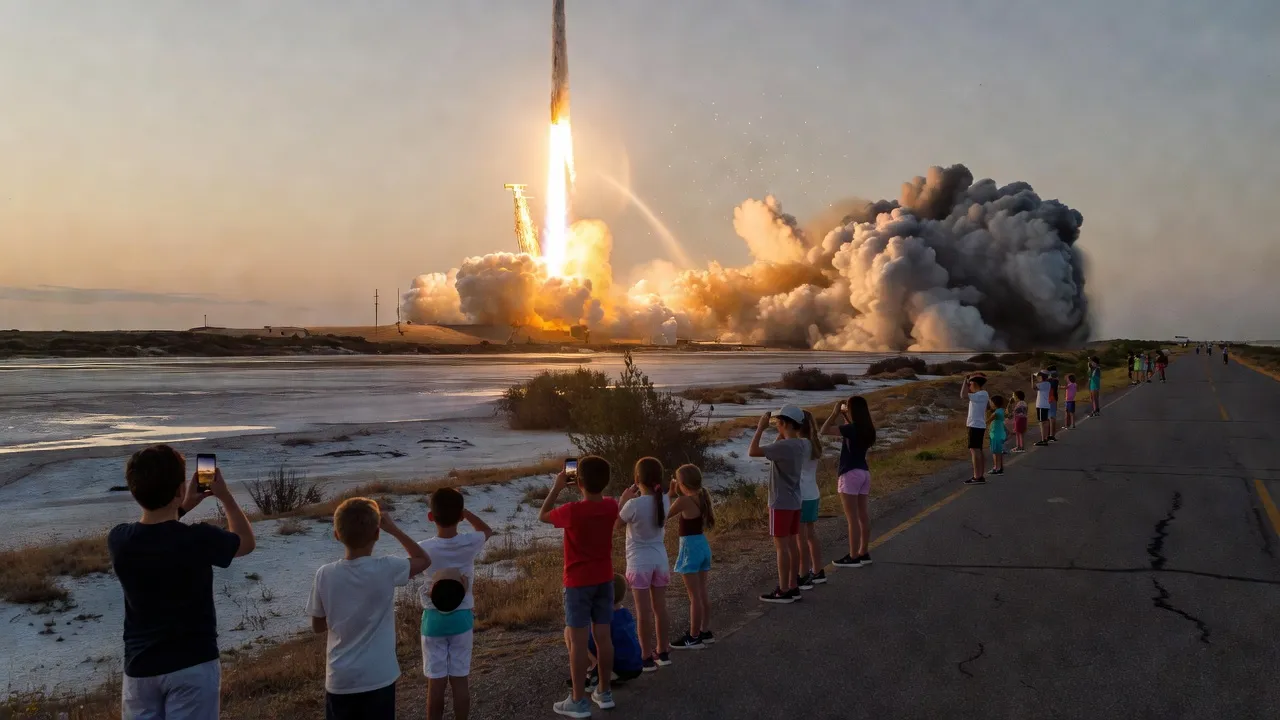
Berlin, September 29, 2026. The German press first notes a figure: the fourteenth test flight of Starship, which took off Monday morning from Starbase, Texas, is the first to have reached orbit. Tagesschau begins its account with this milestone, before immediately nuancing: "wegen technischer Probleme landete sie aber schon Stunden früher im Pazifik" — due to technical problems, the rocket splashed down hours earlier than planned in the Pacific. The flight was supposed to last about ten hours and make six orbits around the Earth at 275 kilometers altitude and 28,000 km/h; it was interrupted after about three hours, without SpaceX explaining the exact cause. According to Tagesschau, "offenbar hatte sich ein Triebwerk zu früh abgeschaltet" — a engine apparently shut down too early.
ZEIT Online emphasizes the size of the spacecraft, larger than the Statue of Liberty: a 70-meter Super Heavy booster and a 50-meter upper stage, designed to be reusable. Both titles note that the first test flight, in April 2023, ended with an explosion a few minutes after takeoff, and that subsequent tests were below expectations — a context that makes this orbit a significant progress, without erasing the premature engine shutdown or the shortened flight.
The deployment of new-generation Starlink V3 satellites is presented as a technical first in itself: deployment of antennas, solar panels, and then establishment of links with Earth and other satellites — a sequence already simulated in previous tests, and which seems to have largely worked this time according to information provided by SpaceX itself.
A third ZEIT Online article takes a step back: it recounts a speech given by Elon Musk ten years ago at a space conference in Mexico, where he presented Starship as the path to a "multiplanetary" humanity, with Mars as a safeguard in case of a planetary catastrophe. It quotes Musk: "Ich habe persönlich keine andere Motivation, Reichtum anzusammeln, als zu diesem Ziel beizutragen" — I personally have no other motivation to accumulate wealth than to contribute to this goal.
The NASA wants to use Starship to send astronauts to the Moon; SpaceX aims for Mars. The German reading remains measured: orbit is a real milestone, but the shortened mission and the faulty engine remind that reliability remains to be demonstrated before any manned flight.