
DOMINANT ANGLE
Brussels gauges the technical prowess of Starship by the challenges it still has to overcome before any reuse or flight to the Moon.
Dominant angle identified — does not reflect unanimity of this country’s media
KEY POINTS
- 01
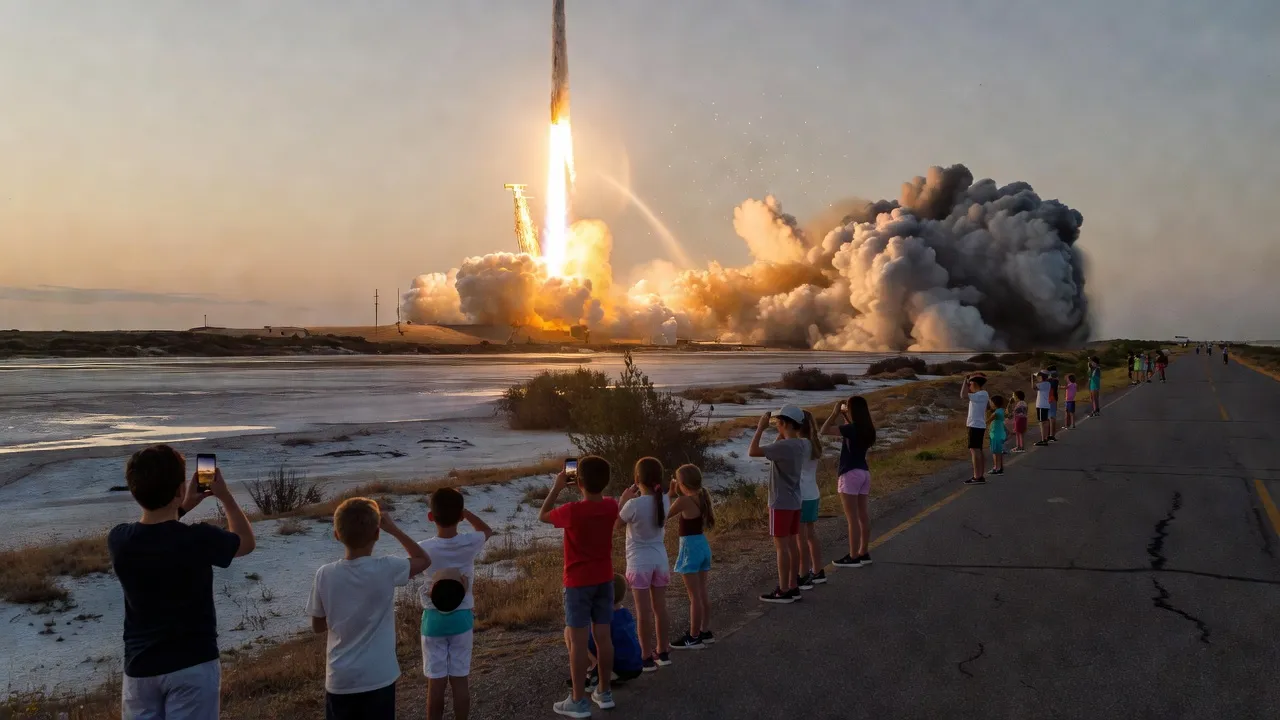
Starship reached Earth's orbit for the first time on Monday, September 28, at 14:48, during its fourteenth test flight from Starbase, in Texas.
- 02
26 new-generation Starlink satellites were deployed one by one about half an hour after launch, to the applause of the control center (VRT NWS).
- 03
According to Kathleen Curlee, space analyst at Georgetown University, quoted by La Libre, reaching orbit involves "more force and more complex calculations" due to maneuvers at different levels of gravity.
ANALYSIS
Brussels, September 29, 2026. On Monday, September 28 at 2:48 p.m. Texas time, the SpaceX Starship vessel reached Earth's orbit for the first time in its history, after a fourteenth test flight from the Starbase base in Texas. The Flemish public channel VRT NWS reports extreme tension in Elon Musk's team: "20 minuten voelden als 3 uur" ("20 minutes felt like 3 hours"), according to the media's account. About thirty minutes after takeoff, 26 new-generation Starlink satellites were released one by one into space, to the applause of the control center, VRT NWS specifies.
La Libre Belgique emphasizes that the upper stage of the rocket, the largest and most powerful ever built, flew at 28,000 km/h and succeeded in a risky but essential test on its first attempt. The newspaper puts the test into perspective three months after SpaceX's resounding stock market debut, a context that increases the pressure on each technical step taken.
The newspaper gives the floor to Kathleen Curlee, space analyst at Georgetown University, as quoted by AFP: reaching orbit "implies more force and more complex calculations", the rocket having to perform different maneuvers according to the level of gravity it is subjected to. For La Libre, this technical complexity explains why the goal remained out of reach during the thirteen previous flights.
The Belgian press mainly retains what this flight proves and what remains to be demonstrated. VRT NWS recalls that the mission, scheduled to last about ten hours and make six turns around the Earth, is part of a competition where China is also showing great lunar ambitions, while SpaceX is working with NASA on its commercial program. La Libre insists on the technical challenges that still separate Starship from regular commercial flights, the deployment of data centers in orbit, or a trip to the Moon or Mars, as well as on Elon Musk's ambition to make the rocket totally reusable.
Neither of the two media outlets consulted mentions at this stage the premature shutdown of an engine or the shortening of the flight mentioned by other international sources: the Belgian coverage focuses on the achievement of reaching orbit and the technical obstacles still ahead for SpaceX.