
DOMINANT ANGLE
Moscow hails an incomplete achievement: Starship reaches orbit for the first time, but the explosion on landing and the shortened flight dominate the Russian account of this advance.
Dominant angle identified — does not reflect unanimity of this country’s media
KEY POINTS
- 01
Starship reached Earth's orbit for the first time during its 14th test flight on September 28, from Starbase, Texas (Interfax).
- 02
The vessel deployed 26 new-generation Starlink satellites before cutting the flight short to around three hours instead of the planned ten, due to the failure of one of the six engines (Meduza).
- 03
Starship exploded on splashdown in the northern Pacific; SpaceX claimed this was not a sign of failure, the vessel not being designed for cold water (TASS, Vedomosti).
ANALYSIS
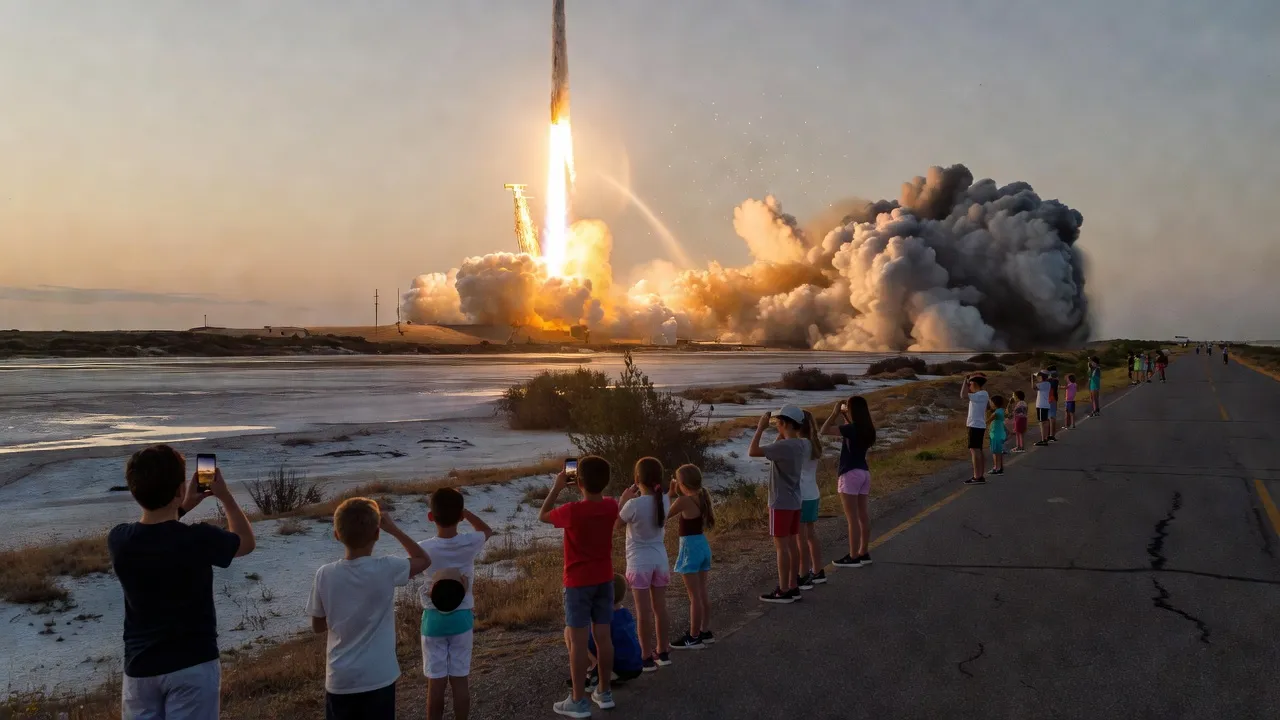
Moscow, September 29, 2026. For the Russian press, the fourteenth test flight of Starship marks a technical advance viewed with caution: the SpaceX rocket successfully reached Earth's orbit for the first time on Monday from the Starbase facility in Texas, but the shortened mission and the explosion of the spacecraft upon landing occupy a large part of the account.
Interfax recalls the mission parameters: liftoff at 12:48 local time (15:48 in Moscow), ascent to approximately 275 km altitude, six orbits of the Earth planned over nearly ten hours, before a landing in the Pacific west of Chile. The agency emphasizes that "all previous attempts followed suborbital trajectories" and that this flight "paves the way for the next stage: the creation of a fully and rapidly reusable system".
The Super Heavy launcher, according to Interfax, landed in the Gulf of Mexico about nine minutes after liftoff, despite the shutdown of one of its 33 engines in flight, an incident that "did not prevent the spacecraft from reaching orbit". Starship deployed 26 new-generation Starlink satellites, Meduza reports, citing CNN to emphasize the significance of the event: this launch "marks the beginning of the transition from the testing phase to full-scale operation" of the rocket.
But the failure of one of the six engines of the spacecraft shortly after separation led SpaceX to reduce the mission by a factor of three: three hours of flight instead of ten, Meduza reports. Vedomosti and TASS, citing the American channel ABC, focus on the final episode: the spacecraft exploded upon landing in the north of the Pacific. SpaceX explained that Starship "is not designed to land in cold water" and specified that this "does not constitute a sign of failure", the mission still being considered a success despite the engine incident.
RT notes that the Starlink V3 satellites on board offer a downlink capacity ten times higher than the previous generation, a commercial argument that the Russian press associates with SpaceX's growing dominance over access to the internet via satellite. The next flight, if this one is deemed conclusive, will have to demonstrate the capture of the spacecraft by the arms of the launch tower, a step towards the full reuse of the system.