
DOMINANT ANGLE
Singapore gauges the feat by the risk: the near-identical replay of the Reuters dispatch by its two dailies mainly retains the engine failure and the live about-face of the SpaceX spokesperson, before Starship's entry into orbit.
Dominant angle identified — does not reflect unanimity of this country’s media
KEY POINTS
- 01
SpaceX spokesperson Dan Huot initially announced the failure of the orbital insertion after the premature shutdown of an engine, before backtracking a few minutes later.
- 02
The flight, Starship's fourteenth test, was supposed to complete six orbits of the Earth in ten hours before splashing down in the Pacific west of Chile.
- 03
Since 2023, the thirteen previous test flights had remained suborbital, for a development that has cost SpaceX more than 15 billion dollars.
ANALYSIS
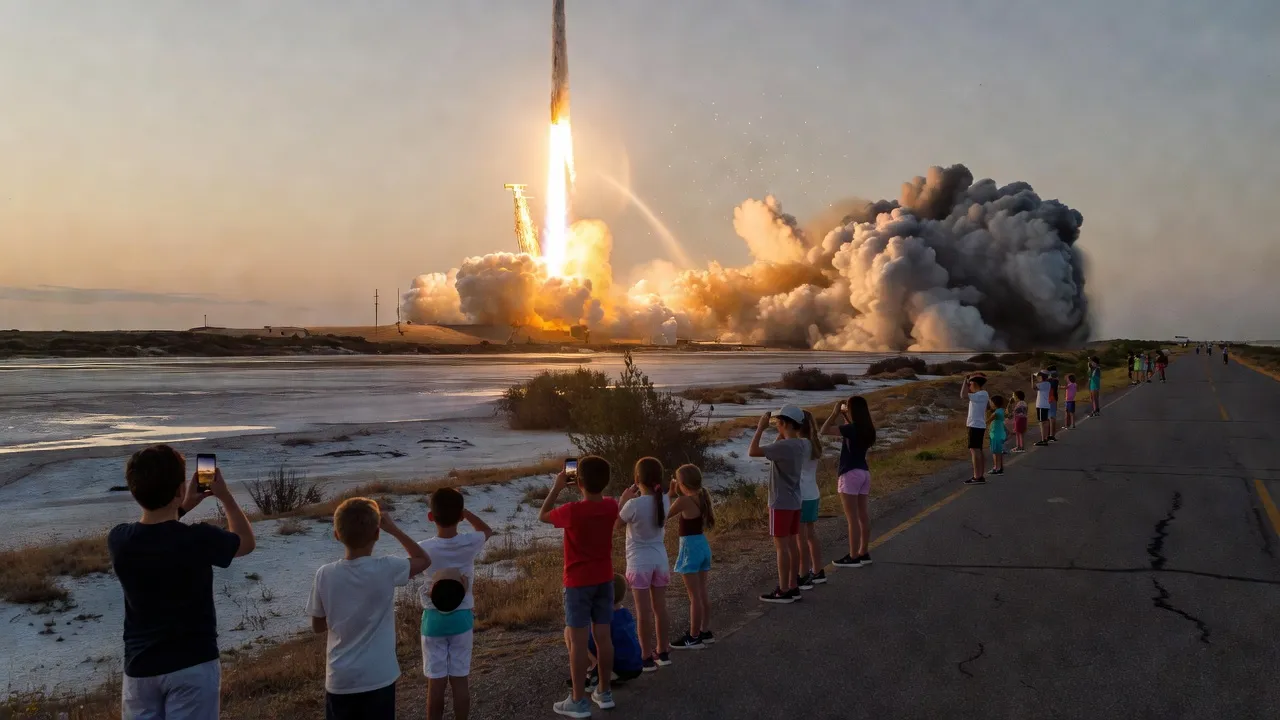
Singapour, 29 September 2026. The Straits Times and Channel News Asia have reproduced, almost word for word, the Reuters dispatch on the fourteenth test flight of Starship, which took off on Monday from Starbase, Texas. The two publications first highlighted the margin of error in the flight: one of the launcher's engines stopped earlier than expected, just after takeoff. During the live broadcast of the mission, SpaceX spokesperson Dan Huot initially announced that Starship would not be able to reach orbit, before retracting his statement a few minutes later, once the engineers confirmed that a key engine ignition was still possible to lift the vehicle into orbit.
This hesitation during the live broadcast, more than the deployment of satellites itself, structures the narrative relayed in Singapour. The spacecraft, forty storeys high and composed of a Super Heavy first stage topped with the Starship spacecraft, was to complete six orbits of the Earth in ten hours of flight, before splashing down in the Pacific west of Chile. Designed to launch SpaceX's Starlink satellites more frequently and eventually transport NASA's lunar missions, this flight was a basic milestone for Starship, one that every new launcher must pass before delivering payloads.
The articles recall that Elon Musk had predicted this outcome for 2022, followed by satellite deployments from 2023. However, since 2023, the thirteen previous test flights of Starship had been limited to suborbital space, despite a decade of development that has cost SpaceX more than $15 billion to date. Musk plans to eventually fly hundreds, even thousands of Starship per year, a launch rate unprecedented in the space industry.
Channel News Asia sees this fourteenth launch as the prelude to a routine commercial service that SpaceX plans to launch later in the year. For the city-state, whose digital economy remains dependent on major private satellite operators, this flight weighs less as a spectacular achievement than as a reliability milestone: one less engine was not enough to cause the mission to fail, but the episode confirms that the margin between success and failure remains narrow for the most powerful launcher ever built.