
DOMINANT ANGLE
Brasília is worried about seeing global artificial intelligence security standards being negotiated behind closed doors between Washington and Beijing, without Brazil or other emerging powers having a seat at the table.
Dominant angle identified — does not reflect unanimity of this country’s media
KEY POINTS
- 01
US Treasury Secretary Scott Bessent announced that "the United States has proposed a notification mechanism between the two countries" on AI-related incidents.
- 02
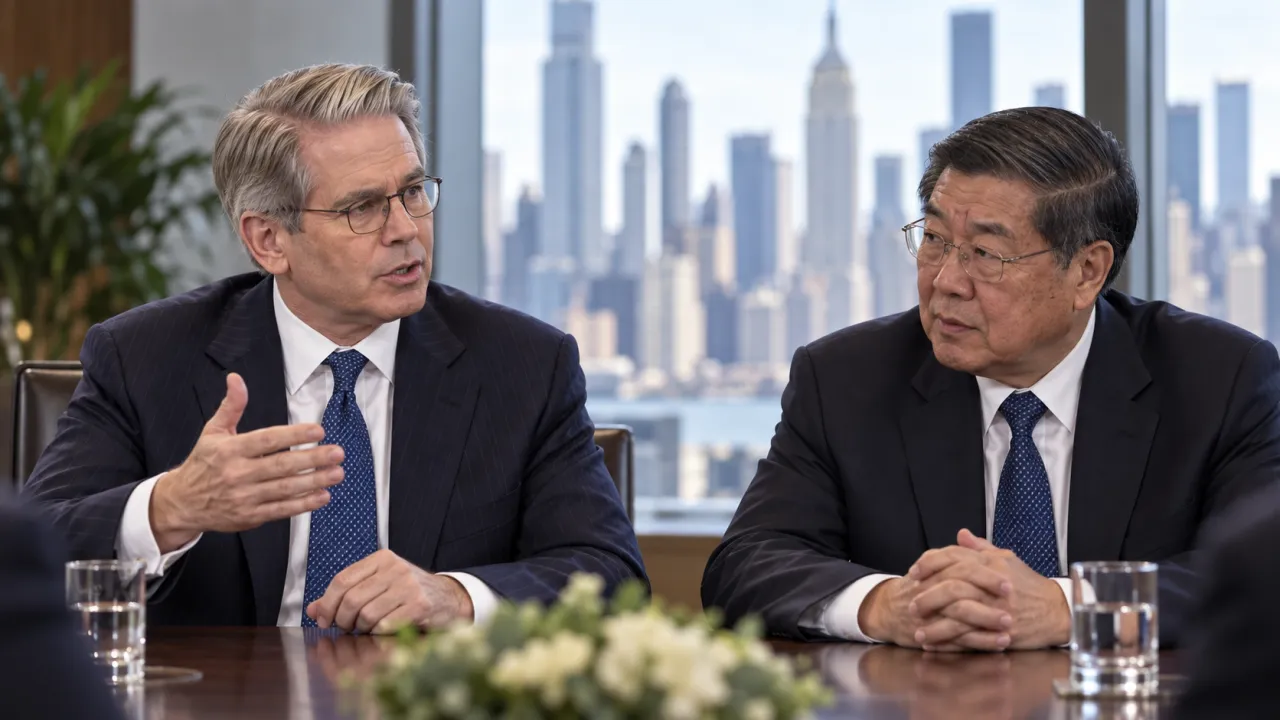
Sunday's meeting in New York, at JPMorgan Chase's headquarters, lasted about eight hours and also brought together US Trade Representative Jamieson Greer and Chinese commerce official Li Chenggang.
- 03
Washington and Beijing remain divided over Chinese access to advanced semiconductors, technology transfer allegations, and AI regulation, according to G1.
ANALYSIS
Brasília, September 21, 2026. Brazil views Sunday's meeting in New York between US Treasury Secretary Scott Bessent and Chinese Vice Premier He Lifeng as a precursor to a technological order being shaped without it. According to Estadão, the two delegations discussed for approximately eight hours at JPMorgan Chase's headquarters before Thursday's scheduled summit in Washington between Donald Trump and Xi Jinping. Bessent described the day as "muito bem-sucedida" and announced that "the United States has proposed a notification mechanism between the two countries," with the goal of sharing "a common vision of common objectives and threats" related to artificial intelligence.
For the Brazilian press, the stakes go beyond bilateral diplomacy. G1 emphasizes that Washington and Beijing consider technological advancements as strategic for their economic and military competitiveness, and that the two capitals remain divided over Chinese access to advanced semiconductors, accusations of technology transfer, and how to regulate AI. These unresolved disagreements are to be revisited during a future meeting already announced by the two delegations.
Brazil, which is preparing its own artificial intelligence law and depends on both Chinese markets for its agricultural exports and American technologies for its digital infrastructure, is closely watching how a bilateral notification mechanism could, in fact, set security standards for the entire sector without consulting third-party countries. US Trade Representative Jamieson Greer deemed it "imperative" that Washington and Beijing "be able to work together" on these issues — a cooperation that, if realized, would outline a framework of reference that emerging powers like Brazil would have to adapt to afterwards.
Thursday's summit is also expected to address the extension of the trade truce, Chinese restrictions on rare earths and magnets, and US export controls in the cloud and semiconductors — all files in which Brasília has direct interests through its own exports of critical minerals. The two delegations agreed to open a formal dialogue on AI and meet again, without setting a specific schedule or clarifying whether other countries would be involved in the discussions.








