
DOMINANT ANGLE
Islamabad sees the stakes of this Trump-Xi summit as primarily economic: the trade truce that expires on November 10, rare earths, and Boeing purchases weigh more heavily, for the Pakistani press, than the future notification mechanism on artificial intelligence.
Dominant angle identified — does not reflect unanimity of this country’s media
KEY POINTS
- 01
The Sino-American trade truce is set to expire on November 10, according to Business Recorder.
- 02
Beijing committed, during the May summit in Beijing, to buying $17 billion worth of American agricultural products per year and more than 200 Boeing planes.
- 03
Bessent announced the American proposal for a "notification mechanism", dubbed the US-China AI dialogue, for AI-related security incidents.
ANALYSIS
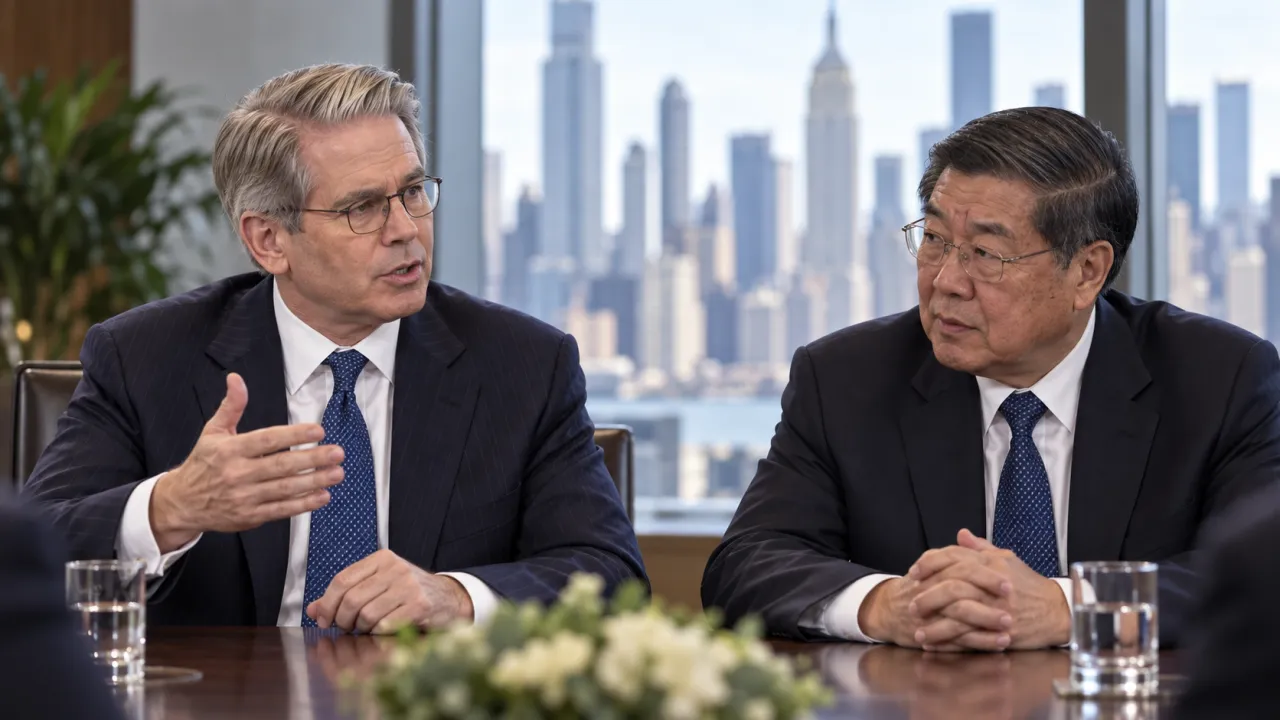
Islamabad, September 21, 2026. Pakistan is following, through its economic press, the final stretch before the Washington summit between Donald Trump and Xi Jinping, scheduled for Thursday. On Sunday, September 20, 2026, in New York, US Treasury Secretary Scott Bessent and Chinese Vice Premier He Lifeng held an approximately eight-hour negotiation session at JPMorgan Chase's Manhattan headquarters, in the presence of US Trade Representative Jamieson Greer and Chinese international trade official Li Chenggang. Bessent described the meeting as a "very successful engagement" and specified that Washington proposed a bilateral notification mechanism for incidents related to artificial intelligence, including those affecting national security: "What we discussed was setting up a mechanism... it's going to be called the US-China AI dialogue," he stated, adding that the two delegations had agreed to meet again.
For the Pakistani specialized press, the central issue of the week remains economic. The trade truce concluded between the two powers is set to expire on November 10, and negotiators are seeking to preserve the status quo rather than announce a breakthrough: "I think status quo is probably both sides' general best expectation," notes Anna Ashton, a Sino-American trade analyst quoted by Business Recorder. The discussions also focus on Chinese flows of rare earths and critical magnets, deemed insufficient by Washington, as well as Chinese commitments inherited from the Beijing summit in May: annual purchases of $17 billion in American agricultural products and orders for over 200 Boeing aircraft.
Analyst Jon Czin, from the Brookings Institution, notes that Xi Jinping is not under pressure to make concessions and is primarily seeking to extend the tacit agreement concluded with Trump to give China time to strengthen itself. The context serves Beijing: Chinese trade has progressed over the past four months, while Trump's popularity has eroded, particularly due to the cost of the war in Iran. For Islamabad, which depends on global trade balances and critical mineral supply chains, this balance of power between the world's two largest economies weighs on regional growth prospects, more so than the technical content of the future artificial intelligence dialogue.








