
DOMINANT ANGLE
Singapore measures the risk of an AI governance written by two, between Washington and Beijing, without third countries at the table
Dominant angle identified — does not reflect unanimity of this country’s media
KEY POINTS
- 01
Scott Bessent stated that the mechanism would aim to shift exchanges "from opacity to more transparency between the world's first and second AI power"
- 02
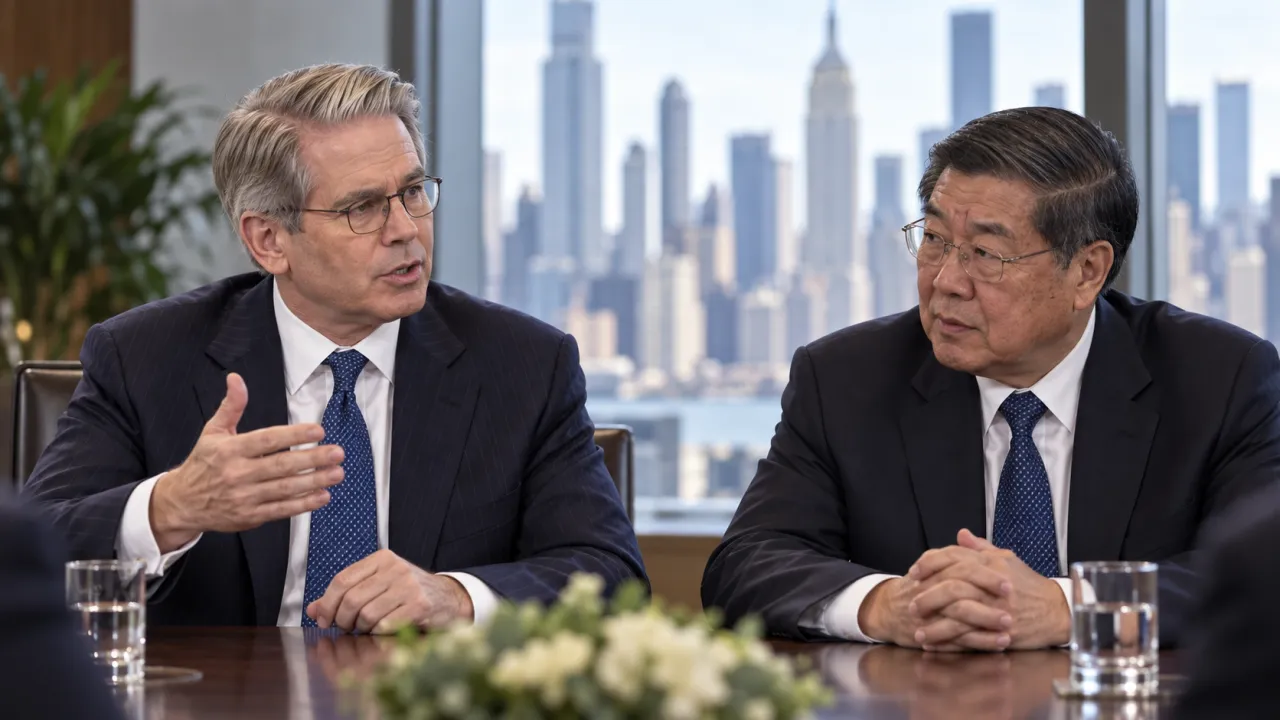
Sunday discussions on September 20 in New York, at JPMorgan Chase headquarters, brought together Bessent, He Lifeng, and US Trade Representative Jamieson Greer for a full day
- 03
Jon Czin (Brookings Institution), quoted by Channel News Asia, estimates that "Xi is seeking nothing concrete" and wants "to extend the tacit agreement with Trump so that China can buy time to strengthen itself"
ANALYSIS
Singapour, 21 September 2026. Just a few days ahead of the Washington summit between Donald Trump and Xi Jinping, scheduled for Thursday, the Singaporean press is primarily focusing on the American proposal for a bilateral notification mechanism regarding artificial intelligence-related incidents. According to the Straits Times, discussions held on Sunday, 20 September, at the JPMorgan Chase headquarters in New York, brought together US Treasury Secretary Scott Bessent, Chinese Vice Premier He Lifeng, and US Trade Representative Jamieson Greer, for a full day of negotiations. Bessent presented this mechanism as a means to exchange alerts in the event of a serious incident affecting national security, stating that moving "from opacity to more transparency between the world's first and second AI powers is very important".
Channel News Asia situates the proposal within an unequal balance of power. The media outlet recalls that Chinese trade has "stagnated" since the last meeting between the two leaders in May in Beijing, while Trump's popularity has eroded, partly due to the cost of the war with Iran. Jon Czin, from the Brookings Institution, quoted by CNA, summarizes China's wait-and-see attitude: "Xi is not looking for anything concrete. He wants to extend the tacit agreement with Trump so that China has time to strengthen itself." The White House itself has sought to downplay the chances of a major breakthrough during the summit.
For Singapore, an open economy caught between the two technological blocs, the stakes go beyond the bilateral relationship alone. The mechanism mentioned by Bessent, in his own words, only covers incidents reaching "a level of national security" - leaving out the broader governance of AI that Trump and Xi had already outlined without formalizing it since May. The local press also notes that no progress was made on Sunday regarding critical minerals or export controls, despite the stated goal of extending the trade truce that expires in November. A commentary by Channel News Asia, borrowing the nuclear metaphor of the Cold War, describes the United States and China as the "two AI superpowers", recalling that their safeguards are negotiated primarily between two capitals, without third countries at the table.
SOURCES (2)
- Straits TimesMEDIUM








