
DOMINANT ANGLE
New Delhi is particularly concerned that this bilateral dialogue on AI is being held between Washington and Beijing without it, while a US sanctions law is simultaneously targeting buyers of Russian oil, including India.
Dominant angle identified — does not reflect unanimity of this country’s media
KEY POINTS
- 01
Washington has proposed a bilateral "notification mechanism" for AI-related incidents affecting national security, according to Scott Bessent
- 02
The two delegations agreed to open a formal dialogue on AI and operationalized the "trade council" outlined during the Beijing summit in May
- 03
The US sanctions law signed by Trump imposes 100% tariffs on countries buying Russian oil and gas, a list that explicitly includes China and India
ANALYSIS
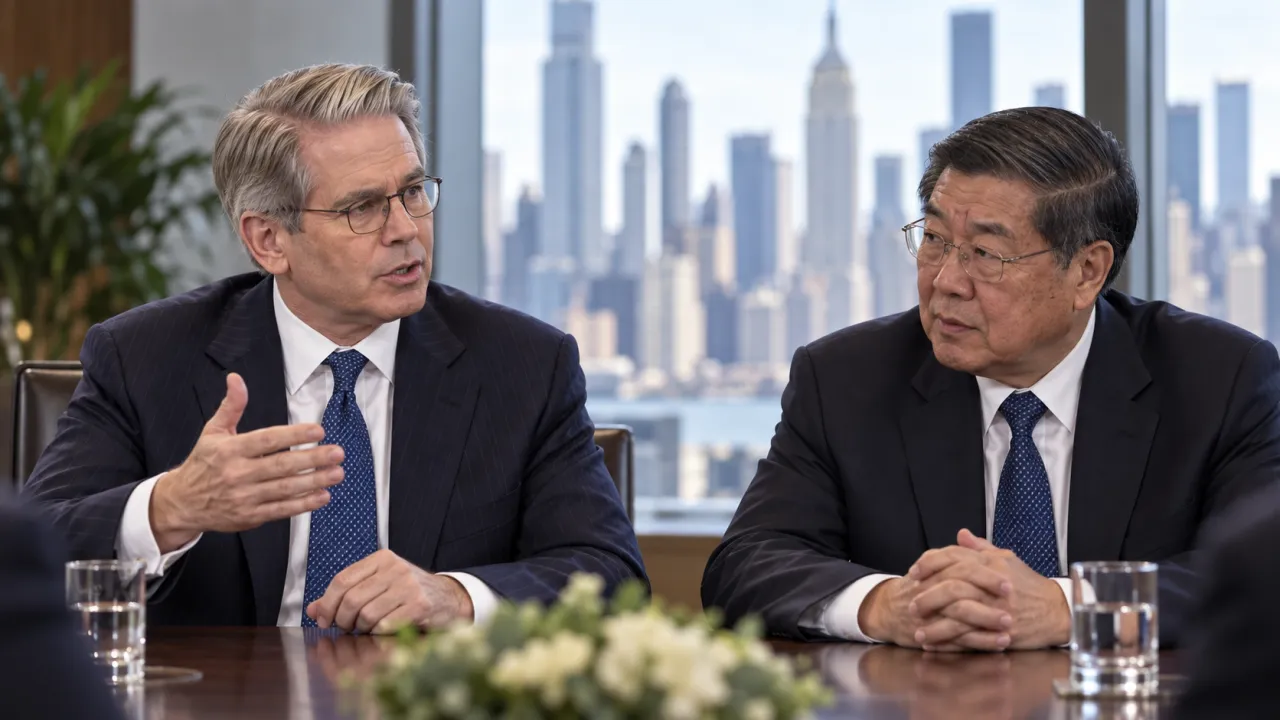
New Delhi, September 21, 2026. The Indian press first notes that this round of discussions between Washington and Beijing, held on Sunday in New York with Treasury Secretary Scott Bessent, Chinese Vice Premier He Lifeng, and US Trade Representative Jamieson Greer, took place without India having a voice, even though its interests are directly at stake. Bessent described the meeting as "very successful", stating that they had "completed what was left pending in Beijing" during the May summit between Donald Trump and Xi Jinping. Xinhua, on the other hand, spoke of "frank, in-depth, and constructive" exchanges, guided by "mutual respect" and "peaceful coexistence".
The two delegations agreed to open a formal dialogue on artificial intelligence and the operationalization of a "trade council" outlined in Beijing in May. Washington proposed a bilateral notification mechanism for incidents related to AI affecting national security - a channel that Bessent presents as a step towards "more transparency" between "the world's two leading AI powers". The Times of India emphasizes that this framework remains strictly bilateral: neither India nor any third country is included, even though the norms being drawn up will shape global regulation of the technology.
However, New Delhi is not just a spectator: the new US sanctions law, signed by Trump in parallel, imposes 100% customs duties on countries buying Russian oil and gas - a list that explicitly includes China and India. The Hindu Business Line also notes the announcement, the previous day, of an "AI Force" and a future "AI Tsar" to maintain America's lead over Beijing.
The Free Press Journal broadens the perspective to the social consequences of the AI race on the Chinese side: according to IDC, the proportion of Chinese industrial enterprises using AI models has risen from less than 10% in 2024 to nearly half today, with job losses such as that of Beijing programmer Fei Zhaojun, who was laid off with 160 colleagues. For the Indian press, this diagnosis serves as a warning: the AI governance standard is being negotiated between two parties, but its effects far exceed the two capitals, reaching as far as New Delhi, just days before the Trump-Xi summit scheduled for September 23 in Washington.
SOURCES (3)
- Times of IndiaMEDIUM
- The Hindu Business LineMEDIUM
- Free Press JournalMEDIUM








