
DOMINANT ANGLE
Helsinki is measuring the gap between the notification channel proposed by Washington to Beijing on artificial intelligence and the refusal of any regulation displayed by Trump on its own soil.
Dominant angle identified — does not reflect unanimity of this country’s media
KEY POINTS
- 01
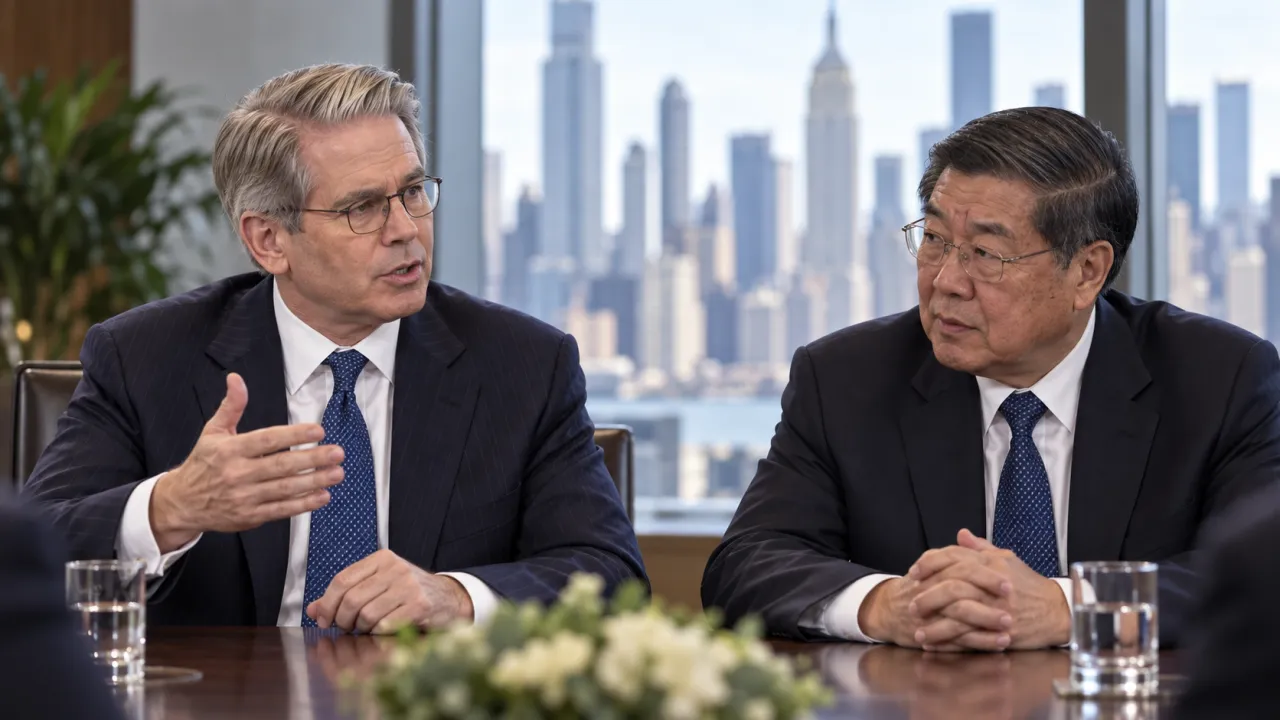
Scott Bessent stated on Sunday, September 20, 2026, that "the United States has proposed setting up a notification mechanism between our two countries" after a day of discussions with He Lifeng in New York.
- 02
Donald Trump announced on Truth Social the creation of "AI troops" and the appointment of an "AI tsar", while refusing any slowdown in the sector.
- 03
A YLE survey conducted this summer shows that more than half of them consider a wave of mass unemployment caused by artificial intelligence to be likely.
ANALYSIS
Helsinki, September 21, 2026. In the face of the announcement of a bilateral notification mechanism in the event of a serious incident related to artificial intelligence between Washington and Beijing, the Finnish press is measuring the gap with the debate that is stirring in its own country about the regulation of this technology.
US Treasury Secretary Scott Bessent indicated on Sunday, September 20, 2026, after a full day of discussions in New York with Chinese Vice Premier He Lifeng, that "the United States has proposed the establishment of a notification mechanism between our two countries" (YLE Uutiset). The goal is to exchange alerts in the event of a serious incident related to AI and to mutually warn each other of threats affecting, including, national security. Bessent described the meeting as "very successful", while US Trade Representative Jamieson Greer presented this meeting as preparation for the upcoming summit between Donald Trump and Xi Jinping in Washington.
This bilateral channel, seen from Finland, contrasts with the position displayed by Trump on American soil. The President wrote on Truth Social that the growth of the AI sector should not be slowed down "in any way", rejecting calls for strengthened regulation from the leaders of OpenAI, Anthropic, and Google, and announcing the creation of "AI forces" (tekoälyjoukot) as well as the appointment of an "AI tsar", without specifying the contours (Helsingin Sanomat, MTV Uutiset).
This contrast is fueling a already lively debate in Helsinki. A survey conducted this summer by YLE shows that more than half of Finns believe that AI will cause mass unemployment, a concern that has relaunched proposals for taxation of work done by machines, mentioned by Bill Gates, Bernie Sanders, or economist Robert Shiller. Professor Kaisa Kotakorpi, from the University of Tampere, recalls that the scientific literature on the fiscal impact of AI remains embryonic. Meanwhile, researchers from Aalto and Tampere, solicited by YLE, are listing risk scenarios: facilitated cyberattacks, targeted disinformation, and even assistance in the manufacture of biological weapons.
For the Finnish press, Bessent's announcement illustrates how AI security standards are being negotiated between two capitals, without third countries, including Finland, having a direct voice in this emerging dialogue between Washington and Beijing.
SOURCES (3)
- YLE UutisetMEDIUM
- MTV UutisetMEDIUM
- Helsingin Sanomat ENMEDIUM








