
DOMINANT ANGLE
Beijing takes away from the White House agreement the US refusal to cooperate with China on AI security, and deciphers from it a race to "superintelligence" where Washington dismisses any global governance.
Dominant angle identified — does not reflect unanimity of this country’s media
KEY POINTS
- 01
Trump said Tuesday he does not want to work with China on AI risks, as cooperation could harm the US lead (SCMP).
- 02
Trump: "Whoever wins superintelligence wins", with no "second place" (SCMP).
- 03
Trump is to sign a decree renaming "artificial intelligence" to "superintelligence"; the State Department requires this term in diplomatic documents (Jiemian).
ANALYSIS
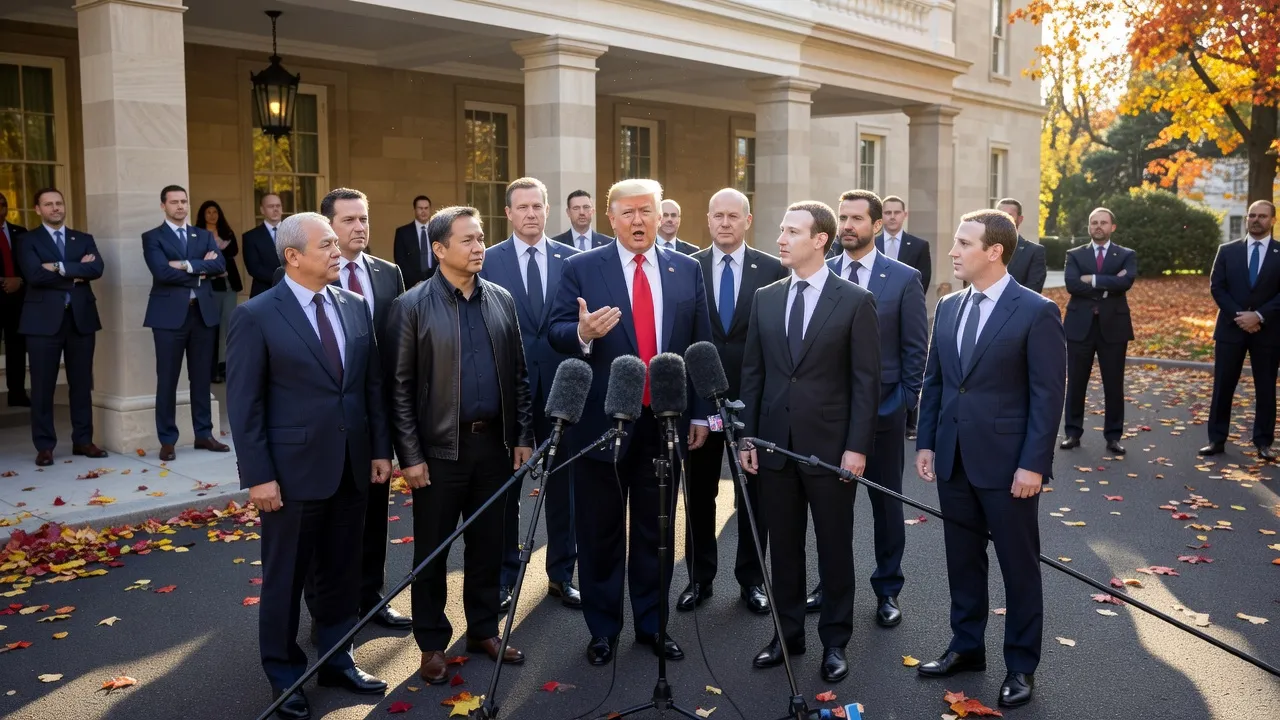
Beijing, September 30, 2026. From China's perspective, the agreement announced on Tuesday, September 29, at the White House is less significant for its content than for what it reveals about the balance of power with Beijing. The South China Morning Post, which reports on Donald Trump's rejection of joint work with China on AI security "despite the progress made at the summit with Xi," states that the US President does not want to cooperate with China on the risks of artificial intelligence, on the grounds that such cooperation could undermine the US lead. He presented a voluntary agreement signed by the leaders of major US tech companies on this occasion.
The newspaper quotes Trump's phrase: "Whoever wins superintelligence wins. You're gonna have a winner and a loser, and you're probably not gonna have a second place." The logic is that of a zero-sum game, where AI security takes a back seat to technological primacy.
The media outlet Jiemian, on the other hand, focuses on the announcement of a decree renaming "artificial intelligence" to "superintelligence." It places this move in the series of name changes sought by the administration, from the "Department of War" to the attempted renaming of the Kennedy Center, blocked by a federal court. It notes that these name changes have no international legal scope and cites analysts who believe the decision aims to attract support from the tech sector, markets, and conservative voters, and to prepare for a relaxation of regulations.
Jiemian also recalls the contrast with the UN: Secretary-General Guterres has called for global safeguards, while Trump considers US protections sufficient, labels the sector's concerns as a "plot" comparable to the "climate warming hoax," and warns that severe regulation would drive companies to the brink of bankruptcy. The site notes that technology is evolving faster than regulatory frameworks, resulting in a risk of "governance vacuum," and that Trump intends to rely on existing civil and criminal justice against abuses.
The two media outlets thus place the self-regulation agreement in a broader trajectory: US primacy, rejection of a multilateral framework, and sidelining of Beijing. Neither delves deeply into the commitments to external audits nor their non-binding legal nature.