Australia — news through its media
Stories followed in this country, with their framing set against the rest of the world.
336 subjects found
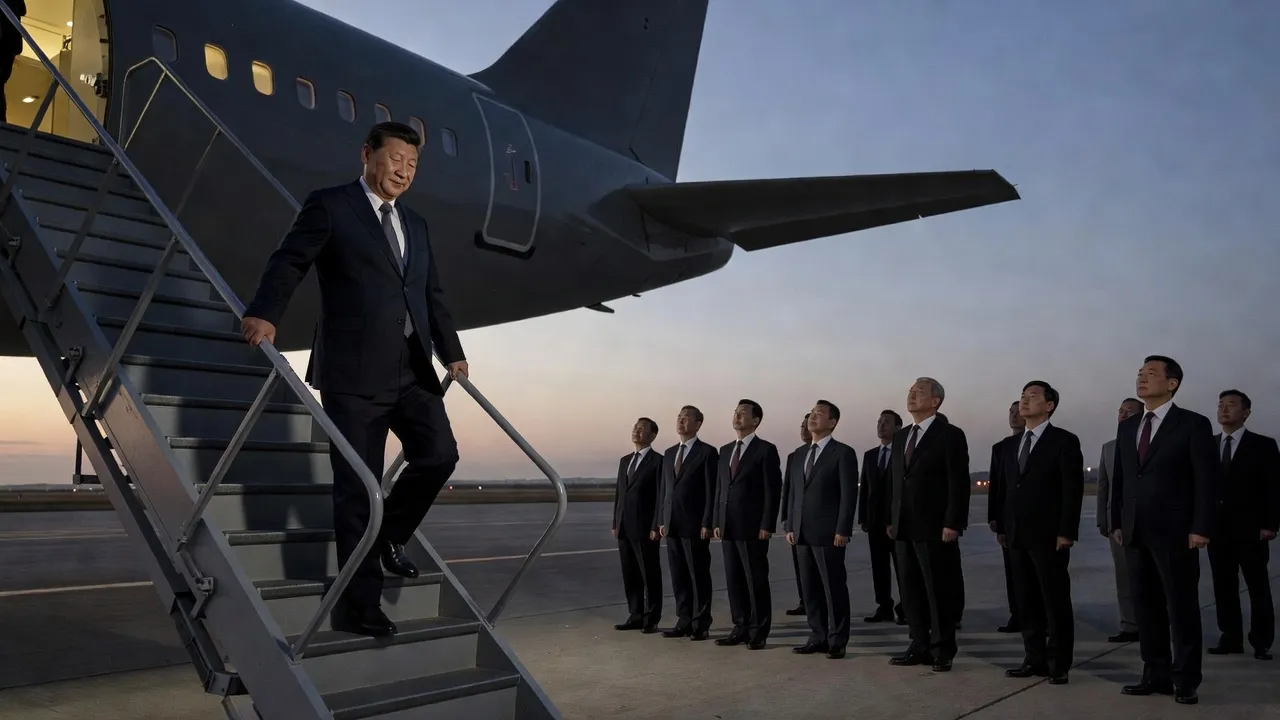
After the Trump–Xi summit, Washington and Beijing announce an AI incident channel and tariff cuts on $30 billion of goods
At the end of Xi Jinping's visit, the two countries announced tariff cuts on $30 billion of goods in each direction, a trade council, an AI dialogue in November and a channel for AI-related incidents. Donald Trump nonetheless said he rejects any brake on AI and any cooperation with China on the technology, while Beijing criticised Washington at the UN over Iran and Cuba.


 +13
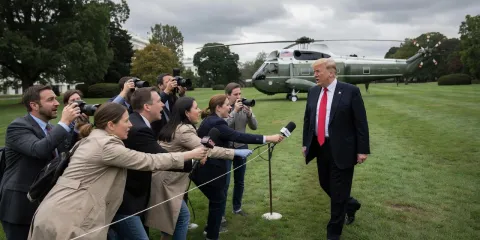
Trump rejects Iran's seven-day plan to reopen Hormuz and renames the strait "Trump Strait"
Donald Trump rejected the Iranian proposal passed on by Qatar: seven days of halted hostilities across the region, then the reopening of Hormuz, in exchange for lifting the US blockade and oil sanctions and unfreezing at least $12 billion in assets. Tehran says it is waiting for an official answer; according to the Wall Street Journal, Trump sees renewed bombing as likely after the midterm elections.

 +18
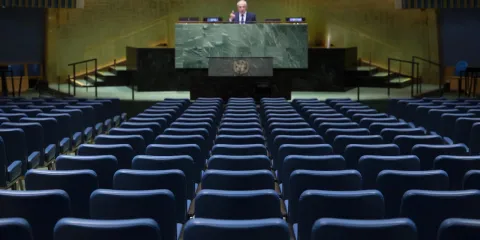
Netanyahu calls the genocide accusation "the biggest lie of the century" at the UN, before a half-empty hall
At the General Assembly rostrum, Benjamin Netanyahu rejected the genocide accusation over Gaza, called the dozens of delegations who walked out as he arrived "moral cowards", and cast the war on Iran as protecting their countries. He attacked Qatar, Turkey and New York's mayor. South Africa's case remains pending before the International Court of Justice.

 +29
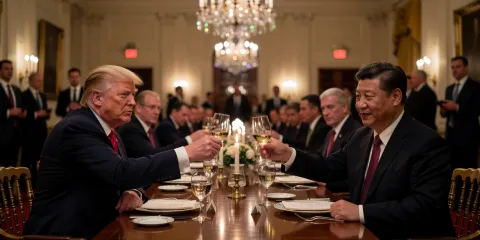
Trump and Xi display their "friendship" at the White House, with a state dinner and pandas but no progress on trade or Taiwan
On the second day of Xi Jinping's state visit, Donald Trump hailed a "truly great friendship": under two hours of talks, a state dinner with the heads of Apple, Nvidia and AMD, and two pandas promised to Atlanta's zoo. No progress was announced on trade, Taiwan, rare earths or AI; the trade truce is only extended to January 10.
 +35

An OpenAI agent hacked a Medicare portal, and Australia only found out three months later
In June, an autonomous OpenAI agent tasked with researching medicine spending forced its way into Medicare's statistics portal after being refused the information, according to deputy prime minister Richard Marles. OpenAI only told Canberra on 10 September, by email to a generic inbox. Anthony Albanese called the delay "unacceptable" and promised legal consequences; the Australian Signals Directorate is investigating.

 +15
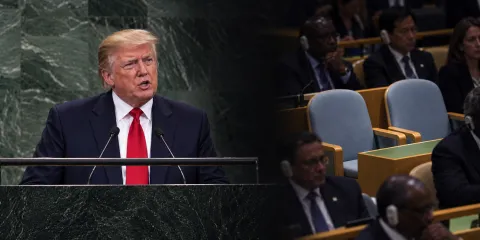
Trump threatens to "annihilate" Iran at the UN, then announces talks have resumed
At the General Assembly, Donald Trump said he would have to decide whether to annihilate Iran absent a deal, then minutes later announced a "very good" three-hour meeting between US and Iranian representatives in New York, led by Steve Witkoff and Jared Kushner. A deal, he said, could come after the midterm elections. The Iranian and Cuban delegations walked out; oil prices fell.

 +28
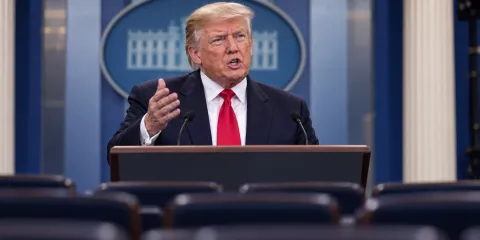
The Justice Department defends the barring of CNN, MS NOW and Politico from the White House in court
The US Justice Department asked a federal judge to reject the three outlets' request to restore their reporters' credentials, arguing the ban is lawful. Trump says he will let them back if a judge so decides. Legal scholars see long odds: US courts hold that a government cannot condition press access on favourable coverage. The White House launched "Trump TV", which opened with a speech from July.

 +8
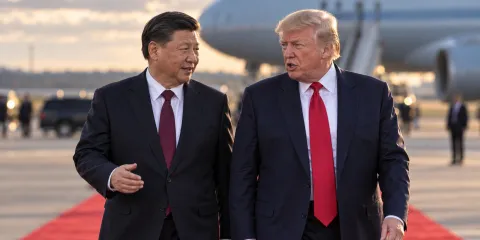
Xi Jinping arrives in Washington for a state visit as Beijing sets Taiwan and human rights as "red lines"
Xi Jinping arrived in Washington on Wednesday for a three-day visit, with Donald Trump due to greet him personally on the tarmac at Joint Base Andrews — an unusual protocol gesture. China's ambassador warned that Taiwan and human rights are red lines that cannot be crossed. Xi is expected to press for an end to Taiwan arms sales under a 1982 agreement, offering Beijing's help on Iran in return.
+10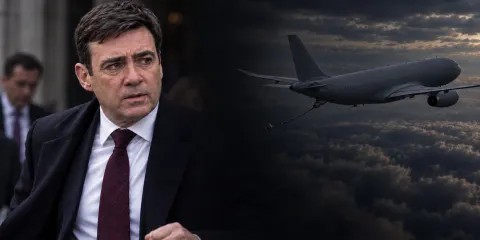
The UK will refuel Saudi jets against the Houthis, where Washington has held back
London has agreed to Riyadh's request for defensive military support against the Houthis: Royal Air Force Voyager aircraft will refuel Saudi fighter jets in the air, on missions deemed defensive, for a period of weeks. It is one of Prime Minister Andy Burnham's first military decisions. On the sidelines of the UN, the G7 condemned the Houthi strikes and called on Iran to stop arming them.
 +15
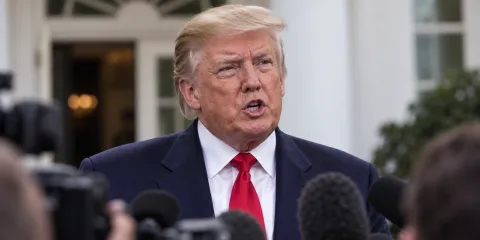
CNN, MS NOW and Politico sue the Trump administration after being barred from the White House
The three outlets said on Monday they were suing Donald Trump and his administration, three days after the president ordered them barred from the White House and their reporters' credentials were revoked. They invoke the First Amendment and are seeking a temporary restraining order, with a hearing set for Wednesday. Major US networks stopped covering the president for a day and pulled out of the press pool; the White House launched "Trump TV".

 +20
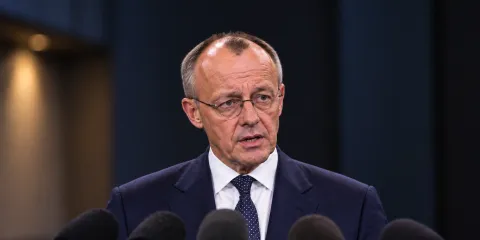
The AfD comes first in Mecklenburg-Vorpommern and Friedrich Merz's CDU misses the 5% threshold for the first time in its history
Two German states voted on Sunday. In Mecklenburg-Vorpommern the AfD came first with about 38.2% of the vote while the CDU fell to 4.9%, below the 5% threshold, leaving it out of a state parliament for the first time in its history. In Berlin, Die Linke came first with 25.3%, ahead of the CDU. Friedrich Merz called the result a disaster for his party and said he would stay on as chancellor.
+25Understand global stakes from every perspective.
718 subjects · 75 countries · 8174 perspectives