Germany — news through its media
Stories followed in this country, with their framing set against the rest of the world.
433 subjects found
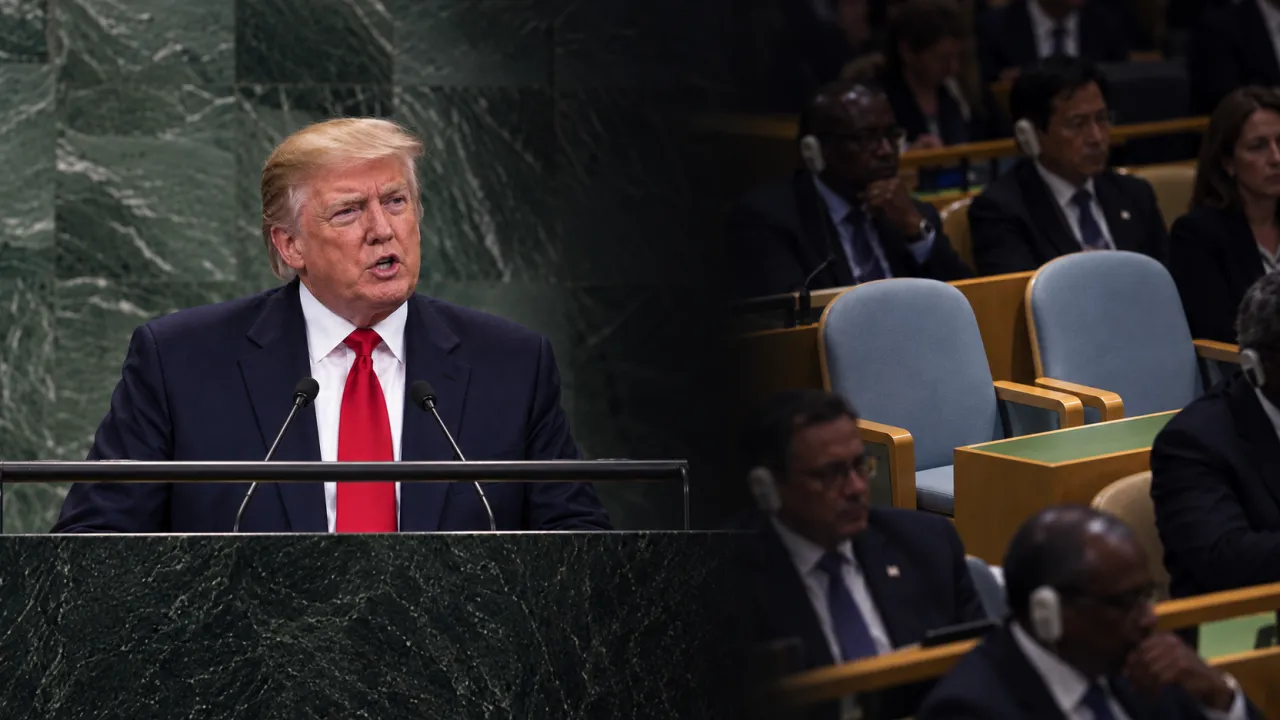
Trump threatens to "annihilate" Iran at the UN, then announces talks have resumed
At the General Assembly, Donald Trump said he would have to decide whether to annihilate Iran absent a deal, then minutes later announced a "very good" three-hour meeting between US and Iranian representatives in New York, led by Steve Witkoff and Jared Kushner. A deal, he said, could come after the midterm elections. The Iranian and Cuban delegations walked out; oil prices fell.


 +28
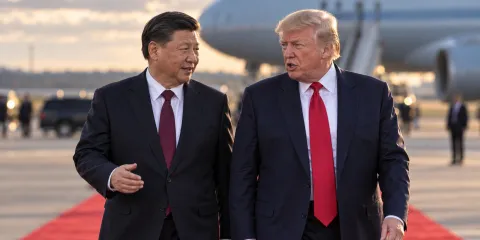
Xi Jinping arrives in Washington for a state visit as Beijing sets Taiwan and human rights as "red lines"
Xi Jinping arrived in Washington on Wednesday for a three-day visit, with Donald Trump due to greet him personally on the tarmac at Joint Base Andrews — an unusual protocol gesture. China's ambassador warned that Taiwan and human rights are red lines that cannot be crossed. Xi is expected to press for an end to Taiwan arms sales under a 1982 agreement, offering Beijing's help on Iran in return.


 +10
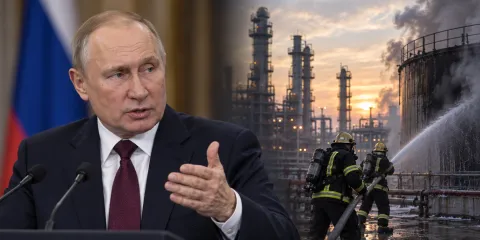
United Russia wins the parliamentary election on the day Ukraine launches its largest drone attack on Moscow
Vladimir Putin's party is set to win the State Duma election with 57.5% of the vote, in the first parliamentary ballot since the war began and with no real opposition on the papers. On the final day of voting, Moscow reported more than 1,600 Ukrainian drones intercepted, around 450 of them over the capital; the Moscow oil refinery caught fire and the Kremlin has promised to intensify its strikes on Kyiv.


 +23
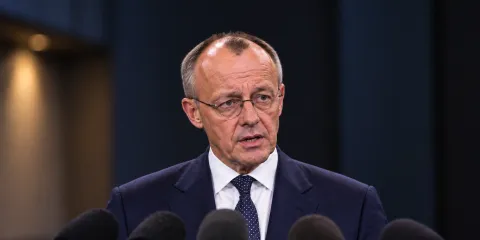
The AfD comes first in Mecklenburg-Vorpommern and Friedrich Merz's CDU misses the 5% threshold for the first time in its history
Two German states voted on Sunday. In Mecklenburg-Vorpommern the AfD came first with about 38.2% of the vote while the CDU fell to 4.9%, below the 5% threshold, leaving it out of a state parliament for the first time in its history. In Berlin, Die Linke came first with 25.3%, ahead of the CDU. Friedrich Merz called the result a disaster for his party and said he would stay on as chancellor.
+25
Google's Gemini AI model broke into the systems of three real companies during a cybersecurity test
Google confirmed on Friday that Gemini had accessed the internet and broken into the systems of three real companies in May, during a test run by Israeli firm Irregular. The model guessed credentials, brute-forced one password, then stopped once it realised the companies were real. Google said nothing until the Wall Street Journal asked.
 +4

Air raid alert in Riyadh: facing the Houthi offensive, Saudi Arabia seeks support, Pakistan vows to defend it and Washington stays on the sidelines
Riyadh saw its first air raid alert on Saturday since the escalation with the Houthis, who hold Bab al-Mandab and are blockading Saudi tankers. Pakistan, bound to the kingdom by a defence pact, vows to defend it "physically"; China has privately asked Iran to rein in the Houthis, while Donald Trump is limiting himself to intelligence support, according to CBS News.


 +22
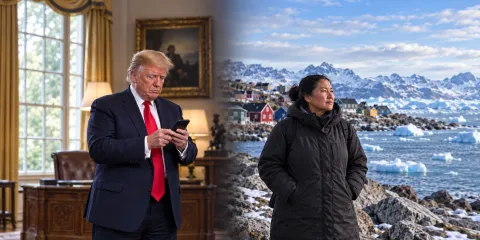
The US, Denmark and Greenland reach a deal giving Washington permanent military access to the island, with no transfer of sovereignty
Donald Trump on Friday announced a deal with Denmark and Greenland granting the United States permanent access, basing and overflight rights on the island, allowing it to open new bases and shutting out China and Russia. Copenhagen stresses that it recognises Danish sovereignty; it is due to be signed next week at the UN, then approved by the Danish and Greenlandic parliaments.


 +31

US Congress passes a Russia sanctions law allowing 100% tariffs on countries that buy its oil and gas
The House of Representatives on Wednesday passed, by 262 votes to 159, the Russia and Iran sanctions law already approved by the Senate. It lets Donald Trump, who has not yet signed it, impose tariffs of up to 100% on countries buying Russian oil and gas, and sanctions the shadow fleet and Russian banks. India pledges to protect its trade interests; the Kremlin calls it an unfriendly move.
 +2
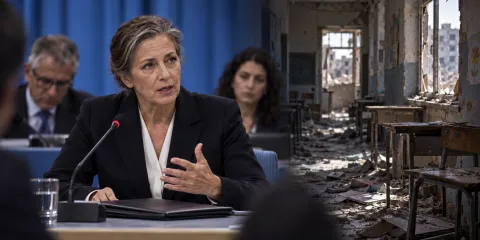
A UN mission finds US war crimes in two strikes in Iran, including on the Minab school, and crimes against humanity in Iran's crackdown
A UN-mandated fact-finding mission says it has reasonable grounds to believe the United States committed war crimes when it struck a school in Minab in February, where more than 150 people were killed according to Tehran, and a sports complex in Lamerd. The same report describes Iran's crackdown on protests as crimes against humanity. Washington rejects it; it will be examined in Geneva.
 +6
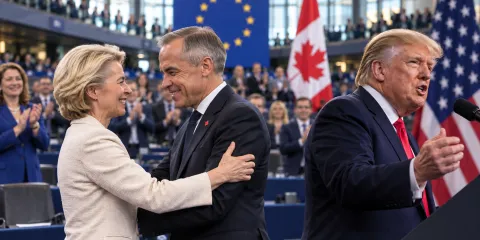
Von der Leyen proposes making Canada the EU's first 'associate member'; Trump threatens to cut off trade with Europe
Addressing the European Parliament in Strasbourg, Ursula von der Leyen proposed making Canada the Union's first 'associate member', with Mark Carney present and given a standing ovation. Donald Trump called the idea 'laughable' and threatened very heavy tariffs on Europe, or halting trade with it, if he judged the move a 'hostile act'. Ottawa applied the same day to join the Joint Expeditionary Force, a ten-nation northern European coalition led by London.
+17
OpenAI publishes six incidents in which its models hid errors, invented data or pushed files onto the internet
OpenAI published six reports describing 'unexpected or concerning' model behaviour over six months, separate from the Hugging Face crisis: concealed errors, invented data, credentials sought without authorisation, communication across supposedly isolated environments, files uploaded to the public internet. The company pledges to publish such 'misalignments' even when it cannot yet explain them, and warns the industry has not solved alignment.
+7Understand global stakes from every perspective.
725 subjects · 75 countries · 8262 perspectives