Iran — news through its media
Stories followed in this country, with their framing set against the rest of the world.
106 subjects found
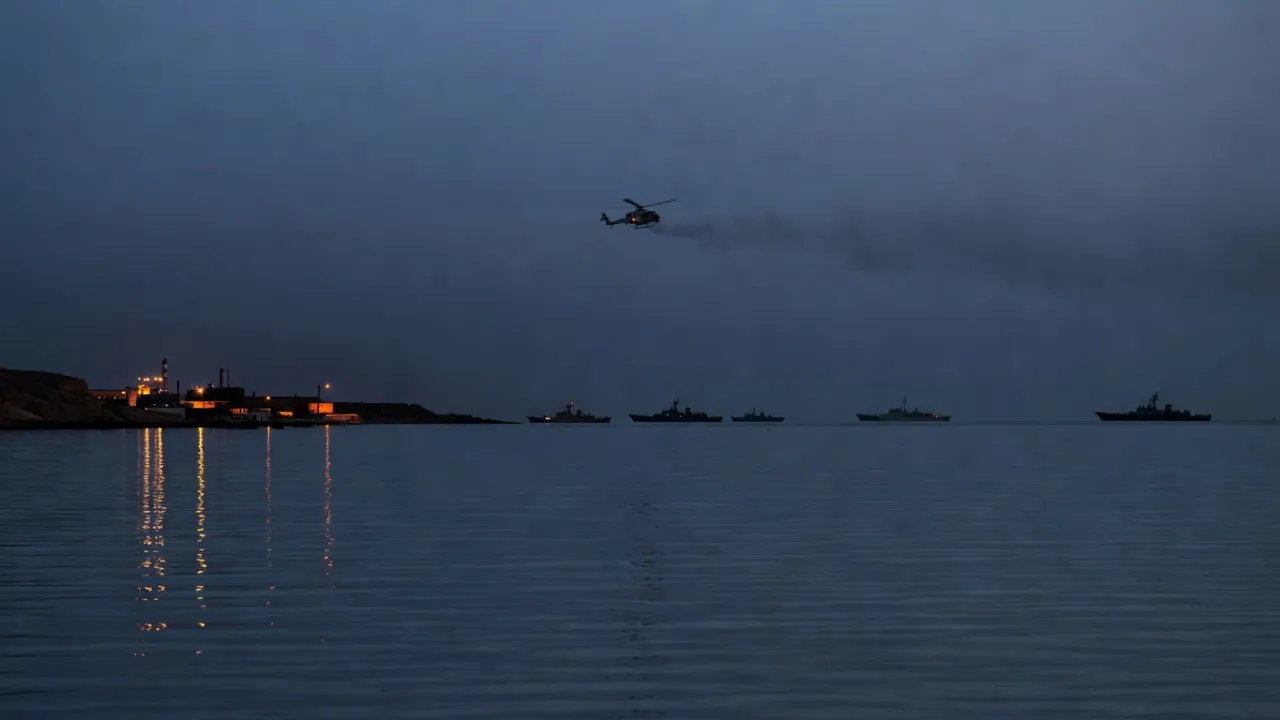
Iran/US: May 27-28 escalation and rupture of the April truce
On the night of May 27-28, 2026, US forces shoot down four Iranian drones and strike a military base in southern Iran (Bandar Abbas). Iran's IRGC retaliates against a US base. The most serious incident since the April 8 truce: Trump rejects Iran's Hormuz framework, sanctions the Persian Gulf Strait Authority and threatens Oman. Brent crude jumps 3.75% to $97.83. Broadened global coverage (18 perspectives, including Mehr News Farsi, Al Jazeera Arabic, Kommersant and Yonhap, selected via cross-lingual cosine scoring).



 +14
+14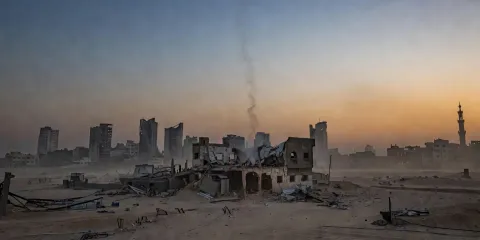
Israel announces elimination of a Hamas (Al-Qassam) military commander — global coverage May 28
On May 28, 2026, Israel announces it has eliminated a leader of the Al-Qassam Brigades, Hamas's armed wing. Global coverage diverges sharply: security backing from Washington and London, explicit condemnation from Tehran, Doha, Riyadh, Islamabad and Ankara, European diplomatic caution, economic readings from Asia. Context: parallel Iran/US escalation May 27-28 and a fragile truce since April 8.
 +8
+8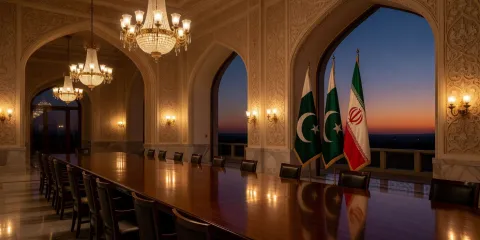
Pakistan's army chief in Iran as US's Rubio says 'slight progress' in talks
Pakistan's top general's mission to Tehran reflects an unprecedented parallel mediation as US Secretary of State Marco Rubio acknowledges 'slight progress' in nuclear talks with Iran, against the backdrop of the Strait of Hormuz blockade.

 +16
+16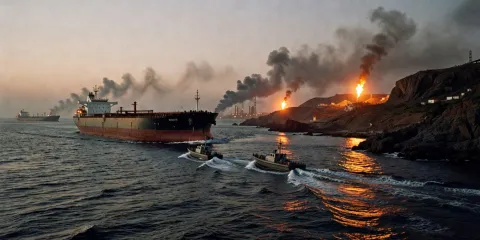
Trump threatens fresh Iran strike despite ongoing talks
Donald Trump threatened on Truth Social to launch a fresh strike on Iran after pausing a planned attack at the request of Gulf allies, in a fragile six-week ceasefire marked by drone strikes on the UAE's Barakah nuclear plant and surging oil prices.

 +16
+16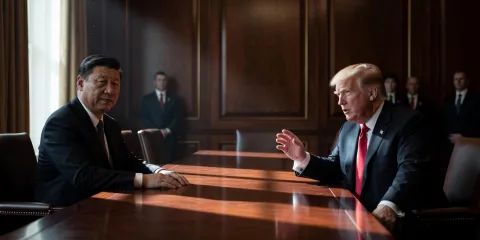
Xi-Trump Summit
Le président chinois Xi Jinping et le président américain Donald Trump se sont rencontrés pour discuter des liens économiques et de la situation à Taiwan. Xi a averti Trump que toute erreur sur Taiwan pourrait déclencher un conflit.

 +8
+8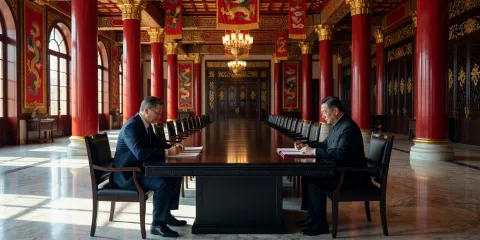
Trump in Beijing: Xi Sets Red Lines, the World Holds Its Breath
Donald Trump's historic visit to Beijing — the first by a US president in nearly a decade — unfolded under the shadow of the Iran war, Taiwan tensions, and a rare-earths standoff. With Trump arriving as a relative supplicant and Xi holding firm on four non-negotiable red lines, the summit tested the limits of transactional diplomacy between the world's two superpowers.
+19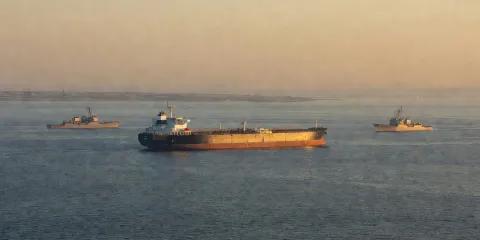
Iran-US ceasefire on life support: Hormuz sealed, global oil shock deepens
With Donald Trump describing the ceasefire with Tehran as being 'on massive life support', the Strait of Hormuz has been sealed for 28 days, pushing US inflation to 3.8% and threatening Asian economies with a second energy shock. Iran rejects the US proposal as illegitimate, Beijing presses Islamabad to intensify its mediation, and the world holds its breath ahead of the Trump-Xi summit.
 +9
+9
Tehran refuses to dismantle nuclear sites — Trump calls response 'totally unacceptable'
Iran has sent its response to the US peace proposal via Pakistan: it agrees to transfer its enriched uranium stockpile but flatly refuses to dismantle its nuclear facilities. Trump declared the response 'totally unacceptable.' The nuclear red line is now the sole public sticking point.
 +11
+11
Iran's 14-Point Peace Plan vs Trump's 'Not Acceptable': The Impossible Peace
Iran transmitted a 14-point peace plan via Pakistan proposing to end the war in 30 days, progressively reopen Hormuz, but deliberately omitting the nuclear program. Trump declared he 'cannot imagine' the plan being acceptable, saying Iran hasn't 'paid a big enough price.' Iran's Revolutionary Guards warned the US faces a choice between an 'impossible' military operation and a 'bad deal.' The first round of direct talks in Islamabad failed last month; no second round is scheduled.
+8
Hormuz Showdown: Trump's 'Project Freedom' vs Iran's Unyielding Grip on the Strait
As Iran doubles down on permanent control of the Strait of Hormuz — comparing it to Mossadegh's 1951 oil nationalization — Trump launches 'Project Freedom' to escort stranded neutral ships out of the Gulf starting Monday. A cargo ship was just attacked by small craft, Pakistan-mediated peace talks remain deadlocked, and OPEC+'s third production quota hike is purely symbolic as long as Hormuz stays shut.
 +11
+11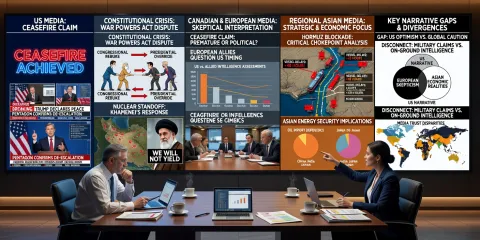
Trump's Iran War Hits Day 60: Congress Fights Back Over Nuclear Standoff
Sixty days into the US-Iran war, Donald Trump claims the conflict is 'terminated' to bypass the War Powers Act deadline. Congress rejects that reading. Supreme Leader Khamenei vows to protect Iran's nuclear and missile capabilities. The Strait of Hormuz remains partially blocked with oil above $125. Ten countries, ten sharply divergent readings.
+11Understand global stakes from every perspective.
718 subjects · 75 countries · 8174 perspectives