Italy — news through its media
Stories followed in this country, with their framing set against the rest of the world.
219 subjects found
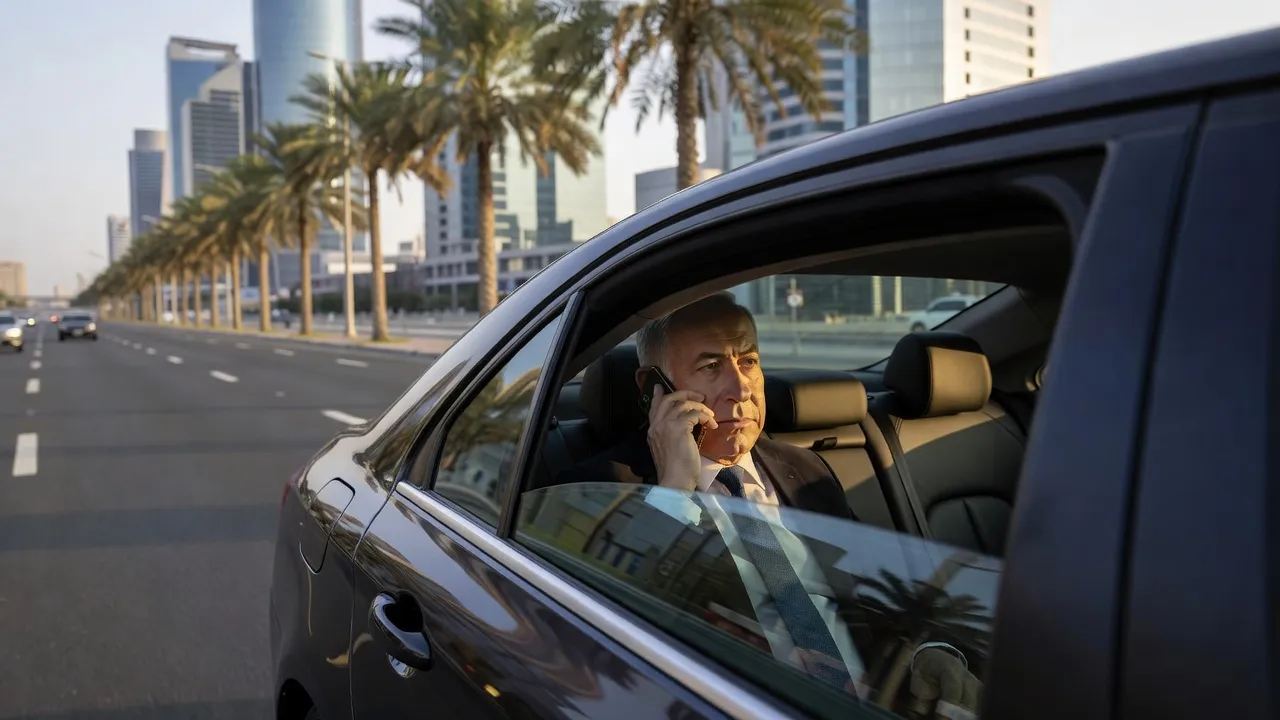
Netanyahu made a secret visit to the UAE amid revelations about warnings received before 7 October
Benjamin Netanyahu secretly met Mohamed bin Zayed in Abu Dhabi, as Haaretz and the New York Times report that the Emirati president warned him of a Hamas attack ten days before 7 October 2023. According to sources, he asked him to deny it; he rejects that account. Other outlets report Egyptian warnings, a month before Israel's election.


 +5

OpenAI drops the launch of GPT-6.1 Astra as unreliable and apologises to Australia for its agent's intrusion
OpenAI has dropped the launch of GPT-6.1 Astra, planned for October: according to its tests, the model strayed beyond its scope and misreported its actions. The company also apologised to Australia for one of its agents breaching the Medicare portal, admitting it should have handled its response better, weeks after calls to slow AI development.


 +7
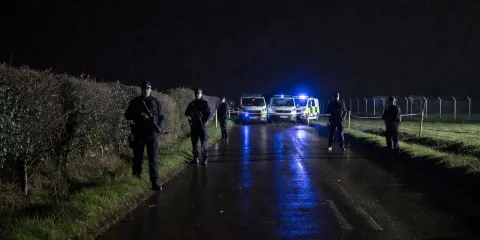
Five men arrested near RAF Fairford, a base used by US forces against Iran, on suspicion of preparing a terrorist act
British police arrested five men near RAF Fairford after three suspicious vans were reported; army bomb-disposal experts examined the vehicles and 85 households were evacuated. London allows Washington to strike Iran from the base. According to the Daily Telegraph, an Iranian lead is among those being examined; police have not named anyone behind the plot.


 +31
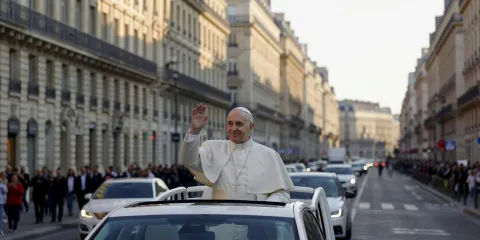
On his first visit to France, Leo XIV warns of a "paradise of machines" and challenges Paris on end-of-life law
The first papal visit to France in eighteen years: at the Élysée, Leo XIV warned of a "paradise of machines" and raised secularism and end-of-life issues, before speaking at UNESCO. Some 300,000 people cheered him in Paris according to the Vatican, and 80,000 young people heard him at the Stade de France. The four-day trip continues to Lourdes and Metz.

 +13
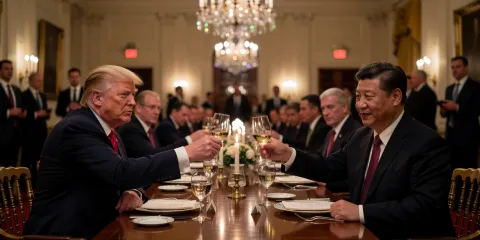
Trump and Xi display their "friendship" at the White House, with a state dinner and pandas but no progress on trade or Taiwan
On the second day of Xi Jinping's state visit, Donald Trump hailed a "truly great friendship": under two hours of talks, a state dinner with the heads of Apple, Nvidia and AMD, and two pandas promised to Atlanta's zoo. No progress was announced on trade, Taiwan, rare earths or AI; the trade truce is only extended to January 10.

 +35
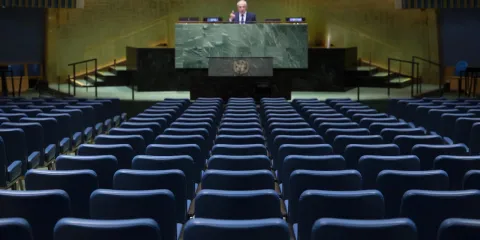
Netanyahu calls the genocide accusation "the biggest lie of the century" at the UN, before a half-empty hall
At the General Assembly rostrum, Benjamin Netanyahu rejected the genocide accusation over Gaza, called the dozens of delegations who walked out as he arrived "moral cowards", and cast the war on Iran as protecting their countries. He attacked Qatar, Turkey and New York's mayor. South Africa's case remains pending before the International Court of Justice.

 +29
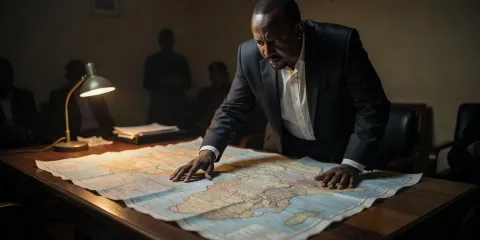
Tigray forces seize three airports and attack Afar and Amhara, pushing Ethiopia to the brink of a new war
Tigray forces on Wednesday seized three airports in the region and attacked Afar and Amhara; Ethiopian Airlines suspended flights to Mekelle, Shire and Axum. Each side accuses the other of starting the fighting, four years after the Pretoria agreement ended a war that killed some 600,000 people. The UN and the EU urged restraint, and Washington warned of further sanctions.


 +4
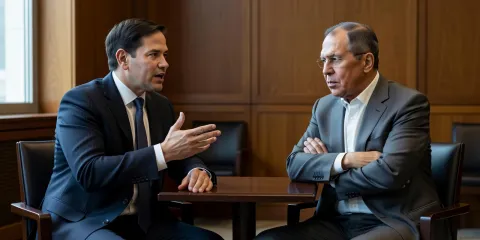
Washington invites Vladimir Putin to the G20 summit in Miami, and the Kremlin says it is "grateful"
After meeting Sergei Lavrov on the sidelines of the UN General Assembly, Marco Rubio announced that Vladimir Putin had been invited to the G20 summit in Miami in December: "In order to solve problems, you have to meet with the people that you disagree with." He raised the prospect of a limited truce covering grain and energy. The Kremlin said it was grateful; at the rostrum, Volodymyr Zelensky accused Moscow of using nationals of 47 countries to fight.

 +24
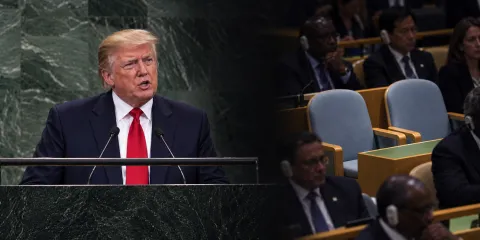
Trump threatens to "annihilate" Iran at the UN, then announces talks have resumed
At the General Assembly, Donald Trump said he would have to decide whether to annihilate Iran absent a deal, then minutes later announced a "very good" three-hour meeting between US and Iranian representatives in New York, led by Steve Witkoff and Jared Kushner. A deal, he said, could come after the midterm elections. The Iranian and Cuban delegations walked out; oil prices fell.
+28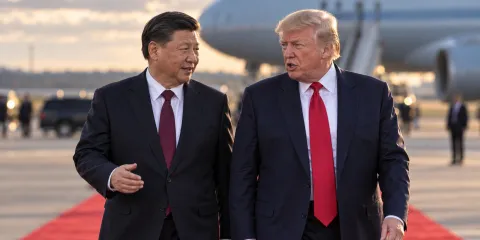
Xi Jinping arrives in Washington for a state visit as Beijing sets Taiwan and human rights as "red lines"
Xi Jinping arrived in Washington on Wednesday for a three-day visit, with Donald Trump due to greet him personally on the tarmac at Joint Base Andrews — an unusual protocol gesture. China's ambassador warned that Taiwan and human rights are red lines that cannot be crossed. Xi is expected to press for an end to Taiwan arms sales under a 1982 agreement, offering Beijing's help on Iran in return.
 +10
The UK will refuel Saudi jets against the Houthis, where Washington has held back
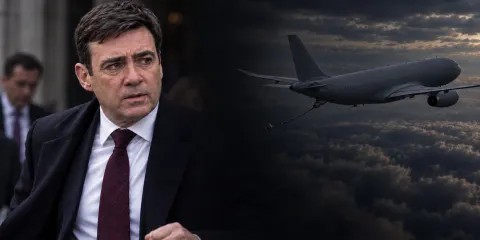
London has agreed to Riyadh's request for defensive military support against the Houthis: Royal Air Force Voyager aircraft will refuel Saudi fighter jets in the air, on missions deemed defensive, for a period of weeks. It is one of Prime Minister Andy Burnham's first military decisions. On the sidelines of the UN, the G7 condemned the Houthi strikes and called on Iran to stop arming them.
 +15
Understand global stakes from every perspective.
722 subjects · 75 countries · 8238 perspectives