Every angle on the news
Every story decoded through media worldwide, perspective by perspective.
78 subjects found
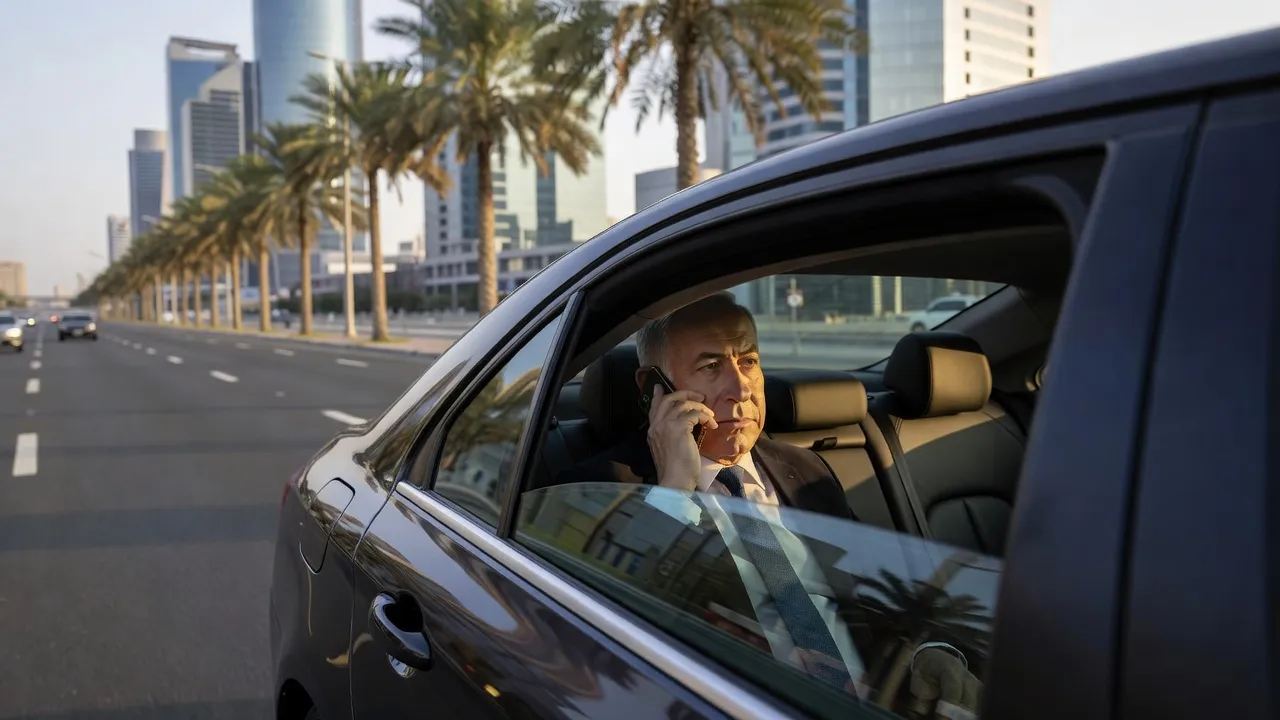
Netanyahu made a secret visit to the UAE amid revelations about warnings received before 7 October
Benjamin Netanyahu secretly met Mohamed bin Zayed in Abu Dhabi, as Haaretz and the New York Times report that the Emirati president warned him of a Hamas attack ten days before 7 October 2023. According to sources, he asked him to deny it; he rejects that account. Other outlets report Egyptian warnings, a month before Israel's election.


 +5
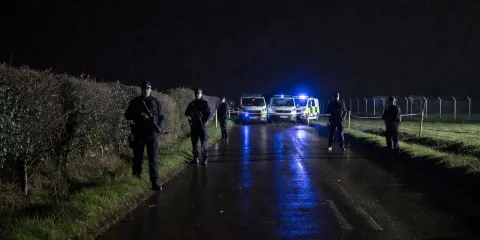
Five men arrested near RAF Fairford, a base used by US forces against Iran, on suspicion of preparing a terrorist act
British police arrested five men near RAF Fairford after three suspicious vans were reported; army bomb-disposal experts examined the vehicles and 85 households were evacuated. London allows Washington to strike Iran from the base. According to the Daily Telegraph, an Iranian lead is among those being examined; police have not named anyone behind the plot.


 +31
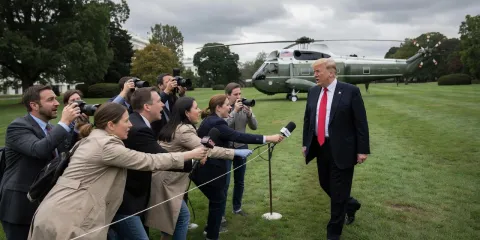
Trump rejects Iran's seven-day plan to reopen Hormuz and renames the strait "Trump Strait"
Donald Trump rejected the Iranian proposal passed on by Qatar: seven days of halted hostilities across the region, then the reopening of Hormuz, in exchange for lifting the US blockade and oil sanctions and unfreezing at least $12 billion in assets. Tehran says it is waiting for an official answer; according to the Wall Street Journal, Trump sees renewed bombing as likely after the midterm elections.


 +18
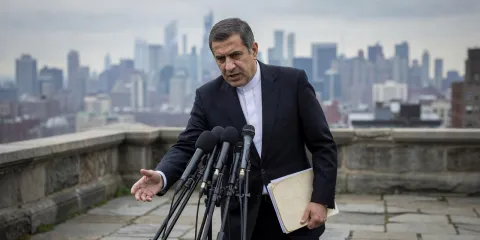
Iran offers to reopen the Strait of Hormuz within seven days if the blockade is lifted, and Trump reportedly rejects it
Relayed by Qatar, Abbas Araghchi's plan calls for lifting the naval blockade of Iranian ports, ending oil sanctions and a ceasefire including Lebanon, then reopening Hormuz on day six and resuming nuclear talks on day seven. Tehran rules out nuclear concessions. According to the Wall Street Journal, Donald Trump has rejected it; Tehran awaits an official answer.


 +14
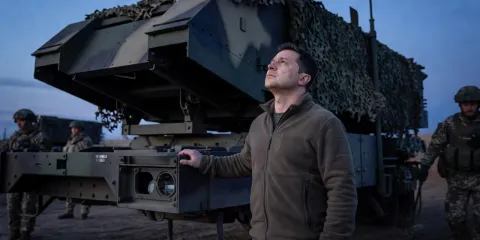
Zelensky says Trump has made a "final decision" to let Ukraine produce Patriot missiles
According to Volodymyr Zelensky, Donald Trump confirmed that Ukraine will receive licences to produce Patriot missiles, the only ones able to reliably counter Russian ballistic missiles. Trump had wavered since July. Kyiv has been short of interceptors since the war on Iran diverted US stocks; the announcement came on the day a Russian strike killed a 14-year-old boy in Kyiv.
 +2
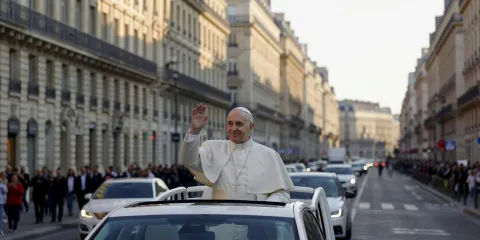
On his first visit to France, Leo XIV warns of a "paradise of machines" and challenges Paris on end-of-life law
The first papal visit to France in eighteen years: at the Élysée, Leo XIV warned of a "paradise of machines" and raised secularism and end-of-life issues, before speaking at UNESCO. Some 300,000 people cheered him in Paris according to the Vatican, and 80,000 young people heard him at the Stade de France. The four-day trip continues to Lourdes and Metz.
+13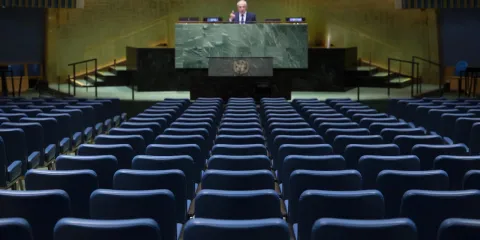
Netanyahu calls the genocide accusation "the biggest lie of the century" at the UN, before a half-empty hall
At the General Assembly rostrum, Benjamin Netanyahu rejected the genocide accusation over Gaza, called the dozens of delegations who walked out as he arrived "moral cowards", and cast the war on Iran as protecting their countries. He attacked Qatar, Turkey and New York's mayor. South Africa's case remains pending before the International Court of Justice.

 +29
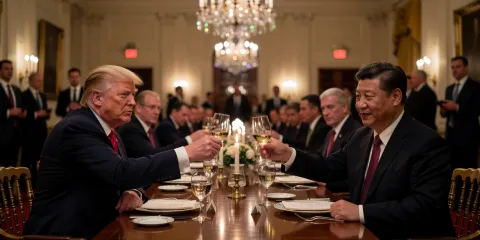
Trump and Xi display their "friendship" at the White House, with a state dinner and pandas but no progress on trade or Taiwan
On the second day of Xi Jinping's state visit, Donald Trump hailed a "truly great friendship": under two hours of talks, a state dinner with the heads of Apple, Nvidia and AMD, and two pandas promised to Atlanta's zoo. No progress was announced on trade, Taiwan, rare earths or AI; the trade truce is only extended to January 10.
 +35
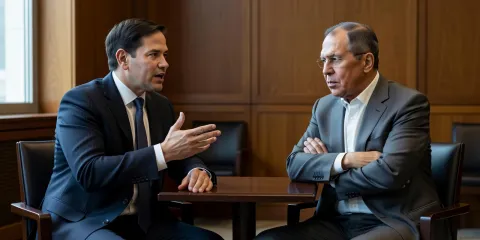
Washington invites Vladimir Putin to the G20 summit in Miami, and the Kremlin says it is "grateful"
After meeting Sergei Lavrov on the sidelines of the UN General Assembly, Marco Rubio announced that Vladimir Putin had been invited to the G20 summit in Miami in December: "In order to solve problems, you have to meet with the people that you disagree with." He raised the prospect of a limited truce covering grain and energy. The Kremlin said it was grateful; at the rostrum, Volodymyr Zelensky accused Moscow of using nationals of 47 countries to fight.

 +24
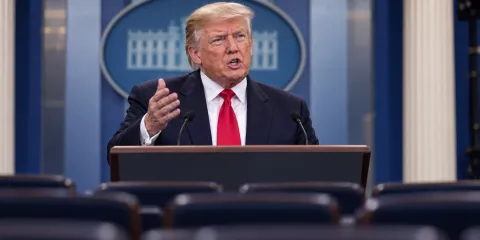
The Justice Department defends the barring of CNN, MS NOW and Politico from the White House in court
The US Justice Department asked a federal judge to reject the three outlets' request to restore their reporters' credentials, arguing the ban is lawful. Trump says he will let them back if a judge so decides. Legal scholars see long odds: US courts hold that a government cannot condition press access on favourable coverage. The White House launched "Trump TV", which opened with a speech from July.
 +8
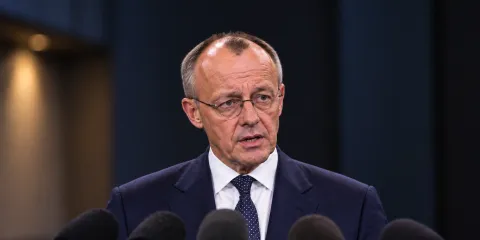
The AfD comes first in Mecklenburg-Vorpommern and Friedrich Merz's CDU misses the 5% threshold for the first time in its history
Two German states voted on Sunday. In Mecklenburg-Vorpommern the AfD came first with about 38.2% of the vote while the CDU fell to 4.9%, below the 5% threshold, leaving it out of a state parliament for the first time in its history. In Berlin, Die Linke came first with 25.3%, ahead of the CDU. Friedrich Merz called the result a disaster for his party and said he would stay on as chancellor.
+25Understand global stakes from every perspective.
718 subjects · 75 countries · 8174 perspectives