
DOMINANT ANGLE
Madrid sees the Brazilian election as a clash of values: faith, family, and cultural war carry as much weight as the economy, between Lula and the Bolsonaro clan.
Dominant angle identified — does not reflect unanimity of this country’s media
KEY POINTS
- 01
Datafolha: Lula 45% to Flávio Bolsonaro's 42% in the first round, and 47 to 46 in the second, according to ElDiario.es.
- 02
If no candidate exceeds 50%, a second round is scheduled for October 25.
- 03
Jair Bolsonaro, president from 2019 to 2023, is under house arrest for his attempted coup and has designated his son Flávio as a candidate (El País).
ANALYSIS
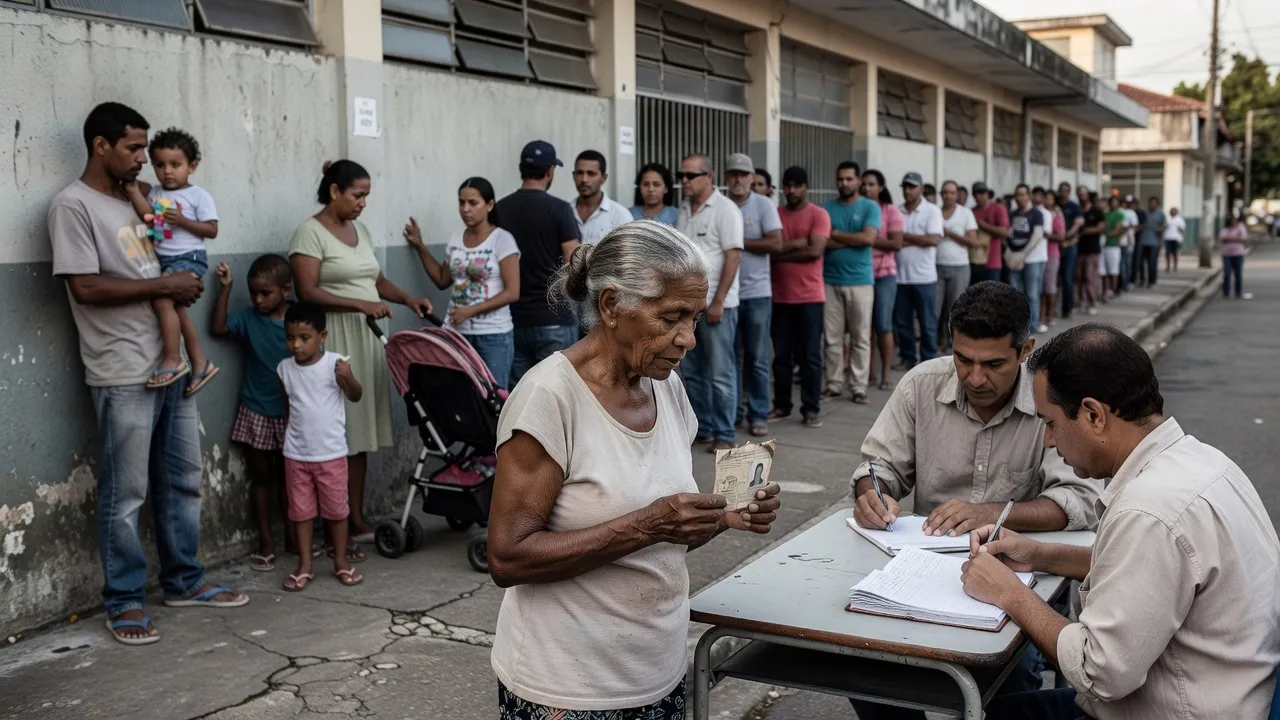
Madrid, October 4, 2026. For the Spanish press, the Brazilian first round is not just a possible alternation: it's the clash of "two radically opposed projects," according to ElDiario.es. Voters are casting their ballots this Sunday, October 4, and if no one exceeds 50%, a second round will take place on October 25.
The latest Datafolha figures are reported with caution. Lula would win in the first round with 45% against 42% for Flávio Bolsonaro, and in the second round with 47 to 46. ElDiario.es recalls that just two weeks ago, Flávio was leading in voting intentions. The gap is within the margin of error.
El País in English emphasizes the genesis of the movement. Jair Bolsonaro, president from 2019 to 2023, is currently under house arrest for his attempted coup. He has designated his son, a senator, as the candidate. The newspaper describes him as a copy "without sparkle and without charisma" of his father, who has nonetheless managed to equal Lula in the polls. According to El País, the hard right endures because it keeps moral issues at the center of its program and presents the left as a threat to faith and family.
Religion occupies a unique place in these narratives. ElDiario.es tells the story of the entry into the campaign of a black virgin, Nossa Senhora Aparecida, patron saint of Brazil since 1930, an icon of popular Catholicism, which the most radical sectors reject. The media cites journalist Maria Cristina Fernandes, who says a movement within the Catholic Church is reacting to a portion of evangelicals who are mobilizing a bill.
US interference forms the other axis. ElDiario.es gives a voice to Jean Willys, a former deputy who had gone into exile after death threats and is now running again under the PT banner. He opposes a project "led by Trump and his far-right international" to another, carried by China, which would bet on multipolarity. This is a militant voice, presented as such.
In both texts, the economy and security remain in the background: attention is focused on polarization, faith, and Brazil's place between Washington and Beijing.