
DOMINANT ANGLE
Dhaka retains from New Delhi mainly the claim for a less locked-up global governance, more than the implicit condemnation of the war in the Middle East
Dominant angle identified — does not reflect unanimity of this country’s media
KEY POINTS
- 01
The 11 BRICS members unanimously adopted the New Delhi Declaration on Saturday, September 12, 2026, expressing "deep concern" and calling for "maximum restraint" in the Middle East
- 02
The text demands a "structural update" of the UN Security Council, with more representation for Africa, Asia, Latin America, and the Caribbean
- 03
The bloc condemns unilateral tariff measures and encourages increased use of national currencies to reduce dependence on the dollar
ANALYSIS
Dhaka, September 13, 2026. Bangladesh has taken note of a statement from New Delhi that, without naming any country, calls for a broader place for developing nations in the global architecture. The eleven members of BRICS — Brazil, Russia, India, China, South Africa, Egypt, Ethiopia, Indonesia, Iran, and the United Arab Emirates — unanimously adopted the "New Delhi Declaration" on Saturday, September 12, 2026, which expresses "deep concern" over the escalation in the Middle East and calls for "maximum restraint".
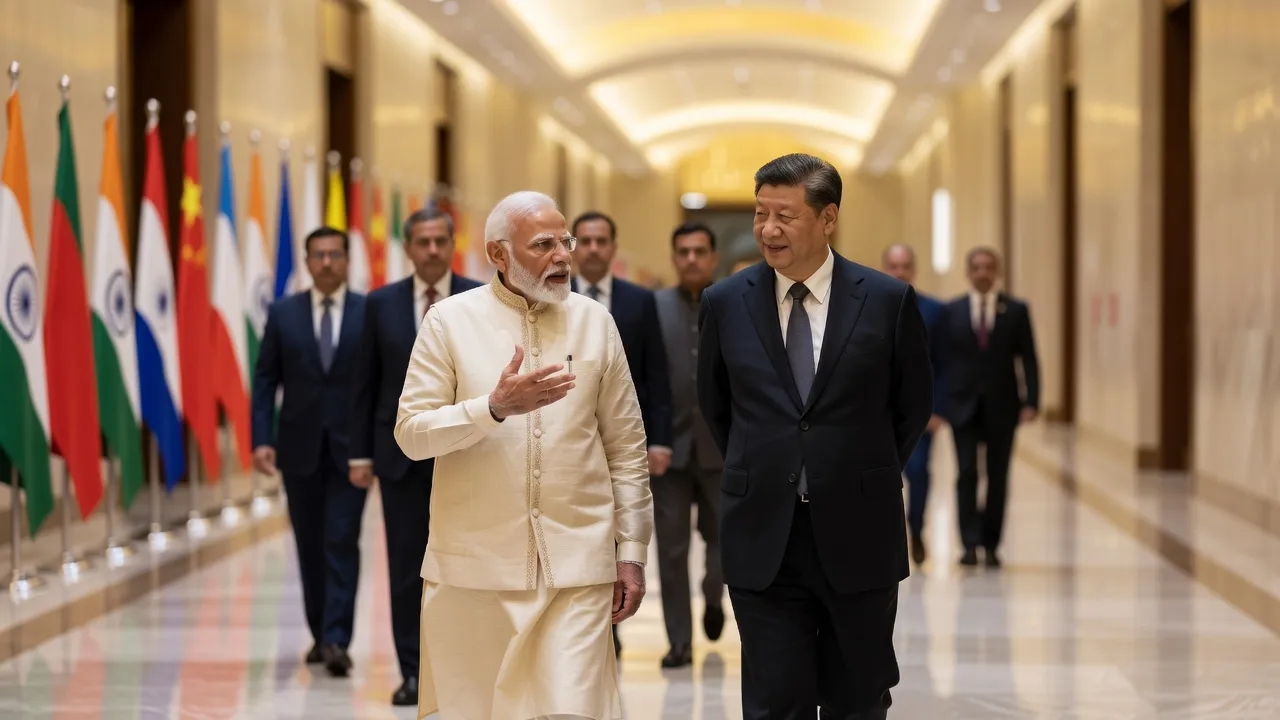
For the press in Dhaka, the essence of the text lies less in its implicit condemnation of war than in its demand for reform of global governance. The document calls for a structural update of the UN Security Council, with increased representation for Africa, Asia, Latin America, and the Caribbean — a claim that China and Russia, the only permanent members of the Council present at the summit, say they support for Brazil and India. Narendra Modi summed up the ambition in his closing remarks: "the changes in the world cannot be driven by outdated institutions; reforms are essential in terms of representation, responsiveness, and rule-making."
The text also condemns unilateral tariff measures that distort trade, in the context of US sanctions against Tehran and Western sanctions against Moscow, and encourages members to increase the use of their national currencies, to reduce dependence on the dollar. A speaker quoted in the press mentions the need to "transform this pyramid of privileges".
On the Middle East, Xi Jinping judged that war "does not serve the common interests of the international community", while Modi reminded his Chinese counterpart that peace on their common border remains essential to bilateral relations. The foreign ministers of the group had failed to agree on a joint text in May, hindered by divisions between Iran and the United Arab Emirates over the Gulf conflict.
Dhaka notes that the summit was held under exceptional protection, with tens of thousands of agents deployed around Xi, Putin, and Modi. The second day, Sunday, September 13, 2026, is expected to focus on technology, economic resilience, and sustainable development.
SOURCES (2)
- The Daily StarMEDIUM
- BRICS for 'maximum restraint' in Mideast
- BRICS agrees on joint declaration before New Delhi summit, sources say
- China's Xi tells BRICS summit Mideast war doesn't serve 'common interests': Xinhua
- BRICS Summit Day 2: What leaders will discuss after adopting New Delhi Declaration
- Inside BRICS' extraordinary protection grid for Xi, Putin and Modi
- TBS Top NewsMEDIUM