
DOMINANT ANGLE
London sees the BRICS statement as an exercise in tightrope walking dictated by the shadow of Donald Trump, rather than as a united front against Washington.
Dominant angle identified — does not reflect unanimity of this country’s media
KEY POINTS
- 01
Michael Kugelman, of the Atlantic Council, quoted by the BBC: "India cannot afford a joint statement that takes aim at Washington"
- 02
The BRICS, founded in 2006 by Brazil, Russia, India, and China, joined by South Africa in 2010, now have eleven members representing about half of the world's population (The Independent)
- 03
The BBC links the summit to American tariffs and the war in Iran, which it says have destabilized global energy markets
ANALYSIS
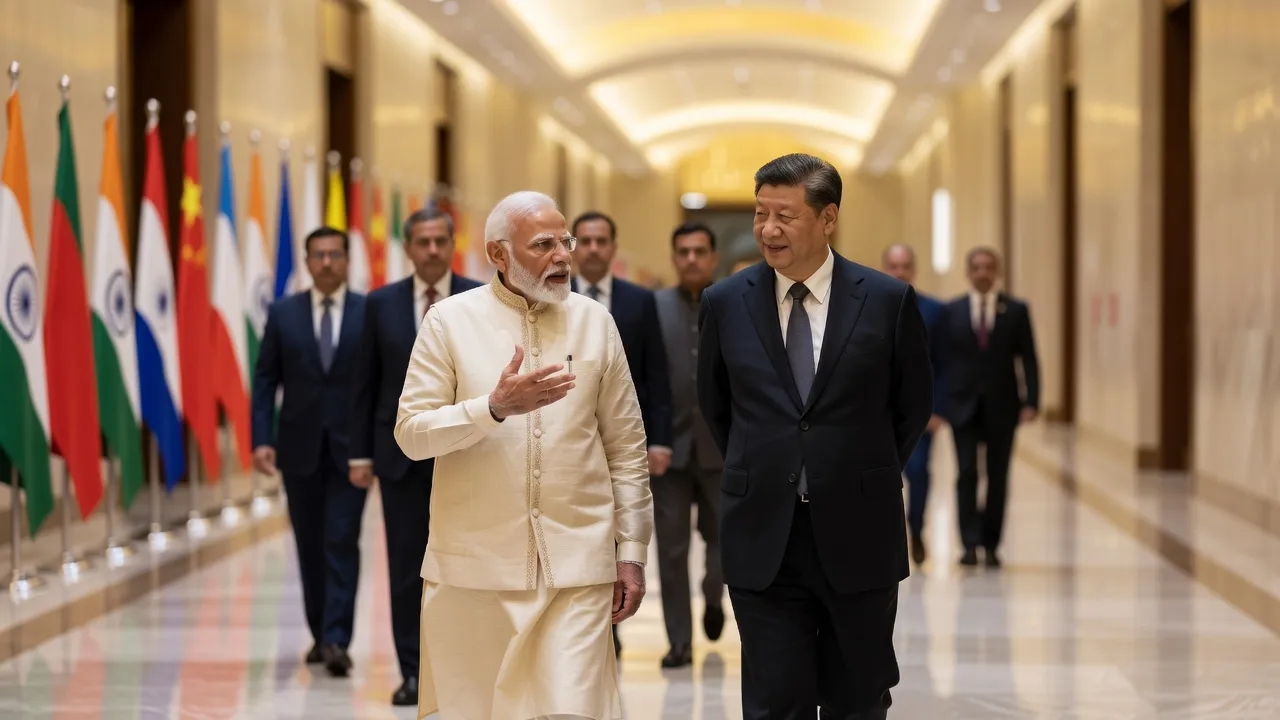
London, 13 September 2026. For the British press, the BRICS summit in New Delhi is seen less as a collective act of defiance towards Washington than as a demonstration of the bloc's internal limits. The BBC notes that "the shadow of President Trump looms large" over the proceedings, even though the United States is not a member. The tariffs imposed by the White House and the war in Iran, which have destabilised global energy markets, form the backdrop to the meeting, without producing, according to the BBC, a statement directly naming Washington.
The analysis relayed by the BBC, citing Michael Kugelman of the Atlantic Council, stresses the internal divisions: "India cannot afford a joint statement that takes aim at Washington," he recalls, as New Delhi negotiates the final terms of a trade agreement with the United States. Russia and Iran would have preferred a more offensive tone; China, on the other hand, is being cautious not to appear to be instrumentalising the BRICS against Washington. The result, according to this interpretation, is a critique that is judged to be vague and indirect rather than a coordinated line of attack.
The Independent places the summit in the broader context of the wars in Ukraine and the Middle East, as well as the growing tensions between Washington and Beijing, which are testing the bloc's ability to find common ground. The media outlet recalls that the BRICS, founded in 2006 by Brazil, Russia, India, and China, now bring together eleven countries, around half of the world's population and a significant share of global GDP, and that reducing dependence on the dollar is one of the stated priorities, through the promotion of local currencies.
For the British press, the issue is therefore not so much the statement itself as what it reveals about the balances to be maintained: India is juggling its strategic ties with Russia and Iran and its economic rapprochement with Washington, while Beijing is carefully avoiding any posture that would give the White House additional arguments.