DOMINANT ANGLE
Kathmandu is gauging New Delhi's diplomatic prowess, which has succeeded in getting Iran and the United Arab Emirates, two previously divided members, to unanimously sign a text on the Middle East war.
Dominant angle identified — does not reflect unanimity of this country’s media
KEY POINTS
- 01
The eleven BRICS leaders unanimously adopted the "New Delhi declaration" on Saturday, calling for "maximum restraint" without naming any country
- 02
In May, the foreign ministers of the bloc had failed to agree on a joint text, with Iran and the United Arab Emirates divided over the Middle East war
- 03
The declaration condemns attacks on civilian infrastructure and nuclear facilities "under the full guarantees of the IAEA, in violation of international law"
ANALYSIS
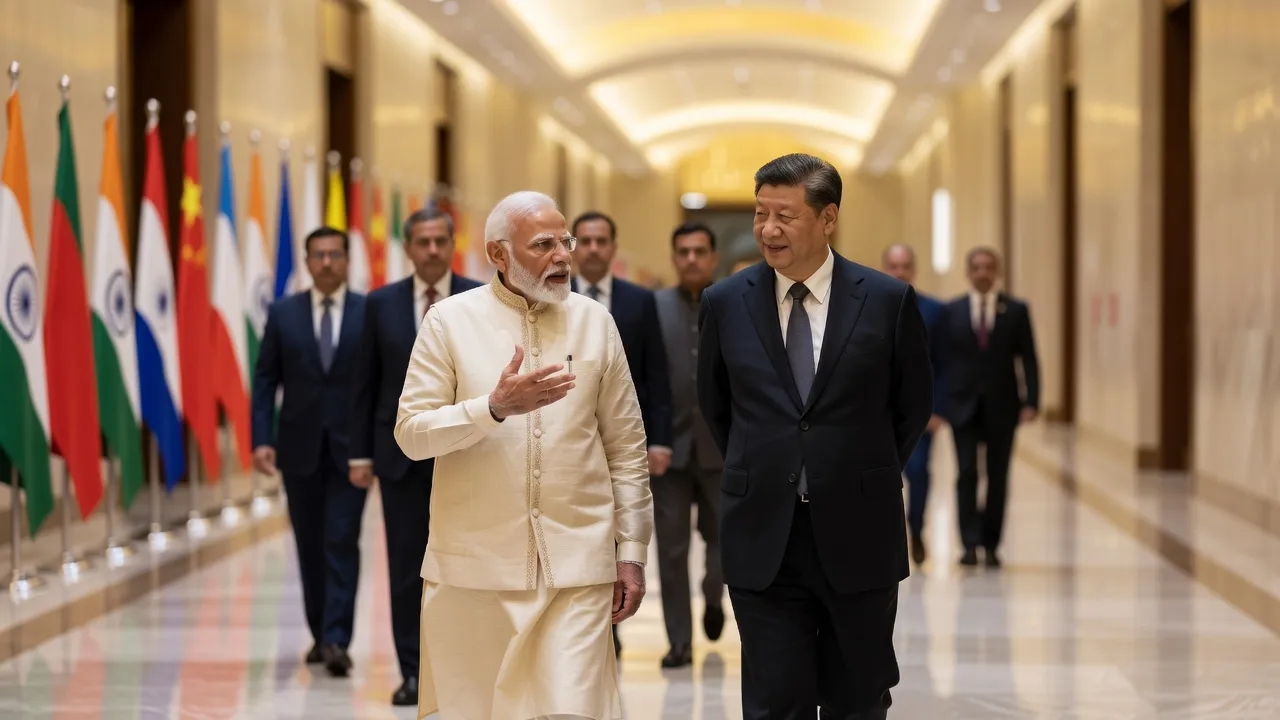
Katmandou, 13 September 2026. For the Nepalese press, the BRICS summit in New Delhi is first and foremost a diplomatic engineering victory for the Indian host. The Kathmandu Post recalls that in May, the foreign ministers of the bloc failed to agree on a joint statement, with Tehran and Abu Dhabi's positions on the Middle East war being too far apart. On Saturday, on the first day of the summit, the eleven leaders nonetheless unanimously adopted the "New Delhi Declaration", expressing "deep concern over the continued escalation of tensions in the Middle East" and calling for "maximum restraint", without designating any party.
The text, cited by Online Khabar, emphasizes the protection of civilian infrastructure and nuclear facilities: "We express serious concern over deliberate attacks on civilian infrastructure and peaceful nuclear facilities under the full guarantees of the IAEA, in violation of international law." The group recalls that nuclear safety must be maintained even in times of armed conflict.
The declaration also denounces the proliferation of "unilateral tariff and non-tariff measures" that distort trade, in a context of American sanctions against Tehran and Moscow. Xi Jinping, opening the proceedings, judged that the war in the Middle East "does not serve the common interests of the international community", according to the Chinese news agency cited by Online Khabar.
Beyond the text, the Nepalese press lingers on the summit's decor: Ratopati details the armored vehicles brought by Vladimir Putin (the Aurus Senat) and Xi Jinping (the Hongqi N-701), described as "rolling fortresses" whose real characteristics remain secret. A symbol, for Katmandou, of the difficulty of getting powers that arrive armored at the negotiating table to talk, but who nonetheless leave with a common text — cautious and without naming anyone.
SOURCES (3)
- The Kathmandu PostMEDIUM
- Online KhabarMEDIUM
- RatopatiMEDIUM