
DOMINANT ANGLE
Lisbon measures the diplomatic feat of a text adopted unanimously despite eleven divergent national positions, from Beijing to Tehran via Moscow.
Dominant angle identified — does not reflect unanimity of this country’s media
KEY POINTS
- 01
The New Delhi Declaration was unanimously approved on Saturday, September 12, 2026, by the eleven BRICS leaders at the Bharat Mandapam convention center.
- 02
The 140-point text calls for "maximum restraint" in the face of the escalation in the Middle East without naming any country and demands the protection of civilians and civilian infrastructure.
- 03
The declaration condemns "unilateral coercive measures contrary to international law", deemed to have "profound negative implications for human rights".
ANALYSIS
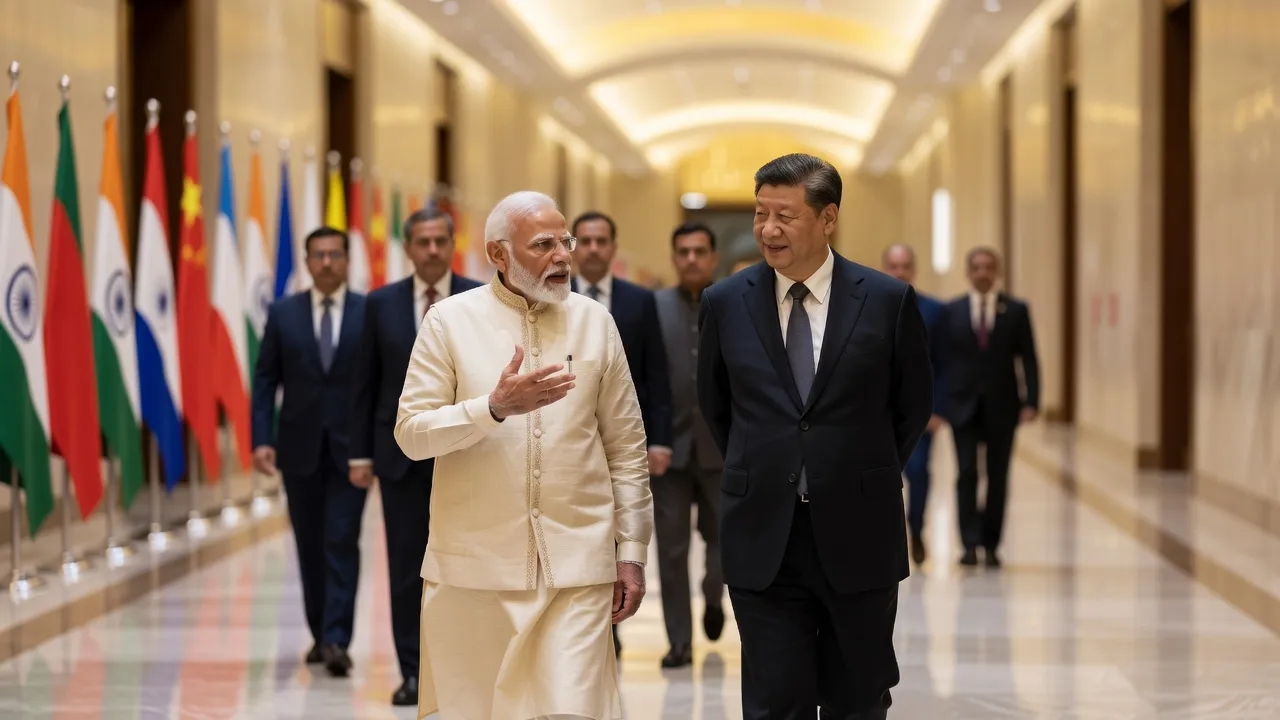
Lisbon, September 13, 2026. In New Delhi, the feat noted by the Portuguese press is not so much the content of the text as the fact that it exists. The New Delhi Declaration was unanimously approved on Saturday, September 12, 2026, by the eleven heads of state of the BRICS, in the main hall of the Bharat Mandapam convention center — a consensus that Lisbon's editorial offices describe as the "main challenge" of the meeting, given the divergent national positions on the war in the Middle East and on Ukraine.
The Jornal Económico highlights that "none of the representatives raised any objections," noting the frictionless presence, around the same table, of Chinese President Xi Jinping, his Russian counterpart Vladimir Putin, and Iranian President Masoud Pezeshkian. For the Portuguese press, this photograph — eleven capitals with contradictory interests signing the same paragraph — constitutes the news, more than the underlying diplomacy.
As for the content, RTP Notícias and SAPO Notícias quote the text: "We express deep concern over the continued escalation of tensions in the Middle East and, recalling our respective national positions, we call for maximum restraint and to avoid any action that could further aggravate the situation." Comprising 140 points, according to these same sources, the document demands the protection of civilians and civilian infrastructure, as well as respect for the sovereignty and territorial integrity of states — without mentioning the Strait of Hormuz, the articles specify, while emphasizing the need to maintain "the constant flow of global trade, supply chains, and energy."
The editorial offices also note the condemnation of "unilateral coercive measures contrary to international law," deemed to have "profound negative implications for human rights" — a phrase almost identical in several titles, a sign of a common source: the Spanish agency EFE, cited in each of the articles consulted.
Portugal, a small EU and NATO member state, observes this summit from a distance: there is no official reaction from Lisbon accompanying these dispatches, which remain descriptive, focused on the adopted text rather than its implications for the transatlantic order.
SOURCES (3)
- SAPO NotíciasMEDIUM
- Jornal EconómicoMEDIUM
- RTP NotíciasMEDIUM