
DOMINANT ANGLE
New Delhi claims a three-pronged diplomatic success: consensus wrested between Tehran and Abu Dhabi, a named mention of the Pahalgam attack in the text, and Modi's call to transform the "privilege pyramid" into shared governance.
Dominant angle identified — does not reflect unanimity of this country’s media
KEY POINTS
- 01
The eleven BRICS members adopted the "New Delhi Declaration" by consensus on Saturday, after tense negotiations between Tehran and Abu Dhabi on the Middle East (Swarajya).
- 02
The text condemns "in the strongest terms" the April 22, 2025 terrorist attack in Jammu and Kashmir, which killed 26 people, without naming Pakistan (Free Press Journal).
- 03
Narendra Modi called for transforming the "pyramid of privileges" of global institutions into a "partnership platform" for the Global South (Swarajya).
ANALYSIS
New Delhi, Sunday, September 13, 2026. For the Indian press, the 18th BRICS summit, which opened on Saturday at the Bharat Mandapam, primarily reflects the diplomatic success of its host. The Hindu Business Line notes that New Delhi has achieved "a critical diplomatic balancing act" by obtaining the consensus of the eleven members on a joint statement, despite persistent differences between Tehran and Abu Dhabi on the Middle East. Swarajya specifies that negotiations on the text continued "until the deadline", the two capitals having long maintained their positions before a last-minute agreement allowed the adoption of the "New Delhi Declaration".
The text, which condemns "in the strongest terms" the terrorist attack of April 22, 2025, in Jammu and Kashmir, which killed 26 people, is presented by Free Press Journal as a personal victory for Narendra Modi: the Prime Minister "ensured that the central issue of terrorism was not forgotten", without Pakistan being named. The declaration rejects any "double standard" in the fight against terrorism and reaffirms China's and Russia's support for India's candidacy to the Security Council.
On global governance, Modi called for an end to the "pyramid of privileges" inherited from current institutions, advocating for a "partnership platform" where the global South would become "rule-maker rather than rule-taker". However, Swarajya nuances: de-dollarization remains "rhetoric", the Working Group on Payments being only tasked with continuing its studies, without a calendar or common mechanism.
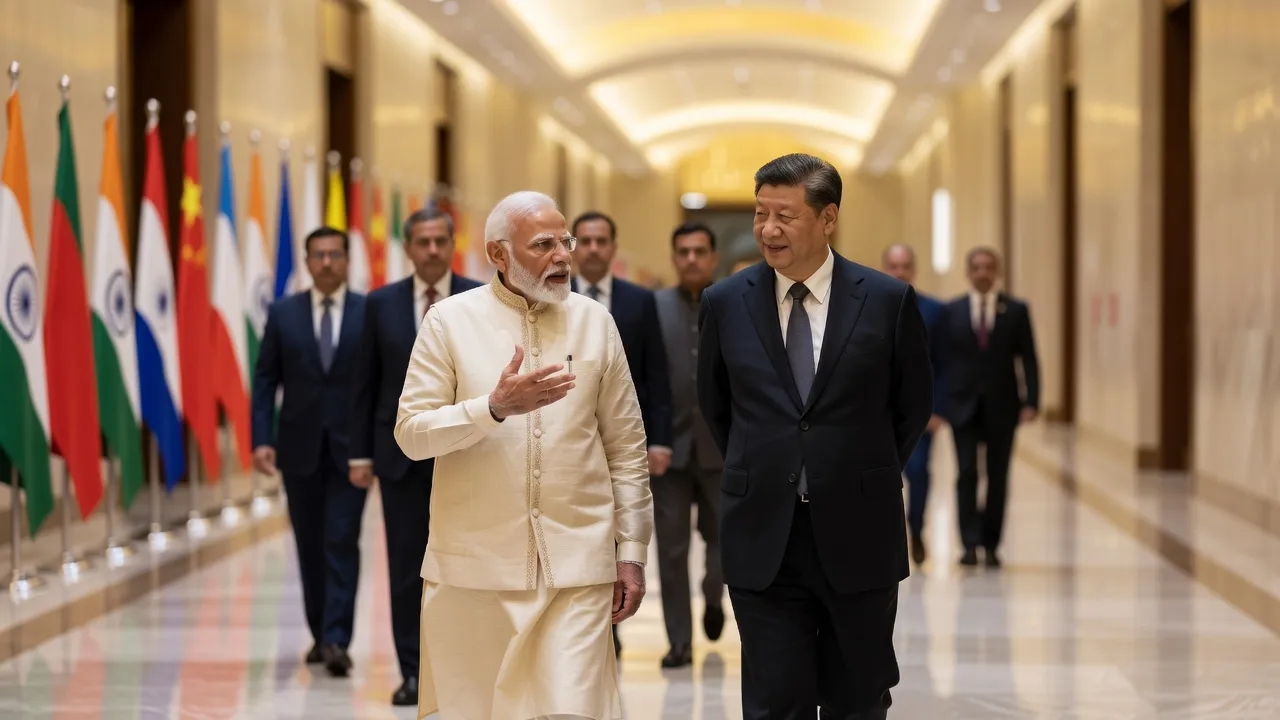
On the Middle East, the call for "maximum restraint", without naming any country, is seen in New Delhi as proof that India has managed to bring together partners with opposing interests. Xi Jinping assured Modi that China and India remain "partners, not rivals", even if his notable absence from the gala dinner on Saturday evening fueled comments on a still cautious warming between the two neighbors.
SOURCES (3)
- The Hindu Business LineMEDIUM
- SwarajyaMEDIUM
- BRICS New Delhi Summit: PM Modi Calls For End To 'Pyramid Of Privilege', Proposes Global Governance Reform Roadmap
- India Gets BRICS Consensus On Joint Declaration After Talks Bridge Iran-UAE Rift Over West Asia
- India's BRICS Scorecard Named Pahalgam, Deferred De-dollarisation: What The New Delhi Declaration Actually Says
- Free Press JournalMEDIUM
- BRICS Declaration Condemns Jammu & Kashmir Terror Attack, Calls For Zero Tolerance Against Terrorism
- BRICS Summit 2026: 'China And India Are Partners, Not Rivals,' Says President Xi Jinping In Meeting With PM Modi | VIDEO
- BRICS Summit 2026: Chinese President Xi Jinping Skips PM Modi's Gala Dinner In Delhi