DOMINANT ANGLE
Riyadhh is approaching the BRICS summit in New Delhi with the caution of a guest, not a committed member of the bloc
Dominant angle identified — does not reflect unanimity of this country’s media
KEY POINTS
- 01
Prince Faisal bin Farhan arrived on September 12 in New Delhi on behalf of Crown Prince Mohammed bin Salman, as a guest and non-member country.
- 02
The joint statement adopted on Saturday by the eleven BRICS members expresses "deep concern" and calls for "maximum restraint" in the Middle East without naming any country.
- 03
Iranian President Massoud Pezeshkian warned before the summit that the Middle East does not need the United States as a "regional policeman", as tensions threaten the Strait of Hormuz.
ANALYSIS
Riyadh, September 13, 2026. Prince Faisal bin Farhan arrived on Saturday, September 12, in New Delhi "on behalf of Crown Prince and Prime Minister Mohammed bin Salman," the Saudi Gazette specifies, to represent the kingdom at the BRICS summit not as a full member but as a "guest country." The trip falls under the official theme of the summit, "Building for Resilience, Innovation, Cooperation and Sustainability," and aims, according to the Saudi presentation, to "strengthen multilateral cooperation in the face of shared global challenges" rather than to endorse the entire program of the bloc.
It is in this context that Riyadh reads the joint statement adopted on Saturday by the eleven members: a text that expresses "deep concern" over the escalation in the Middle East and calls for "maximum restraint," without naming any country, Asharq Al-Awsat reports, citing AFP. A cautious formulation, close to the diplomatic line that the kingdom has held since the beginning of the conflict.
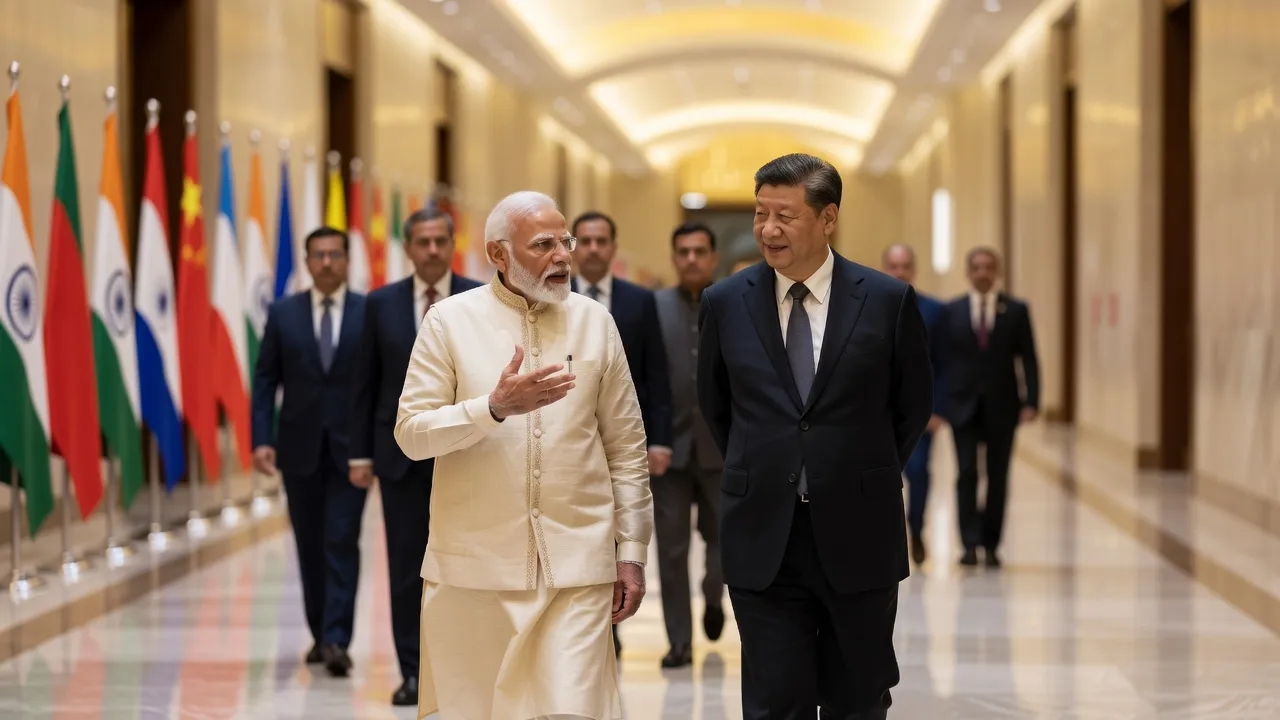
Chinese President Xi Jinping judged that the war "does not serve the common interests of the international community," while Indian Prime Minister Narendra Modi called for "transforming this pyramid of privilege into a platform of partnership," recalling the weight of the group: 50% of the world's population, 40% of global GDP, more than a quarter of international trade.
Iranian President Massoud Pezeshkian, present at the summit shortly after warning that the Middle East does not need the United States as a "regional policeman," intervened as tensions threaten the Strait of Hormuz — a reminder, for Riyadh, of the direct risks that regional escalation poses to its own energy and maritime security, regardless of its status as a guest within the bloc.