
DOMINANT ANGLE
Beijing takes away from the New Delhi summit less the formula on "maximum restraint" in the Middle East than the validation of a reform of global governance that the BRICS have been promoting for years.
Dominant angle identified — does not reflect unanimity of this country’s media
KEY POINTS
- 01
The joint statement adopted on Saturday in New Delhi calls for "greater and more meaningful participation and representation of emerging markets and developing countries... in global decision-making processes and structures" (CGTN).
- 02
The text denounces attempts to unilaterally undermine multilateral institutions, "including through the deliberate withholding of statutory contributions" (CGTN).
- 03
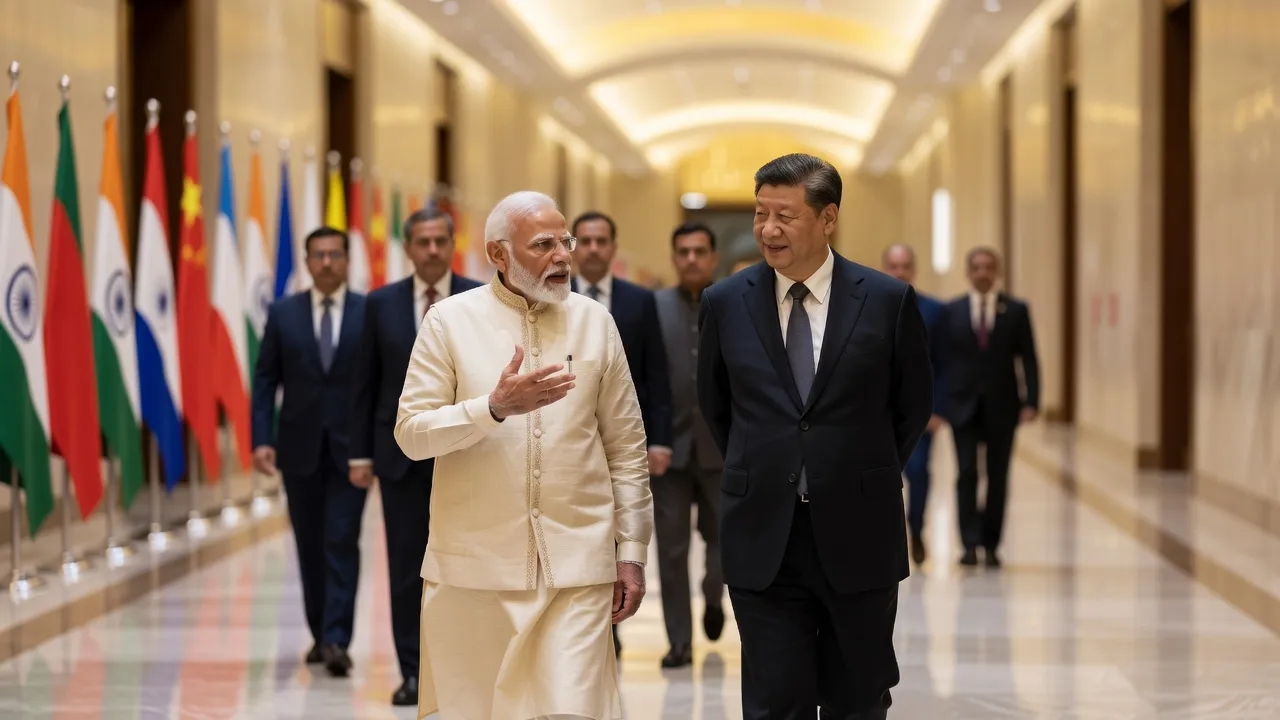
Xi Jinping arrived on Saturday in New Delhi at the invitation of Narendra Modi for this 18th BRICS summit held from September 12 to 13, aiming to "pool the collective strength of the Global South" (ECNS).
ANALYSIS
Beijing, September 13, 2026. For Chinese diplomacy, the 18th BRICS summit in New Delhi confirms a line defended for years: the reform of global governance in favor of emerging and developing countries. According to CGTN, the official agency, the joint declaration adopted on Saturday reaffirms the leaders' commitment to building an international and multilateral system that is "more just, equitable, agile, effective, representative, and responsible", driven by "extensive consultation, joint contribution, and shared benefits". The text calls for "greater and more significant participation and representation of emerging markets and developing countries, as well as the least developed countries, in global decision-making processes and structures" — a formula that aims, without naming it, to expand international decision-making bodies, starting with the UN Security Council.
The declaration also denounces, still according to CGTN, attempts "to unilaterally undermine the work of global multilateral institutions and hinder the execution of their respective mandates", including "through deliberate retention of statutory contributions". The leaders express their concern about ongoing conflicts in several regions of the world and the polarization of the international order, without mentioning the Middle East or any specific party by name.
On the Chinese side, the ECNS agency highlights Xi Jinping's arrival in New Delhi on Saturday, at the invitation of Prime Minister Narendra Modi, for the summit held from September 12 to 13. Xi is participating, according to the agency, to "chart a new course for high-quality development of expanded BRICS cooperation", by "pooling the collective strength of the global South" and bringing "stability and positive momentum to a world undergoing profound changes". The Chinese press thus emphasizes less the content of the conflict mentioned than what it illustrates: the need, for Beijing, for a multipolar order where Southern countries weigh more heavily in collective decisions.