
DOMINANT ANGLE
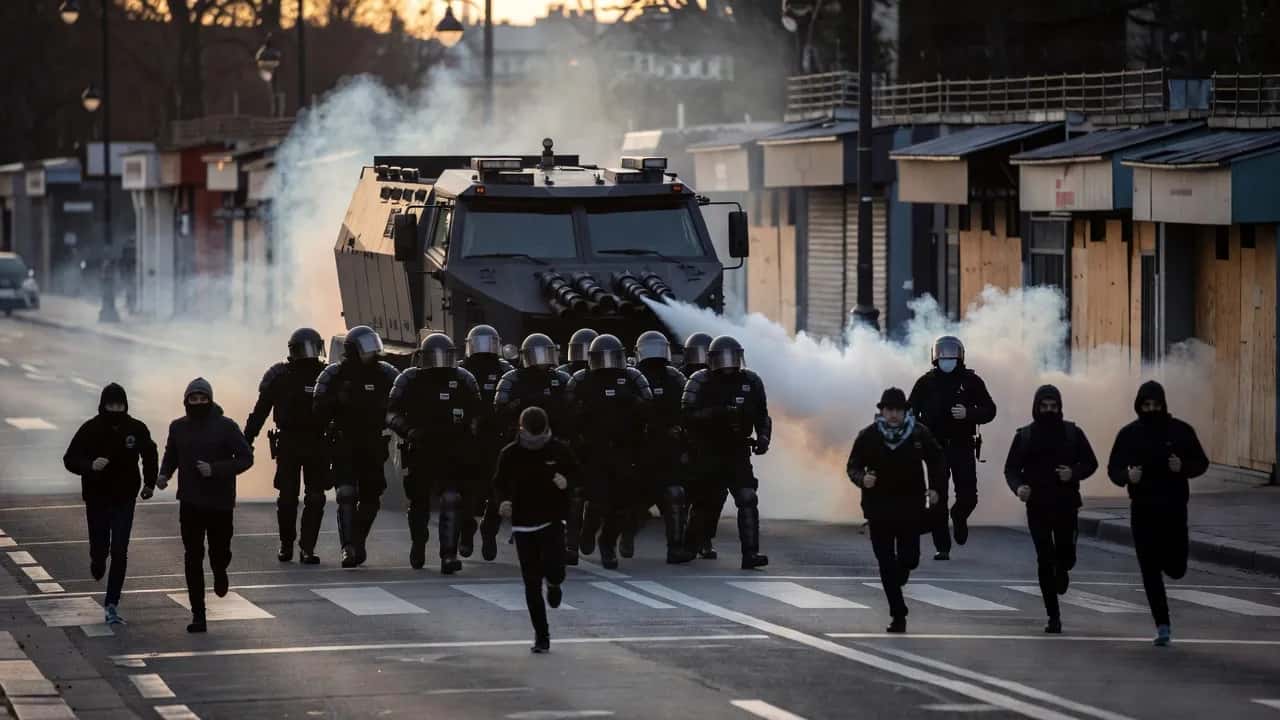
La Paz sees the French mobilization as a structural crisis born in the high schools, and rejects a reading limited to images of riots.
Dominant angle identified — does not reflect unanimity of this country’s media
KEY POINTS
- 01
La Razón (October 24) estimates that France is experiencing not a "fortuitous outbreak" but a crisis born of the exhaustion of its socioeconomic model and the deterioration of public services.
- 02
The movement began in late September 2026 in high schools in the Paris region, particularly in Seine-Saint-Denis, with blockages.
- 03
The initial demands cited include: a lack of substitute teachers, degraded school infrastructure, rejection of Parcoursup, and inflation in the cost of student living.
ANALYSIS
La Paz, October 25, 2026. The Bolivian press is treating the French mobilization as an object of analysis rather than a news item. In an analysis column published on October 24, La Razón asserts that over the past few weeks, France has been plunged into a "deep social mobilization" that has once again drawn international attention. The newspaper immediately criticizes the media coverage for focusing "almost exclusively" on the most spectacular images: tear gas smoke, fires on the avenues, intense clashes between protesters and security forces.
These episodes of urban violence are real, the text concedes, but reducing the phenomenon to a spectacle of public disorder would prevent understanding its true dimensions. The article therefore proposes to examine the structural causes, the mobilization of young people, and the state's response after the recent days of national protest. Its thesis is clear: France is not experiencing "a fortuitous outburst," but a deep crisis born of the exhaustion of its socioeconomic model, the progressive degradation of essential public services, and the growing loss of legitimacy of political institutions in the eyes of citizens.
The narrative goes back to the origin of the movement, which was not born in parties or union leadership, but in secondary education. At the end of September 2026, students from several high schools in the Paris region, especially in vulnerable areas like Seine-Saint-Denis, launched protest actions and blockades. Their initial demands were mainly material: recurrent lack of substitute teachers, deterioration of school infrastructure, rejection of the Parcoursup algorithmic platform, the centralized system for access to higher education. According to the article, this is exacerbated by the direct effect of inflation on the cost of living for students.
A second Bolivian media outlet, Brújula Digital, devoted an article to the event in its World section, with an address that mentions "disturbances in several French cities after peaceful protests," but the recovered content only includes the site's menu and provides no exploitable information on the subject. The dominant reading therefore relies on the sole text of La Razón, which does not mention in the available part either the number of arrests, the police device, or the extension of the movement to Italy. The angle retained in La Paz is that of social causes and youth, rather than that of maintaining order.
SOURCES (2)
- La Razon BOMEDIUM
- Brujula DigitalMEDIUM