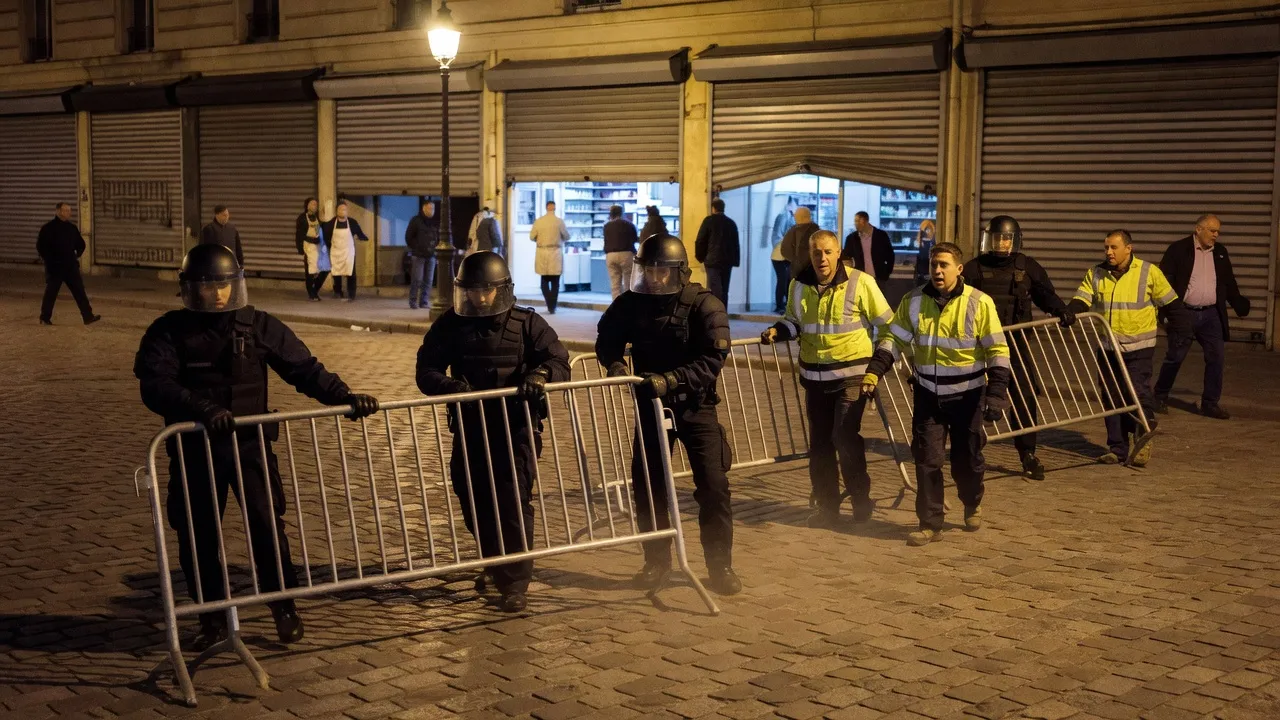
Common ground and differences in coverage across the media analysed.
What the media report in common
1
Sébastien Lecornu has asked prefects for partial and localized curfews starting Monday evening, with no curfew across all of Paris, and is keeping the state of emergency in reserve.
2
The weekend of protests against the high cost of living resulted in nearly 2,400 arrests and nearly 1,000 injured police officers, according to the Ministry of the Interior.
3
Laurent Nuñez offered his resignation, which was refused by Emmanuel Macron, who acknowledges failures in anticipation and intelligence.
Where media coverage diverges
Cause of violence
When asked who is to blame for the violence, Macron, Lecornu, and several dispatches (Mexico, Peru, Venezuela) cite the far left and delinquents. The German FAZ mentions a minority from immigration, Trump sees migrants, and the Indian press reports on an investigation into a far-left network.
On the question of what explains the crisis, the French, Finnish, Chilean, and Peruvian press puts public order first, while Australia, Sweden, Spain, and Russia attribute it to the high cost of living, the high school movement, or the opposition.
The corpora provide different estimates of the number of damaged or looted businesses: at least 3,000 for Canada, Italy, Pakistan, and Singapore, 1,500 for Colombia and Venezuela.
Buenos Aires views the French crisis as a political test for Macron and Lecornu: curfew, Nuñez's refused resignation, and an already launched presidential campaign.
Canberra sees the French riots as a social anger born among high school students and the high cost of living, then hijacked by rioters, with a polarized country in the background ahead of next year's election.
Dhaka is measuring the fragility of a French executive caught between localized curfews, the refused resignation of the Interior Minister, and a presidential election in six months, in a crisis born of the high cost of living.
Buenos Aires views the French crisis as a political test for Macron and Lecornu: curfew, Nuñez's refused resignation, and an already launched presidential campaign.
KEY POINTS
Lecornu announced on Monday, October 19, that he had asked prefects for "several partial curfews" (Perfil), with Les Halles being cited as a sensitive area.
Around 2,400 arrests and nearly 1,000 police officers injured, according to the Ministry of the Interior, with Macron having refused Nuñez's resignation (Ámbito).
The CAC 40 fell by 1.5% on Monday, and the euro was at 1.1208 dollars, according to AFP as cited by Perfil.
ANALYSIS
Buenos Aires, October 19, 2026. The Argentine press is following the French crisis as a test for the executive ahead of the presidential election. Perfil reports that Prime Minister Sébastien Lecornu announced on Monday, October 19, after a crisis meeting, that he was asking prefects to decree "several partial curfews", without specifying the cities. He cited Les Halles, a problematic point due to its symbolic value and transportation connections. In Marseille, demonstrations were banned from 12 pm to 8 pm, and Denain imposed a nighttime curfew.
Ámbito highlights that a state of emergency remains an option, with Lecornu considering curfews more suitable for the situation. The newspaper links the measure to the proposed resignation of Interior Minister Laurent Nuñez, which was rejected by Emmanuel Macron, who demands new police methods. Perfil notes that the executive had to acknowledge a failure in anticipation and maintaining order, and quotes Macron calling for "new operating methods" against barricades and looting.
The balance sheet is detailed: around 2,400 arrests, nearly 1,000 police officers injured according to the Interior Ministry, 3,000 looted businesses according to Perfil, one death from cardiac arrest in Paris, and the burning of the city hall in Limoges. La Nación describes Macron's speech on Sunday, October 18: "anger and shame", distinguishing between legitimate protesters and vandals, "Those who destroyed must pay", while the majority and opposition accuse each other. MercoPress recalls that Marine Le Pen is questioning Jean-Luc Mélenchon and that Jordan Bardella believes that "order no longer exists in this country". NGOs denounce the disproportionate use of force against minors.
The economic angle is also dominant: Perfil headlines European markets falling on Monday, with the CAC 40 losing 1.5% and the euro retreating to 1.1208 dollars, the violence reviving fears about public accounts. Clarín expands to Italy, where Milan experienced looting over the weekend. Ámbito finally reports on a new mobilization of the yellow vests on Saturday, October 24, which the authorities fear.
Australia
DOMINANT ANGLE
Canberra sees the French riots as a social anger born among high school students and the high cost of living, then hijacked by rioters, with a polarized country in the background ahead of next year's election.
KEY POINTS
On Saturday, around 2,400 people were arrested and nearly 1,000 law enforcement members injured, according to SBS News; the organizers claim 800,000 protesters.
Macron distinguished the "several hundred thousand" protesters with "legitimate claims" from those who "destroyed, vandalized, and looted", and promised swift justice.
Historian Peter McPhee (University of Melbourne) compares the movement to 1968: high school students have joined broader public concerns about the future.
ANALYSIS
En Australie, October 18. The French crisis is first and foremost a story of generation and cost of living. SBS News summarizes: weeks of student protests against their teaching conditions eventually joined worker organizations in, according to the media, 110 cities across the country, over fuel price hikes, the Palestinian cause, and climate inaction. On Saturday, October 17, some 2,400 people were arrested and nearly 1,000 law enforcement officers injured, while organizers claim 800,000 protesters. The Sydney Morning Herald and The Age estimate 550,000 people in the marches.
SBS cites historian Peter McPhee, from the University of Melbourne, who compares the episode to May 1968: high school students, he says, captured a broader concern about a difficult future. Experts quoted warn that the unrest risks rooting political polarization, ahead of next year's presidential election.
The Sydney Morning Herald and The Age's on-the-ground account, at the Place de la République the day after the worst French riots "in recent memory," describes young people in black hoods ready for tear gas, a burned-out kiosk, a ravaged florist, and an emptied wine shop. A resident, Alice Boucheron, believes many protesters had genuine reasons, such as the cost of living, but too many wanted to destroy; she cleans up the square. In Limoges, the historic city hall was largely destroyed.
Bangladesh
DOMINANT ANGLE
Dhaka is measuring the fragility of a French executive caught between localized curfews, the refused resignation of the Interior Minister, and a presidential election in six months, in a crisis born of the high cost of living.
KEY POINTS
Lecornu has called for "partial" and "localized" curfews, ruled out a general curfew in Paris, and kept the state of emergency in reserve "if needed" (The Daily Star, TBS News).
Nearly 2,400 arrests were made on Saturday and almost 1,000 police officers and gendarmes were injured, according to the Ministry of the Interior (The Daily Star).
Nuñez has offered his resignation, which was refused by Macron, who acknowledges "failures in anticipation and intelligence" (The Daily Star).
ANALYSIS
Dhaka, October 19, 2026. Bangladeshi English-language dailies are closely following the French crisis. The Daily Star reports that Prime Minister Sébastien Lecornu called on regional authorities on Monday to impose "partial" and "localized" curfews to protect businesses, after a crisis meeting with ministers. "I'm absolutely determined to restore public order," he said, adding that the government was ready to declare a state of emergency "if needed." TBS News specifies that he did not detail the cities concerned and ruled out a general curfew in Paris: "My determination to restore order is absolute."
The newspapers emphasize the extent of the violence. According to The Daily Star, around half a million people demonstrated on Saturday against the rising cost of living, after four weeks of mobilization launched by high school students demanding better conditions in their institutions. Masked groups attacked law enforcement, set fire to town halls and public buildings, looted stores, and burned vehicles. According to the Ministry of the Interior, cited by the newspaper, nearly 2,400 people were arrested on Saturday and almost 1,000 police officers and gendarmes were injured. TBS News relays the Federation of Commerce, which estimates that nearly 3,000 businesses were affected.
Belgium
DOMINANT ANGLE
Brussels sees the French riots as a link in a European anger over the high cost of living, between aid to traders and yellow vests demanding the Elysée.
KEY POINTS
The government estimates that at least 3,000 businesses have been affected by damage or looting, with 100% partial unemployment starting Tuesday and a support fund (DH).
Emmanuel Macron acknowledged "failures of anticipation and intelligence" and refused the resignation of the Interior Minister (La Libre Belgique).
Protests against the high cost of living are spreading to Italy and Portugal; in Milan, police used water cannons and tear gas (VRT NWS).
ANALYSIS
Brussels, October 19, 2026. The Belgian press, both French-speaking and Flemish, is treating the violence of Saturday, October 17, as both a French crisis and a symptom of European anger over the high cost of living.
La Dernière Heure reports that Prime Minister Sébastien Lecornu, following an interministerial crisis meeting, announced 100% partial unemployment starting Tuesday and a "specific support fund" for merchants: "There is no question of social unrest in this matter." The government estimates that "at least 3,000" businesses have been affected by damage or looting. The Minister of Trade, Serge Papin, met with merchant federations, banks, and insurers at Bercy. Lecornu speaks of "very specific general delinquency," with the resale of stolen goods.
On the political side, La Libre Belgique notes that Emmanuel Macron, "under pressure," has acknowledged "failures of anticipation and intelligence" and refused the resignation of the Minister of the Interior, who is responsible for implementing "new modes of action" against vandals.
The story also focuses on the human face of the damage: in Nice, a merchant named Pierre, who was hit in the back by a vandal while trying to prevent the looting of his store, confides: "I am unable to intellectualize what happened." La Libre notes that the demands of October 17 were "eclipsed by vandals."
Bolivia
DOMINANT ANGLE
La Paz is eyeing the French crisis as a test for the executive: a government accused of failing to anticipate the violence, six months out from the presidential election.
KEY POINTS
Macron assures that "nothing justifies" the unrest and promises that those responsible "will pay"; authorities report nearly 2,400 detainees and around 1,000 injured police officers (La Razón).
According to the Élysée, as reported by El Deber, Interior Minister Laurent Nuñez attempted to resign; Macron asked him to improve security and pursue those responsible for the violence.
Six months ahead of the presidential election, Marine Le Pen is the favorite in the polls and Jean-Luc Mélenchon is among the top contenders (El Deber).
ANALYSIS
La Paz, October 19, 2026. The Bolivian press, through La Razón and El Deber, tells the story of the French crisis through the prism of the pressure on the executive. On Sunday, Emmanuel Macron stated that "nothing justifies" or "excuses" the unrest and looting of the previous day, which occurred during a protest against the high cost of living, and promised that those responsible "will pay". According to La Razón, the authorities described a chaos "without precedent", with nearly 2,400 arrests and around 1,000 police officers injured. Hundreds of businesses were looted, the city hall of Limoges was set on fire, and that of Marseille was damaged.
The head of state said he was seized with "rage and shame" in the face of "devastated" streets, promised "rapid aid" to merchants, and accused "far-left groups" and delinquents. However, he asked not to "confuse" the vandals with those who made "legitimate" demands in massive demonstrations, and mentioned the possibility of banning certain gatherings "if necessary".
La Razón emphasizes that six months before the presidential election, in which he can no longer run, the government is accused of not having anticipated the risk of overflow, and the opposition has demanded explanations throughout the day. El Deber, which reprints an article from the BBC, reported on Monday that Interior Minister Laurent Nuñez tried to submit his resignation, according to the Élysée, but Macron asked him to study how to improve security in the streets and bring the perpetrators of the weekend's violence to justice.
Brazil
DOMINANT ANGLE
Brasília takes a stance in favor of a public order narrative: the Brazilian press prioritizes curfews, looting, and the arrest tally, treating social unrest as a backdrop.
KEY POINTS
Lecornu has requested "partial" curfews starting Monday evening and ruled out, for now, the state of emergency called for by Bruno Retailleau (Folha).
The tally for Saturday, October 17: one protester dead, nearly 1,000 police officers injured, and around 2,400 arrests (Folha, Estadão).
Macron stated Sunday that "nothing justifies" the violence, and Nuñez attempted to resign, according to the G1.
ANALYSIS
Au Brésil, October 19. The press describes a France emerging from a weekend of unrest that Folha describes as "one of the most violent days in years." On October 17, more than 500,000 people marched against the rising cost of living and the deterioration of public services; Folha and Jornal de Brasília report a protester killed, nearly 1,000 police officers injured, and around 2,400 arrests. The city hall of Limoges was set on fire.
On Monday, October 19, Prime Minister Sébastien Lecornu asked mayors, then prefects according to reports, to decree curfews. G1 and Estadão quote his phrase: "partial curfews." Estadão estimates that at least 3,000 businesses were damaged or looted. Marseille banned gatherings from 12 pm to 8 pm and Denain instituted a nighttime curfew. Folha notes that Lecornu is ruling out a state of emergency for now, which was requested by Bruno Retailleau, but does not exclude it: "if necessary, we can adopt it."
G1 dedicates an article to videos of desperate merchants in Nice and Paris, and Estadão reports on the looting of the headquarters of the esports team Team Vitality. Brazilian headlines also follow the political dimension: Emmanuel Macron stated on Sunday, October 18, that "nothing justifies" the violence, while addressing the youth at the origin of the protests, and, according to Jornal de Brasília, acknowledged on Monday "flaws" in police management. Interior Minister Laurent Nuñez attempted to resign, according to G1, and his actions are being criticized for an insufficient response.
Canada
DOMINANT ANGLE
Ottawa focuses on the angle of a weakened French executive: the Canadian press highlights the security failures, Nuñez's refused resignation, and the shadow of the presidential election, more than the social crisis itself.
KEY POINTS
Lecornu has requested "partial" and "localized" curfews from prefects, rules out a curfew for all of Paris, and does not exclude a state of emergency (Globe and Mail, Global News).
Nuñez offered his resignation on Sunday; Macron refused it and asked him for transparency regarding planning and intelligence failures (Global News).
At least 2,400 arrests and at least 3,000 businesses damaged or looted, according to Global News; nearly 3,000 according to the Retail Federation cited by the Globe.
ANALYSIS
Ottawa, October 19, 2026. Canadian media, which largely relay agency dispatches, are covering Sébastien Lecornu's announcement from the angle of a government on the back foot. The Globe and Mail writes that the central power "has asked certain local authorities to impose curfews" and "is facing pressure" on its security flaws, following a weekend of riots and looting born out of national protests against the government.
The Prime Minister has not ruled out a state of emergency, but considers it "more appropriate for now" to apply partial and localized curfews, without specifying the cities targeted. He excludes a general curfew in Paris and asserts: "My determination to restore order is absolute." Global News specifies that he gave instructions to the prefects, after an emergency meeting, for "very limited" measures, and that the details of the areas would be communicated later on Monday. He also praised the work of the police: on Saturday, despite severe violence, "no one was killed, and that's a miracle."
The political aspect takes center stage. Interior Minister Laurent Nuñez offered his resignation on Sunday; Emmanuel Macron refused it "given the need for continuity of command of the security forces," according to the Élysée, and tasked him with ensuring "total transparency" on planning and intelligence failures. The President is also calling for "new police tactics" as soon as possible.
Chile
DOMINANT ANGLE
Santiago is primarily focused on regaining control of security: partial and localized curfews, a state of emergency held in reserve, and businesses to protect.
KEY POINTS
Lecornu has requested "partial" and "localized" curfews from prefects after an interministerial crisis cell, with the expected map on Monday afternoon (La Tercera).
The weekend saw nearly 2,400 arrests, around 1,000 injured agents, and some 3,000 looted businesses (El Ciudadano).
Macron acknowledges "shortcomings" in police anticipation, refuses the resignation of the Interior Minister, and rules out a state of emergency for now (El Ciudadano).
ANALYSIS
Santiago, October 19, 2026. The Chilean press is following the announcement by Sébastien Lecornu as a public order response to a night of violence. La Tercera headlines a quote from the Prime Minister: "The law enforcement agencies have done a good job," and presents the "partial" and "localized" curfews as the adapted measure, with the state of emergency remaining on reserve.
According to La Tercera, which cites EFE and French media, Lecornu spoke at a press conference after an interministerial crisis cell, alongside the Minister of the Interior, Laurent Nuñez, and the Minister of Trade and SMEs, Serge Papin. He asked the prefects to establish nighttime restrictions in the most affected areas, mainly to protect businesses. The details of the sectors were to be known in the afternoon, after exchanges with the concerned mayors. The government also plans economic aid for affected traders.
The daily newspaper picks up on the nuance of the head of government on the image of the country: "The French, when they watch television, think there is widespread chaos. Fortunately, that's not the case." For him, the disorder remains very concentrated in certain urban centers. La Tercera reports that the Prime Minister does not exclude declaring a state of emergency if the situation requires it, but for now judges the localized measures more appropriate.
Colombia
DOMINANT ANGLE
Bogotá is analyzing the French crisis from the angle of a weakened power: a refused resignation, an overwhelmed police force, nervous markets, six months away from the presidential election.
KEY POINTS
Lecornu announced partial curfews on Monday without a state of emergency, according to Portafolio.
1,800 people were arrested, including 855 in Paris, and 1,500 businesses were damaged, according to the Federation of Commerce, as reported by El Colombiano.
The spread of French 10-year bonds with Germany reached 146 basis points and the CAC 40 lost 1.5%, according to La República.
ANALYSIS
Bogotá, October 19, 2026. The Colombian press is treating the French unrest as a crisis of government and finances as much as public order. Portafolio reports that Prime Minister Sébastien Lecornu announced "curfews" in several parts of the country on Monday after a crisis meeting, ruling out a state of emergency in favor of "partial curfews". Marseille has banned demonstrations from 12 pm to 8 pm and Denain, near the Belgian border, has decreed a nighttime curfew.
El Colombiano describes a day of protest against the high cost of living that brought together between 550,000 and 800,000 people, according to the authorities and the CGT, before degenerating into looting. The newspaper reports 1,800 arrests, including a "record" 855 in Paris, and 1,500 damaged businesses according to the Federation of Commerce and Distribution. The 19th-century city hall of Limoges burned down in a fire that the prefect attributes to "a savage horde". Paris Deputy Mayor Lamia El Aaraje mentions a level of violence never seen in the city.
La República CO emphasizes the resignation of Interior Minister Laurent Nuñez, which was refused by Emmanuel Macron, who asked him to put an end to the barricades and looting and be transparent about the intelligence failures. The daily notes that 60,000 police officers were deployed on Saturday, a force that Nuñez acknowledges is insufficient, at a time when the government must pass a budget, six months before the presidential election. According to Portafolio, Macron admitted "failures" in police management and called for "new operating methods".
Germany
DOMINANT ANGLE
Berlin is weighing the fragility of the French executive: resignation refused, "loss of control" acknowledged, and limited curfews, with the failure of integration denounced by the FAZ in the background.
KEY POINTS
According to the Justice Ministry, 2,331 people were taken into custody this weekend, and 997 police officers were injured, according to the Interior Ministry (Tagesschau).
Lecornu wants "local and limited" curfews starting Monday evening, rules out all of Paris, and does not exclude a state of emergency (DW).
The yield on French 10-year bonds reaches 4.9%, the highest since 2002, and the euro falls below 1.12 dollars (Tagesschau).
ANALYSIS
Berlin, October 19, 2026. The German press is addressing the French crisis from the angle of a weakened executive. DW reports that Emmanuel Macron has refused the resignation of Interior Minister Laurent Nuñez, citing the "need for continuous leadership of the police forces in the current circumstances". Nuñez had stated on France Inter: "I submitted my resignation because I am responsible for everything that happens". Macron has tasked him with clarifying the errors in preparing police interventions and gathering intelligence.
Prime Minister Sébastien Lecornu has asked the authorities to prepare curfews for Monday evening, which should be "local and limited". A curfew for all of Paris is ruled out, a state of emergency remains possible if the situation worsens, and the affected cities were not specified. In Marseille, gatherings were already banned on Monday from 12 pm to 8 pm.
The Tagesschau headlines the "Kontrollverlust" recognized by the government. According to the Ministry of Justice, 2,331 people were taken into custody over the weekend; 350 others were arrested in Paris on Sunday and at night. The Ministry of the Interior reports 997 police officers and security forces injured, seven seriously. The Keeper of the Seals Gérald Darmanin estimates that the security apparatus is "manifestly not acting effectively against the far left", which the Ministry of the Interior designates as the main culprit.
Spain
DOMINANT ANGLE
Madrid is gauging the French crisis in light of Macron's political and budgetary fragility: riots, refused resignation, and rising risk premium, six months ahead of the presidential election.
KEY POINTS
Lecornu asks prefectures for partial curfews, deemed more suitable than a state of emergency, which he does not rule out (ElDiario.es).
More than 2,400 arrested and over 500 police officers injured according to HuffPost España; 2,331 people in custody as of Monday at 8 am according to the Ministry of Justice.
The French 10-year yield approaches 4.90% and the risk premium reaches 146 basis points against Germany (Expansión).
ANALYSIS
Madrid, October 19, 2026. The Spanish press is treating the French crisis as a political storm coupled with a financial alert. Expansión, quoting the Financial Times, speaks of "the worst wave of street violence in years", which occurred six months before a presidential election that "Europe will follow more closely". The newspaper recalls that Emmanuel Macron and his minority government, led by Sébastien Lecornu, were already facing a budget battle and weeks of high school protests, that Marine Le Pen is leading the polls, and that the president's popularity has fallen to 15%.
The demonstrations on Saturday, October 17, which brought together students and citizens outraged by the cost of living, degenerated into fires and looting. The Minister of the Interior acknowledged a loss of control in several cities and presented his resignation, which Macron refused. HuffPost España puts the toll at over 2,400 arrested and more than 500 police officers injured, mentions the city hall of Limoges whose roof burned, and notes that Macron is calling for "new modalities of action" while receiving the organizations behind the mobilizations.
ElDiario.es details the response announced on Monday, October 19, after an interministerial meeting. Lecornu is asking the prefectures for partial curfews, "by territory", which he considers "more adapted" than a state of emergency, which he does not exclude. He considers it "a miracle" that there were no deaths, attributes the daytime disorders to "the extreme left" and those at night to "general delinquency", announces a "massive penal response" and 200 investigators in Paris. According to the Ministry of Justice, 2,331 people were in custody at 8 am.
Finland
DOMINANT ANGLE
Helsinki is mindful of the security escalation: from Saturday's violence to Lecornu's partial curfews, with a state of emergency in reserve.
KEY POINTS
According to the French Ministry of the Interior, nearly 2,400 protesters were arrested on Saturday, October 17, and almost a thousand police officers were injured (YLE).
Macron stated on Sunday that nothing justifies "unrestrained" violence and promised a transparent review of police action (YLE).
Lecornu called for partial curfews and said he is ready to declare a state of emergency if necessary; students blocked the Louvre on Monday (MTV).
ANALYSIS
Helsinki, October 19, 2026. The Finnish press, through YLE and MTV Uutiset, is covering the French events as a public order crisis relayed by the agencies. YLE, which relies on AFP and AP, looks back on Saturday, October 17: hundreds of thousands of people took to the streets, then the demonstrations degenerated. Businesses were looted, cars and buildings were set on fire, and some protesters threw stones at the police. According to the French Ministry of the Interior, nearly 2,400 protesters were arrested on Saturday and nearly a thousand police officers were injured. According to the media, one protester lost a hand.
On Sunday, October 18, Emmanuel Macron addressed the French people. YLE reports that he judged that nothing justifies unbridled violence, which he described as unprecedented: "Tonight, we all feel anger and shame." The President asked to distinguish between protesters with legitimate claims and those who destroyed and looted, demanded that the looters repair the damage, and warned that those who "seek to overthrow" the Republic will have to answer for their actions. YLE notes that the police preparation was deemed insufficient, but also that their use of force was criticized; Macron promised a transparent review of police action.
MTV Uutiset, under a title evoking cities in flames and a resort to radical means, focuses on Monday, October 19. Citing Reuters, the channel writes that Prime Minister Sébastien Lecornu has asked certain local authorities to introduce partial curfews and that he has decided to restore public order. "If the declaration of a state of emergency is deemed necessary, we will do it," he says. Affected businesses will be able to use partial unemployment from Tuesday. The Paris Saint-Germain - Barcelona football match, scheduled for Tuesday, will not be cancelled.
France
DOMINANT ANGLE
Paris takes a firm stance on law and order: in the face of looting, the government is responding with localized curfews, is keeping the state of emergency in reserve, and is refusing the resignation of Laurent Nuñez.
KEY POINTS
Sébastien Lecornu has requested "partial" and "localized" curfews from prefects starting Monday evening, without ruling out a state of emergency "if it's useful" (Sud Ouest, RFI).
Nearly 2,400 people were arrested on Saturday, October 17, and almost 1,000 police officers and gendarmes were injured, according to the Ministry of the Interior cited by France 24.
Laurent Nuñez acknowledged "a loss of control" by the police in certain cities; his resignation was rejected by Emmanuel Macron (L'Express, RFI).
ANALYSIS
Paris, October 19, 2026. After an interministerial crisis cell, Prime Minister Sébastien Lecornu announced on Monday that he had asked prefects to "trigger a number of curfews" that same evening, "partial" and "very localized", in order to protect people and especially businesses. Sud Ouest specifies that he did not rule out a state of emergency "if it's useful", but considers curfews "more suitable". A map was to be communicated after discussion with mayors and chambers of commerce.
The weekend's toll shapes the accounts. France 24 mentions nearly 2,400 people arrested on Saturday, October 17, almost 1,000 police officers and gendarmes injured according to the Ministry of the Interior, town halls set on fire and hundreds of businesses looted or damaged. Commerce Minister Serge Papin estimates the number of affected stores at "probably at least 3,000". On Sunday, October 18, at the Place de la République in Paris, then around the Halles and the BHV, new looting took place; Lyon and Marseille experienced attempted break-ins, according to 20 Minutes and France 24.
The executive has responded on two fronts. Lecornu announces a "specific support fund" and partial unemployment for merchants. In his Sunday address, Emmanuel Macron denounced "troublemakers" from the far left and delinquents, said he felt "anger, shame", and promised to respond to the "legitimate demands" of high school students and university students. Laurent Nuñez acknowledged "a loss of control" by the police in certain cities; his resignation was refused by the Élysée "given the need for continuous command of the security forces", and he must be transparent about the shortcomings in anticipation and intelligence.
Israel
DOMINANT ANGLE
Israel is watching the French riots from the angle of the security of the Jews of France and the conspiracy theories targeting Israel and the Mossad on social networks.
KEY POINTS
A synagogue in Paris's 19th arrondissement was vandalized overnight; the congregation believes it was an attempted theft, with no anti-Semitic graffiti or Torahs touched (Jerusalem Post).
The CAM recorded 1,384 messages on X between October 16 and 18 linking the riots to Jews or to Israel, including "Mossad is burning France right now".
The CAM considers this to be the fourth wave of this type in less than three months and calls on French authorities and platforms to take action.
ANALYSIS
Jérusalem, October 19, 2026. In the Israeli press, the riots that shook France over the weekend are first seen through their effect on the Jews of France and on the image of Israel. The Jerusalem Post reports that a synagogue in the 19th arrondissement of Paris is among several sites linked to the Jewish community that were burglarized or damaged, according to a statement released Sunday by the Service de Protection de la Communauté Juive (SPCJ).
The congregation of Ohalei Yaakov discovered Sunday morning that their temporary place of prayer on rue Burnouf had been vandalized: prayer books, tefillin, and the contents of lockers thrown to the ground, the rabbi's office ransacked. However, the newspaper notes that the circumstances and motive remain unclear. A member of the committee, Raphaël, estimates: "It really looks like an attempted robbery." No anti-Semitic inscriptions were reported and the Torah scrolls were not touched.
The SPCJ calls for "caution and responsibility," asking not to relay unverified information and to rely on the official communications of the organization and the authorities, due to the disinformation surrounding these incidents.
The second part, reported by the Jerusalem Post and World Israel News (Win), concerns social media. According to a report by the Combat Antisemitism Movement (CAM), 1,384 messages posted on X between October 16 and 18 linked the riots to Jews or Israel. Some claim that "Mossad is burning France right now" or evoke a "civil war orchestrated by Jewish elites." Others link Emmanuel Macron to the Rothschild family, and far-right militants with large followings write: "The Jews did this to France. Don't let them do it to America."
India
DOMINANT ANGLE
New Delhi is first focusing on restoring order: localized curfews, a state of emergency on standby, arrest tallies, with an ideological detour through the global far left.
KEY POINTS
Lecornu has requested "very limited" and "localized" curfews from prefects and does not rule out a state of emergency (Times of India)
More than 2,400 people arrested in France over the weekend, according to authorities (Times of India, Free Press Journal)
Macron has refused Laurent Nuñez's resignation and asked him for transparency on planning and intelligence failures (Deccan Chronicle)
ANALYSIS
New Delhi, October 19, 2026. The Indian English-language press is covering the French crisis from the angle of public order. The Times of India is reporting on Prime Minister Sébastien Lecornu, who on Monday asked prefects to impose "very limited" and "localized" curfews to prevent new violence, after a crisis meeting with government officials. Despite scenes of violence, no one was killed on Saturday, he said: "it's a miracle." The newspaper notes that the head of government is hinting at a state of emergency and announcing partial unemployment for affected businesses starting Tuesday.
The tolls are taking up a lot of space: over 2,400 arrests according to the authorities, nearly 1,000 police officers injured according to the Interior Minister, one protester dead from a cardiac arrest in Paris, the city hall of Limoges ravaged by flames. The Hindu BusinessLine is quoting Emmanuel Macron's televised address on Sunday: "anger" and "shame", with the implication of "insurrectional elements" from radical far-left groups. The newspaper is reporting 550,000 protesters according to the authorities, 800,000 according to the organizers.
The resignation of Laurent Nuñez, refused by the Élysée "given the need for continuous command of the police forces", is being reported by the Free Press Journal and the Deccan Chronicle. They are repeating the demand for transparency on planning and intelligence failures, as well as "new operational methods". Nuñez told France Inter: "I am responsible for everything that happens."
Italy
DOMINANT ANGLE
Rome is gauging the international shockwave of the French riots: curfews announced by Lecornu, but above all the image of a weakened France, which Moscow, Washington, and Bukele are each exploiting in their own way.
KEY POINTS
Lecornu has requested "partial" and "localized" curfews from prefects starting in the evening, with a state of emergency to be declared only "if useful" (ANSA).
At least 3,000 commercial activities have been affected or looted; 100% partial unemployment and a specific support fund announced from the next day (ANSA).
Trump, Vance, Bukele, Moscow, and Tehran have reacted to the riots; Pierre Haski speaks of a weakened France on the global stage (Internazionale, La Repubblica).
ANALYSIS
En Italie, November 14. The ANSA reports on the announcement by Sébastien Lecornu: following an interministerial crisis meeting in Paris, the Prime Minister has asked prefects to "declare some curfews" starting in the evening. These are "partial" and "localized" measures aimed at protecting businesses after Saturday's protests against the high cost of living, which degenerated into devastation and looting in Paris, Marseille, Lyon, and Bordeaux. The map of curfews is to be published in the afternoon, after consultation with mayors. A state of emergency will only be declared "if necessary"; for now, curfews "seem more suitable".
The agency quantifies the damage: "at least 3,000 commercial activities" affected or looted. Lecornu promises partial unemployment (the "cassa integrazione") starting the next day, covered at 100%, and a "specific support fund" for merchants.
La Repubblica broadens the scope. It shows high school students blocking the entrance to the Louvre, with signs explaining to tourists: "We are fighting against their government and its policies hostile to public services". In Marseille, demonstrations are banned from 12 pm to 8 pm, and the "yellow vests" announce a "second act" for next Saturday. The newspaper also notes Moscow's reaction, which speaks of a "crisis on the brink of chaos". In an interview, expert Leonardo Bianchi describes young people who self-organize on TikTok, outside traditional organizations, and draw inspiration from foreign mobilizations, thinking of them "as viral trends". The title evokes a challenge to France, with a glance towards Italy.
Mexico
DOMINANT ANGLE
Mexico City details the response of the French executive to the riots: partial curfews, a state of emergency in reserve, and a Macron absent from the country then forced to speak out after nearly a decade of power.
KEY POINTS
Lecornu announces partial curfews by territory, without a state of emergency for now, and partial unemployment for around 3,000 affected businesses.
Macron, in a ten-minute televised address, says he feels "anger and shame" and attributes the violence to the far left and delinquents.
Prefects will be able to ban certain gatherings; the damage is estimated to be in the hundreds of millions of euros, with no precise amount.
ANALYSIS
Mexico, October 19, 2026. The Mexican press reports that the French government announced curfews on Monday in certain areas of the country, without specifying which ones, after a weekend of looting and vandalism that occurred on the sidelines of the massive demonstrations on October 17. Prime Minister Sébastien Lecornu presented these measures to the press after an emergency meeting, while Emmanuel Macron was on an official trip to the Gulf, according to El Informador.
Lecornu defended a gradual approach: "A curfew by territory, partial, seems to me at this moment a more suitable instrument than declaring a state of emergency," he said, without ruling out the latter later. The Ministry of the Interior must communicate a map of the affected areas. The government also announced a partial unemployment program for the approximately 3,000 businesses affected.
El Informador puts the surge into perspective over time: the protests target the rising cost of living and the deterioration of education and health services, "in a context marked by nearly a decade of Macron's government." The newspaper recalls recent precedents: the death of young Nahel in June 2023, the pension reform of winter 2023, and the "yellow vests" of 2018.
El Siglo de Torreón relayed Macron's ten-minute televised address on Sunday, October 18. The president said he felt "anger and shame," condemned the riots, attacks on public buildings, and looting, and attributed them to far-left groups and delinquents, while asking to distinguish the perpetrators of violence from protesters with legitimate demands. He announced that prefects will be able to ban certain gatherings to protect cities, public buildings, and businesses, whose damage is estimated in hundreds of millions of euros, without a precise amount.
Peru
DOMINANT ANGLE
Lima is first focusing on the security aspect of the French crisis: partial curfews, thousands of arrests and looting, as reported by news agencies.
KEY POINTS
Darmanin reported "2,331 people detained" over the weekend, including around 350 in Paris between Sunday and Monday.
The Prime Minister asked prefects to decree partial curfews; Marseille banned demonstrations from 12 pm to 8 pm Monday.
Students blocked access to the Louvre Monday, preventing it from opening at 9 am.
ANALYSIS
Lima, October 19, 2026. The Peruvian press is addressing the French crisis from the perspective of public order. Andina reports that around 350 people were arrested between Sunday and Monday night in Paris, where about thirty businesses were looted, according to Interior Minister Laurent Nuñez and Mayor Emmanuel Grégoire. At the national level, Justice Minister Gérald Darmanin reported "2,331 people detained" over the weekend, with dozens of provisional detention orders.
The head of the government, described as center-right, stated: "I have asked the prefects to decree several curfews this evening, partial curfews," without specifying the locations; the list was to be known in the afternoon, after discussion with the mayors. In Marseille, demonstrations were banned on Monday between 12 pm and 8 pm, and Denain, near the Belgian border, decreed a nighttime curfew until Sunday. Andina notes that the government is under pressure, as the violence eclipsed the massive protests against the rising cost of living on Saturday.
Gestión highlights the televised speech of Emmanuel Macron: "nothing" justifies or "excuses" the violence, and one must not "confuse" the rioters with the hundreds of thousands of peaceful protesters. The president promised "rapid aid" to business owners, blamed "militants from far-left groups" joined by many delinquents, and asked that the high school students who have been mobilized since late September be heard. The newspaper reports the deployment of the CRS unit 8 on the Place de la République, where hundreds of people clashed with the police, and refers to a dispatch on the comments of Donald Trump.
Philippines
DOMINANT ANGLE
Manila is particularly mindful of Emmanuel Macron's vulnerability as his term nears its end, cornered by admissions of police failures, while the DFA merely reassures about the fate of Filipinos in France.
KEY POINTS
Nearly 2,400 people were arrested on Saturday and nearly 1,000 police officers and gendarmes were injured, according to the Interior Ministry cited by Inquirer.
Macron acknowledged "failures of anticipation and intelligence" but refused the resignation of Laurent Nuñez, according to the Élysée.
The DFA indicated on Monday that no Filipino was injured in France or in Italy, according to the embassy in Paris and the consulate in Milan.
ANALYSIS
Manille, October 19, 2026. The Philippine press is treating the French riots as a power crisis surrounding Emmanuel Macron, rather than as a law and order issue. Rappler leads with the call for calm made by the president on Sunday, October 18, following "one of the worst days of unrest in years," with thousands of arrests and looted or damaged businesses after protests against the high cost of living and the decline of public services.
The site reports new clashes in Paris and Marseille, where anti-riot forces intervened to prevent attempts to sack stores. On Saturday, according to the site, a town hall was set on fire, shops were looted, and buildings were covered with tags in cities across the country. Rappler quotes Macron's televised address: "Nothing justifies it, nothing explains it, nothing excuses it. Tonight, we all feel anger and shame." The president distinguished between peaceful protesters, whose grievances he deemed legitimate, and violent groups, but, the site notes, he stopped short of declaring emergency measures.
The media outlet places these events in the context of a leader who will be leaving power in 2027 after ten years, a term increasingly marked by social discontent, a weak economy, and ballooning debt.
Inquirer Global Nation, in a dispatch, focuses on Monday on the political responsibility. Macron acknowledged "failures of anticipation and intelligence" but refused to accept the resignation of his Interior Minister, Laurent Nuñez, according to the Élysée. Opposition lawmakers had called for his departure. The newspaper reports the Interior Ministry's tally: nearly 2,400 people arrested on Saturday and nearly 1,000 police and gendarmes injured, amid nationwide clashes, massive looting, and fires.
Pakistan
DOMINANT ANGLE
Islamabad is gauging the French crisis through the weakened power of Macron and Lecornu, who are under pressure to restore order six months ahead of the presidential election, at a quantifiable economic cost.
KEY POINTS
Lecornu deems partial and localized curfews more suitable for now, with no general curfew in Paris, and does not rule out a state of emergency (Business Recorder).
On Saturday, over 2,000 arrests and more than 600 police officers injured, according to the Interior Minister; over half a million protesters (Geo News).
Nearly 3,000 businesses affected, according to the commerce federation, while the euro falls to 1.1225 dollars in Asia (Business Recorder).
ANALYSIS
Islamabad, October 19, 2026. The Pakistani press, which largely relays AFP and Reuters dispatches, portrays France as a country where the government must restore order just a few months before the presidential election. Business Recorder reports that the central government has asked certain local authorities to impose curfews after a weekend of riots and looting born out of national protests against the government. Prime Minister Sébastien Lecornu has not ruled out a state of emergency but considers partial and localized curfews to be more appropriate for now, without a general curfew in Paris. "My determination to restore order is absolute," he stated in a press conference. He accuses far-left groups of wanting to provoke serious trouble before the presidential election. Jean-Luc Mélenchon is asking him for proof and inviting him to apologize if he cannot provide it.
Geo News describes renewed clashes on Sunday at the Place de la République, after a Saturday that saw over 2,000 arrests, more than 600 police officers injured, and a town hall set on fire. More than half a million people marched, in a convergence of a month-long student movement and broader social discontent over the rising cost of living. The media outlet mentions a anger targeting Emmanuel Macron, whose decade in power is ending in 2027 amidst a weak economy and ballooning debt. Daily Times quotes a 78-year-old resident: "It's as if we had been at war," and reports around 1,500 damaged businesses, with losses of several hundred million euros according to the commerce federation. ARY News reports on the tear gas and stun grenades used on Sunday to disperse an unauthorized gathering.
Romania
DOMINANT ANGLE
Bucharest is deciphering the French crisis from its political aspect: a Prime Minister who denounces the far left as the presidential election approaches, and European echoes surrounding migration.
KEY POINTS
Lecornu requested "partial" and "localized" traffic restrictions from prefects Monday evening, mainly to protect stores (Digi24/AFP).
A state of emergency will be declared "if necessary", but restrictions "seem more suitable" according to the Prime Minister.
Péter Magyar cites the violence in France to justify Hungary's strict migration policy (G4Media/Mediafax/Telex).
ANALYSIS
Bucharest, October 19, 2026. The Romanian press first notes the response of the French executive and its electoral dimension. Digi24, citing AFP, reports that Prime Minister Sébastien Lecornu asked the prefects to trigger a series of partial and localized traffic restrictions on Monday evening, mainly to protect stores after a weekend of chaos scenes in several cities. The map of these measures was to be made public in the afternoon, after exchanges with the concerned mayors, following an interministerial crisis meeting.
The Romanian text emphasizes the gradation: the state of emergency will be declared if necessary, but traffic restrictions appear more suitable, says the head of government. Digi24 also relays, via Agerpres, the accusation made by Lecornu against the far-left movement, which he suspects of wanting to produce profound disorder in the country before the presidential election. He mentioned a whole network that could be mobilized, including to contest the election schedule, and announced a specific meeting with the Minister of the Interior and the intelligence services.
A second entry into the Romanian debate: the regional use of these images. G4Media, taking up Mediafax and the Hungarian media Telex, reports that Péter Magyar invoked the violence in France to defend Hungary's strict line on migration and the protection of external borders. He describes destroyed historic buildings and hundreds of injured police officers, and claims that the Europe we all love is today in great danger.
Russia
DOMINANT ANGLE
Moscow takes away from these riots a crisis of authority of the Macronist power, which Russian agencies illustrate mainly through the attacks by Le Pen, Bardella and Mélenchon against the president and his Interior Minister.
KEY POINTS
According to TASS, citing AFP and the Interior Ministry, 2,397 people were arrested and 997 law enforcement officers injured during the October 17 riots.
In his October 18 address, Macron said: "This has no excuse, no explanation, no pardon" and attributed the unrest to a small far-left group joined by delinquents (Interfax).
Marine Le Pen deemed the government "out of breath" (RT) and Mélenchon criticized Nuñez for failing to anticipate the unrest (Interfax).
ANALYSIS
Moscow, October 19, 2026. Russian agencies are focusing their coverage on the political fallout from the riots that took place in France on Saturday, October 17. TASS reports, citing AFP and the Ministry of the Interior, that 2,397 people were arrested and 997 law enforcement officers were injured, including seven seriously. The protests against rising prices and declining purchasing power reportedly drew 800,000 people, according to the organizers, and 550,000 according to the Ministry. Interfax cites looted businesses, burned vehicles, and the city hall of Limoges, which was severely damaged by a fire that lasted all night.
On Sunday, October 18, Emmanuel Macron addressed the nation. Interfax quotes his words: "This has no excuse, no explanation, no pardon," and his promise that "those who have destroyed must pay." He attributes the unrest to "a small group of far-left extremists" joined by many delinquents. Sputnik notes that he asked the government to "draw all necessary lessons" in terms of intelligence and anticipation, and that he expects clear answers.
However, the bulk of the Russian coverage focuses on the opposition. According to RT, Marine Le Pen, who is leading in the polls for the first round of the 2027 presidential election, judges the president to be "without credibility or authority" and his government "exhausted." TASS cites her message on X: "We are going through a deep crisis of confidence and authority." Jordan Bardella expects Macron to apologize and "step down," according to RT. Interfax details the analysis of Jean-Luc Mélenchon, who accuses the authorities of failing to anticipate the unrest and criticizes Interior Minister Laurent Nuñez, "who noticed nothing," recalling that 14,000 police officers were mobilized for the pope, compared to 10,000 for the entire country.
Sweden
DOMINANT ANGLE
Stockholm is questioning the French executive's control: Svenska Dagbladet headlines a Macron who is "maktlös" (powerless), with the police having lost control and his minister having offered to step down.
KEY POINTS
Police expected around 200,000 protesters on Saturday, but between 500,000 and 800,000 showed up (Svenska Dagbladet).
Laurent Nuñez offered to resign on Sunday; Emmanuel Macron refused, citing the need for stable police leadership (Svenska Dagbladet).
Nearly 2,400 people were arrested and about 1,000 police officers were injured, according to AFP as cited by Aftonbladet.
ANALYSIS
Stockholm, October 19, 2026. For the Swedish press, the episode is first and foremost one of a power caught off guard. Svenska Dagbladet titles its article "Maktlös Macron" and recalls the words of the president on Sunday evening on television: "Tonight, we all feel anger and shame." Emmanuel Macron promised that those responsible would be held accountable and designated extreme left-wing groups, joined, according to him, by criminals who took advantage of the demonstrations to break and loot.
The daily newspaper emphasizes the anticipation gap: the police expected around 200,000 demonstrators, between 500,000 and 800,000 took to the streets on Saturday, and public order lost control in some areas. On Monday, Interior Minister Laurent Nuñez admitted that the authorities had underestimated the scope of the movement. He had offered to resign as early as Sunday, but Macron refused, citing the need for stable police leadership. Svenska Dagbladet also relays doubts about the methods: according to Libération, tear gas was used nearly two hours before the official start of the demonstration in Paris, and researcher Sébastian Roché estimates that police action contributed to dispersing the processions and facilitating the damage. The police union defends the intervention, and Justice Minister Gérald Darmanin targets the intelligence services. The title mentions curfews and the government's crisis meetings on Monday.
Singapore
DOMINANT ANGLE
Singapore is eyeing a France where Prime Minister Lecornu is calling for localized curfews, while the press is emphasizing the powerlessness of a Macron at the end of his term, six months away from the presidential election.
KEY POINTS
Lecornu has requested "partial" and "localized" curfews from regional authorities and says he is ready to declare a state of emergency "if necessary" (CNA, Straits Times).
Nearly 2,400 arrests were made on Saturday and 997 police officers, gendarmes, and firefighters were injured; at least 3,000 businesses were affected, according to Serge Papin (CNA, Straits Times).
Macron has refused Nuñez's resignation, submitted on Sunday, and acknowledged "failures of anticipation and intelligence" (CNA).
ANALYSIS
Singapour, 19 October 2026. The Straits Times and Channel News Asia, which largely reproduce agency dispatches, are following Monday, 19 October, in France from the angle of a power being put to the test. Prime Minister Sébastien Lecornu, after a crisis meeting with ministers, has asked regional authorities to impose "partial" and "localized" curfews to protect businesses, starting Monday evening. "I am absolutely determined to restore public order," he said, adding that a state of emergency could be declared "if necessary." CNA specifies its preference: curfews seem "better adapted to the situation" to them. He also assured that the disorder was "very concentrated in urban centers."
The numerical toll is detailed: nearly 2,400 people arrested on Saturday and 997 police officers, gendarmes, and firefighters injured, according to the cited figures; at least 3,000 businesses affected, according to Trade Minister Serge Papin, with a "dedicated support fund." The Straits Times notes that the security forces "seemed to be losing control of the streets." Interior Minister Laurent Nuñez acknowledged that the police had "lost control"; the Élysée indicates that his resignation, submitted on Sunday, was refused in the name of continuity of the chain of command, Emmanuel Macron citing "anticipation and intelligence failures."
Turkey
DOMINANT ANGLE
Ankara sees the French crisis as a political test for the executive: resignation refused, intelligence failures acknowledged, and a presidential election in six months, while Trump adds the migration theme to it.
KEY POINTS
Macron acknowledged "failures in anticipation and intelligence" and refused the resignation of Laurent Nuñez, according to the Élysée as cited by Daily Sabah.
More than 2,330 people were placed in custody this weekend and nearly 1,000 members of the security forces were injured, according to Anadolu.
Trump wrote on Truth Social: "The migrants have taken over France. They must close the borders, fast."
ANALYSIS
Ankara, October 19, 2026. Turkish media are following the aftermath of the violence in France from the angle of a weakened government. Daily Sabah reports that President Emmanuel Macron has acknowledged "anticipation and intelligence failures" after the violent protests, while refusing the resignation of Interior Minister Laurent Nuñez, according to the presidential palace on Monday, October 19.
The newspaper places the crisis in a broader context: weeks of student protests, followed by hundreds of thousands of people in the streets this weekend against what many describe as declining public services, under the pressure of the cost of living. In Paris, Marseille, and Lyon, rioters would have quickly hijacked peaceful processions, causing damage and chaos. Nuñez had indicated on Saturday on France Inter that 60,000 police officers and security forces had been deployed, without this being enough to contain the violent crowds in some cities.
Daily Sabah emphasizes the political and financial dimension. The country is six months away from its next presidential election, with a weak economy and growing debt. Tensions within a fragile government, at a time when it must adopt a crucial budget, could worry investors. The Élysée has asked Nuñez to urgently define new strategies to "put an end to barricades and looting" and ensure transparency about the failures. Justice Minister Gérald Darmanin confirmed these failures, citing a threat from the "far left".
United States
DOMINANT ANGLE
The United States is measuring the French crisis in terms of the order to be restored: localized curfews, admission of "loss of control" and repercussions on the markets of a country a few months away from the presidential election.
KEY POINTS
Lecornu has requested "very limited" and "localized" curfews from prefects; the Ministry of the Interior reports nearly 2,400 arrests and almost 1,000 injured police officers and firefighters (ABC, NBC).
Laurent Nuñez acknowledged that the police had "lost control" and offered his resignation, which was refused by Macron, who is demanding transparency on planning and intelligence failures (Time, ABC).
The CAC 40 lost 1.7% on Monday and the 10-year yield gained more than 10 basis points, with debt at 119% of GDP (CNBC).
ANALYSIS
Aux États-Unis, the major media outlets describe a France emerging from a weekend of violence, the scale of which recalls few recent episodes. NBC refers to "the worst violence in years" and describes the city hall of Limoges reduced to a skeletal roof after the fire, its spire collapsing to the applause of the crowd. CBS reports that the 19th-century city hall was burned down by masked rioters who "hijacked" the processions.
The security narrative dominates. ABC explains that Sébastien Lecornu has asked prefects to impose "very limited" and "localized" curfews after an emergency meeting, while emphasizing that "no one was killed, and that's a miracle". CBS specifies that the authorities were also considering a state of emergency and that Marseille has banned all large gatherings. According to NBC, the authorities have acknowledged having "lost control" in major cities.
The official figures are repeated as is: approximately 550,000 protesters according to the Ministry of the Interior, nearly 2,400 arrests, almost 1,000 police officers, gendarmes, and firefighters injured, 3,000 businesses looted or vandalized according to the Prime Minister. Time adds that a union claims over 800,000 protesters and that Laurent Nuñez has presented his resignation, refused by Emmanuel Macron in the name of "the need for continuous police command".
Uruguay
DOMINANT ANGLE
Montevideo is reeling from an institutional crisis: the Uruguayan press is focusing on the Interior Minister's admission of "loss of control" and a rejected resignation, more than the curfews themselves.
KEY POINTS
Laurent Nuñez admitted on France Inter that security forces had "lost control" in some major cities; Macron refused his resignation.
Authorities expected 200,000 protesters, 500,000 showed up despite 60,000 personnel being mobilized.
Around 2,400 arrests and hundreds of looted businesses after the Saturday, October 17 protest; the Louvre was blocked by students on Monday.
ANALYSIS
Montevideo, October 19, 2026. For El Observador, the French government "is going through a profound institutional crisis" after openly acknowledging the "failure" of managing the violence, looting, and clashes on Saturday, October 17, in Paris and other major cities. The newspaper headlines a France "colapsada y sin control" and offers a "radiograph" of a weekend of extreme violence.
The newspaper focuses on the admission of Interior Minister Laurent Nuñez. On Monday, on France Inter, he admitted that the security forces had "lost control" in several major cities due to serious forecasting and intelligence failures. The device, deemed insufficient and "asymmetrical", was based on an expected attendance of 200,000 people; there were 500,000. Despite 60,000 personnel mobilized, including all mobile forces, gendarmes, and police, the attacks on public buildings and looting could not be contained. Nuñez acknowledges that they probably underestimated the number of vandals and looters, as well as the presence of far-left militants. Emmanuel Macron refused to resign to prioritize command continuity.
Prime Minister Sébastien Lecornu, presented as the head of a center-right government, announced after a crisis meeting: "I have asked the prefects to decree several curfews this evening, partial curfews", without specifying the locations concerned. El Observador notes this lack of clarity.
Venezuela
DOMINANT ANGLE
Caracas sees Lecornu's partial curfews as a security response to "unprecedented" riots, with commercial losses and arrests in the background.
KEY POINTS
Lecornu announced partial and localized curfews on Monday, deemed "more suitable" than a state of emergency, which he did not rule out (Contrapunto, El Nacional).
Approximately 2,400 arrests and nearly a thousand injured police officers; Macron refused Nuñez's resignation (El Nacional).
Bompard (Carrefour, FCD) estimates the damage at "hundreds of millions of euros", with 1,500 businesses attacked (Descifrado, Contrapunto).
ANALYSIS
Caracas, October 19, 2026. Venezuelan media are providing detailed coverage of the French executive's response to the violence that followed the demonstration on Saturday, October 17, against the high cost of living. El Nacional, quoting AFP, reports that Prime Minister Sébastien Lecornu announced "curfews" on Monday after a crisis meeting, while refusing to declare a state of emergency. Contrapunto quotes his statement: a curfew by territory is, according to him, "a more suitable instrument" than a state of emergency, which he does not rule out for later. The Ministry of the Interior was to release a "fairly precise" map of the affected areas. Marseille banned demonstrations from 12 pm to 8 pm on Monday, and Denain decreed a nighttime curfew.
The numerical toll is given significant attention. Últimas Noticias, citing the EFE agency, indicates that 2,331 people were in custody, including 70% of adults, with the prosecution seeking provisional detention in more than 80% of cases; 200 investigators are deployed in Paris. El Nacional mentions around 2,400 arrests and nearly a thousand members of the security forces injured. Analitica reports a record 855 arrests in the capital and the announcement by the President of the Assembly, Yaël Braun-Pivet, of a parliamentary inquiry commission. Descifrado and Contrapunto relay the statement of Carrefour's CEO, Alexandre Bompard, who says the damage will amount to "hundreds of millions of euros", with 1,500 stores attacked; the government announces a partial unemployment scheme for the approximately 3,000 affected businesses.
South Africa
DOMINANT ANGLE
Pretoria is measuring the French crisis through its nationals and markets: alert for South African travelers, rising bond spread, and fear of European contagion.
KEY POINTS
Around 550,000 people demonstrated on Saturday, October 17, in France, according to the authorities, with over 2,000 arrests (The South African).
The France-Germany 10-year yield gap reached 146 basis points and the CAC 40 fell by 1.5% (Moneyweb).
Lecornu called for "partial" and "localized" curfews and said he is ready to declare a state of emergency "if necessary" (The Citizen).
ANALYSIS
Pretoria, October 19, 2026. The South African press is following the French crisis through three outlets: the news wire picked up by The Citizen, the practical guide from The South African, and the bond market on Moneyweb. The news feed reports that Prime Minister Sébastien Lecornu asked regional authorities on Monday to impose "partial" and "localized" curfews to protect businesses, after hundreds of shops were damaged or looted. "I'm absolutely determined to restore public order," he is said to have stated, saying he is ready to declare a state of emergency "if necessary." The Interior Minister had acknowledged that the police "had lost control." The yellow vest movement, which organized the rallies, is calling for a new day of action next Saturday, and protesters have blocked the entrance to the Louvre.
The South African is addressing its concerned readers: South Africans living, studying, or traveling in France. The site mentions around 550,000 protesters on Saturday, October 17, according to French authorities, including 110,000 in Paris, over 2,000 arrests, and hundreds of injured police officers. It cites two deaths related to the unrest, a 22-year-old police officer in Nantes and a protester who died of a heart attack in Paris. It details the affected cities: the city hall was stormed in Marseille, the tourist office was set on fire in Lyon, the city hall of Limoges was in flames, and the prefect's residence was invaded in Bordeaux. Clashes continued on Sunday, October 18, in Paris.
Explore every perspective on this subject across 29 countries.
France: after the riots, Sébastien Lecornu orders localised curfews
published on
October 19, 2026
29
countries
88
sources
111
articles
61/100
gap
Beyond the curfews, the foreign press is focusing on the police preparation, the designation of those responsible for the violence, and the economic cost of the weekend, here is what sources are reporting on these three points, and then on the announced follow-up.
Localized curfews are requested from prefects, the state of emergency remains on hold, and Laurent Nuñez remains in office, tasked with examining failures in anticipation and intelligence.
A police operation in question
According to Daily Sabah, Laurent Nuñez stated on France Inter that 60,000 police officers and security forces were deployed on Saturday. La República (Colombia) specifies that he considers this number insufficient. El Observador (Uruguay) reports that he describes the device as "asymmetric" and acknowledges having probably underestimated the number of vandals and looters, as well as the presence of far-left militants.
« I presented my resignation because I am responsible for everything that happens »
Laurent Nuñez, on France Inter, as reported by DW (Germany)
Svenska Dagbladet relays information from Libération: tear gas was allegedly used nearly two hours before the official start of the demonstration in Paris. Researcher Sébastian Roché estimates that police action contributed to dispersing the processions and facilitating damage. The police union defends the intervention. Sveriges Radio adds that mayors of major cities consider the force used excessive, with the police responding that they lacked clear orders.
On the judicial side, Tagesschau quotes Justice Minister Gérald Darmanin, who says the security apparatus is "manifestly not acting effectively against the far left". ElDiario.es reports that Sébastien Lecornu announces a "massive penal response" and 200 investigators in Paris. Analitica mentions a parliamentary inquiry commission announced by Yaël Braun-Pivet.
Judicial counts vary depending on the articles and do not necessarily concern the same population. Tagesschau and ElDiario.es quote the Ministry of Justice: 2,331 people in custody, to which Tagesschau adds 350 arrests in Paris on Sunday and at night. El Colombiano reports 1,800 arrests, including 855 in Paris, which Analitica presents as a record in the capital.
Who is held responsible
The question of the origin of the violence receives several responses, each attributed to a different actor. According to Gestión (Peru), Emmanuel Macron points to "militants from far-left groups", joined by many delinquents. The Globe and Mail (Canada) writes that Sébastien Lecornu suspects far-left groups of wanting to provoke "deep disorder" before the presidential election.
« Otherwise, he should apologize, keep quiet and stop fanning the flames »
Jean-Luc Mélenchon, addressing Sébastien Lecornu, as reported by the Globe and Mail (Canada)
Digi24 (Romania) and Últimas Noticias (Venezuela) report that the Prime Minister mentions a "network" or a "nebula" that could also contest the election schedule. Jean-Luc Mélenchon asks him to "name and prove his accusation", according to the French press. RT and TASS (Russia) give the floor to Marine Le Pen and Jordan Bardella, who judge the government to be without authority.
Other readings come from abroad. The FAZ (Germany) attributes the violence to a minority from mainly the third generation of immigrants and speaks of a failure of integration. Anadolu (Turkey) quotes Donald Trump on Truth Social: "The migrants have taken over France. They must close the borders, fast". G4Media (Romania) reports that Péter Magyar invokes the violence to defend Hungary's migration policy.
The Deccan Chronicle (India) picks up an investigation by Fox News Digital on 50 organizations linked to the student movement, of which only 15 are youth organizations. The Israeli press, on the other hand, does not address these causes: the Jerusalem Post and Win report the vandalism of a synagogue in the 19th arrondissement of Paris, whose motive remains uncertain, and a report by the Combat Antisemitism Movement on 1,384 messages posted on X.
Commercial damage and budget pressure
The articles do not give the same figure for the number of businesses affected. The commerce federation is quoted with "nearly 3,000" by the Globe and Mail and Business Recorder, and with 1,500 by El Colombiano. Contrapunto (Venezuela) attributes these 1,500 attacked businesses to Alexandre Bompard, boss of Carrefour, who mentions damage of "hundreds of millions of euros". These discrepancies concern the same question, but the sources do not specify their counting method.
According to the Globe and Mail and Business Recorder, the federation is demanding relief from social security contributions and taxes. Business Recorder also reports the looting of the official Olympique de Marseille store on the Canebière. HuffPost España also relays Thomas Piketty's op-ed in Le Monde, which sees the student movement as a sign of the twilight of macronism and talks about a distribution issue.
On the public finances side, Tagesschau notes that the yield on French 10-year bonds, at 4.9%, is at its highest since 2002. CNBC (United States) puts the debt at 3,600 billion euros, or 119% of GDP, and mentions 54 billion euros in savings sought for 2027. Moneyweb (South Africa) mentions 43 billion euros in deficit reduction measures in the 2027 budget project. These two amounts are attributed to different media outlets and are not compared in the corpus.
Moneyweb quotes Louis-Vincent Gave, from Gavekal Research, who judges that the president is "in office, but not in power".
The follow-up, in France and abroad
On Monday, students from the École du Louvre and other groups blocked access to the museum, according to RPP (Peru), which specifies that the 9 am opening did not take place and that the management claims not to be directly targeted. Montevideo Portal describes tourists in line insulting the protesters. MTV Uutiset (Finland) notes that the Paris Saint-Germain - Barcelona match, scheduled for Tuesday, will not be cancelled.
La DH (Belgium) reports that the yellow vests, who co-organized the day of October 17, are asking to be received at the Élysée and are calling for the continuation of logistical blockages. They want to make the interprofessional strike of November 5 the starting point for a renewable general blockade. La Repubblica (Italy) quotes their announcement of a "second act" for Saturday, October 24.
Abroad, The Local (Germany) indicates that the German Ministry of Foreign Affairs updated its travel advice on Sunday evening. The Straits Times (Singapore) cites Italy, Germany, the Czech Republic, and the Nordic countries among the governments that have tightened their advice. VRT NWS (Belgium) reports riots in Milan, where Giorgia Meloni convened the National Security Council on Monday, and a peaceful mobilization in Lisbon on housing prices.
The Philippine DFA indicated on Monday that no nationals had been injured in France or Italy, according to Inquirer.
Measures for merchants
Partial unemployment at 100% as of Tuesday and specific support fund for affected businesses.
Attendance on Saturday, October 17
The police expected around 200,000 protesters; between 500,000 and 800,000 came.
Financial markets
The CAC 40 fell by 1.5% on Monday; the 10-year yield gap with Germany reached 146 basis points.
Key figures
approximately 2,400
Arrests during the Saturday, October 17, protests, according to the Interior Ministry
Emmanuel Macron, in a Sunday evening address, distinguished the "several hundred thousand" protesters with legitimate claims from those who destroyed, vandalized, and looted, and promised swift justice. The newspaper notes a political quarrel over state prevention. It also reports American reactions: Donald Trump wrote that "France is burning" and attributed the situation to immigration, after a message from JD Vance on immigration in France.
The provided articles do not address the curfews announced by Sébastien Lecornu or the refused resignation of Laurent Nuñez; Australian coverage stops at the street scenes, weekend figures, and debate over causes.
The political aspect takes center stage. Interior Minister Laurent Nuñez, who acknowledged that the police "had lost control," presented his resignation; the Élysée indicates that Emmanuel Macron refused it, "given the necessity for continued leadership of law enforcement," while acknowledging "failures in anticipation and intelligence." TBS News also reports that Lecornu accuses far-left groups of wanting to sow trouble before the presidential election, which Jean-Luc Mélenchon asks him to prove, or else "apologize."
The two titles put the episode into a broader context: a France shaken six months before the presidential election, under pressure from a weak economy and growing debt. The Daily Star notes that other European countries, where rising prices also spark anger, are watching the situation with concern, with more limited clashes erupting in Milan and Belgium. It mentions the "yellow vests" call for a new day of protest next Saturday and the blockade of the Louvre entrance; TBS News cites the unions' call for national strikes on November 5.
The yellow vests, co-organizers of the day with students, high school students, and certain unions, denounce a "vacuous speech" by the president and demand to be received at the Élysée. They call for "continuing disruptions and logistical blockages" and for the interprofessional strike on November 5 to be the starting point for a renewable general blockade.
VRT NWS broadens the focus: protests against the high cost of living in France, Spain, and Belgium are spreading to Italy and Portugal. In Milan, riots pitted protesters against police, who used water cannons and tear gas; Giorgia Meloni convened the National Security Council on Monday. In Lisbon, the peaceful mobilization focuses on housing prices.
The Santa Cruz daily also provides an electoral context: ahead of 2027, the favorite in the polls is far-right candidate Marine Le Pen, and among the best-placed, far behind her, is the leader of the radical left Jean-Luc Mélenchon. For El Deber, this is one of the "signs of the country's political state". The BBC headline mentions a "weekend of fury", still-open questions, and fear of new demonstrations.
Bolivian articles thus focus on the responsibility of the executive, the figures of violence, and the electoral calendar, without detailing the economic demands of the protesters.
The electoral context is being considered: Jornal de Brasília situates the crisis six months before the presidential election, and G1 talks about a Macron in the "final stretch" of his term, facing a polarized electorate. The headlines also relay the reaction of Donald Trump, who attributed the violence to immigration, and the reminder from the European Commission, which calls to protect the right to demonstrate while judging the fires and looting "unacceptable." The blockade of the Louvre by students on Monday is presented by G1 as a gesture of support for the student movement and a denunciation of "police repression."
The Globe and Mail notes that Lecornu is blaming far-left groups that want to provoke "deep disorder" before the presidential election. Jean-Luc Mélenchon asked him for proof: "If not, he should apologize, keep quiet, and stop fanning the flames."
The material damage is reported with figures: at least 2,400 people arrested according to Global News, nearly 3,000 businesses affected according to the Commerce Federation, which is calling for social security and tax relief. Economic causes (high cost of living, state of schools, weak economy, rising debt) are mentioned as background rather than the main subject. A Reuters video broadcast by The Globe describes a Paris "war zone" at dawn, with Parisians having divided opinions.
El Ciudadano, an online media outlet, provides the weekend's figures: nearly 2,400 arrests, around 1,000 injured police officers, and some 3,000 looted businesses. It describes a France waking up on Monday, October 19, to broken windows, burned containers, and graffiti, the day after the massive protests against the high cost of living on Saturday, October 17. It speaks of one of the worst waves of unrest in recent history and episodes of "urban guerrilla warfare" in Paris, Lyon, and Marseille.
El Ciudadano also highlights the political aspect: Emmanuel Macron acknowledges "flaws" in police anticipation, refuses the resignation of the Minister of the Interior, and rules out the state of emergency for the time being. The "yellow vests" are already calling for a new day of protest the following Saturday. The media outlet publishes the same text in Spanish, English, and German.
In both sources, the narrative starts with the executive's response and the restoration of order. The demands regarding the cost of living only appear as the starting point of the violence.
The financial aspect is also highlighted in La República: French bonds have hit a two-week low, with the spread with the Bund reaching 146 basis points and the CAC 40 falling 1.5%. Louis-Vincent Gave, from Gavekal Research, believes that the president is "in office, but not in power". The unions have called for a national strike on November 5.
Semana focuses on the dispute between Lecornu and Jean-Luc Mélenchon, who denounces a "regime crisis" and reproaches the government for "playing with fire", while the Prime Minister invites him to designate "those who loot and vandalize". El Colombiano finally notes the reactions of Donald Trump, who links immigration and unrest, and the European Commission, which asks Paris to protect the right to demonstrate.
The FAZ adopts a more severe reading: for the daily, Macron reacted with "frightening perplexity" to the worst unrest since the 2005 riots, and the question of his speech, "How can the French do this to France?", remains unanswered. He attributes the violence to a minority, mainly from the third generation of immigrants, and blames the failure of integration.
The economic and diplomatic dimensions complete the picture. The Tagesschau notes that the yield on French ten-year bonds, at 4.9%, is at its highest since 2002, and the euro has fallen below 1.12 dollars. The Local indicates that the German Foreign Ministry updated its travel advice on Sunday evening: "It is advisable to behave with caution and avoid demonstrations if possible."
The economic angle weighs heavily. Expansión notes that the French 10-year rate jumped by more than 10 basis points in the session, to 4.90%, near its highs since 2002, and that the risk premium against Germany reaches 146 points. It recalls a forecast growth of 0.4% in 2026, a deficit of 5.4% of GDP, and a debt close to 120%.
On the side of ideas, HuffPost España relays Thomas Piketty's editorial in Le Monde: the student movement "signals the decline of Macronism", with a per-student expenditure that has fallen by around 20% since 2017 and "a matter of distribution".
MTV links these events to the protests against price increases: high school students, students, "yellow vests" and unions have demonstrated, and students blocked the entrance to the Louvre on Monday, which could not open normally. The two media outlets remain factual, without editorials; the resignation of the Minister of the Interior does not appear in the provided texts.
The political reactions are already taking place in the perspective of the presidential election. Jean-Luc Mélenchon asks Lecornu to "name and prove his accusation" against the far left; Marine Le Pen judges the government "exhausted, disoriented". At the RN, Sébastien Chenu qualifies the address as "consternating carelessness", while the Alliance Police union says it is "dismayed by the lack of response" to the curfew.
RFI notes that the government has not responded to the demands regarding the cost of living, education, and public services, and that the "yellow vests" coordination is calling for a new day of mobilization on October 24. L'Express points out that Italy, Belgium, and other European countries are also experiencing clashes.
The CAM specifies that certified X Premium accounts disseminated some of the most extreme messages, seen by millions, and that this is the fourth wave of its kind in less than three months, after the migration crisis in Ceuta, the anniversary of September 11, and an attempted hijacking of a plane bound for Ben-Gourion. Its director, Sacha Roytman, calls on French authorities and platforms to act before online incitement translates into new violence.
Localized curfews, the refused resignation of the Interior Minister, or anger over the high cost of living do not appear in these articles: the prism is that of community security and the fight against online anti-Semitism.
The Times of India is also reporting on the temporary closure of the Louvre, blocked by students, recalling the theft of jewelry last year, estimated at 88 million euros, and noting that European governments have issued travel advisories.
A more ideological reading appears in the Deccan Chronicle, which is reporting on an investigation by Fox News Digital identifying 50 organizations linked to the student movement, including only 15 youth organizations, and pointing to an imprint in India via the Indian Alliance Paris and its message "Bravo for today" addressed to the Gen Z of France and India.
Internazionale publishes the column by Pierre Haski, "A weakened France on the global stage". Donald Trump wrote that "France is burning" and called for borders to be closed; JD Vance accused "liberals" of having imported the Third World; Nayib Bukele claims that France would solve its problems in a week by imitating him. Haski notes that, two weeks before the US midterm elections, these images serve the supporters of a strong approach. He also cites Iran, which summoned the French ambassador to denounce police violence. The photos of the Limoges town hall in flames and the clashes on the Place de la République, he writes, have made the rounds of the world.
The Italian coverage thus follows two threads: the immediate management of public order by the French executive, and the external gaze on a crisis that damages the country's image.
Macron also demanded from the government, and particularly from Interior Minister Laurent Nuñez, clear conclusions on police management and transparency: "I expect clear answers." He promised initiatives to respond to the demands of students and citizens pressed by inflation. The Mexican coverage remains factual and focused on the executive's announcements, with few elements on the protesters themselves or the opposition's reactions.
RPP covers the symbolic aspect: on Monday, access to the Louvre was blocked by students from the École du Louvre and other collectives, supported by unions, who denounce budget cuts and police repression. The museum was unable to open at 9 am; its management specifies that the mobilization does not directly target it. Dozens of tourists were waiting at the Place de la Pyramide. Macron acknowledged on Monday "shortcomings" in police management and called for "new operating methods" to "put an end to the phenomena of barricades and looting".
The consular aspect occupies the other side of the coverage. The Philippine Department of Foreign Affairs (DFA) assured Monday morning that no Filipinos had been injured in the protests in France and Italy. According to the embassy in Paris and the consulate general in Milan, no nationals had been involved or affected.
The articles in the corpus do not mention localized curfews or the issue of a state of emergency: the narrative remains focused on the president, the numerical toll, and the protection of nationals.
The economic reading is strong: Business Recorder notes that the dollar is strengthening and the euro is weakening, with an analyst judging that the troubles are weighing mainly through French bonds. The commerce federation mentions nearly 3,000 affected stores and is calling for relief from social security contributions and taxes. The newspaper also reports on the looting of the official Olympique de Marseille store on the Canebière and the ban on gatherings decided in Marseille until 8 pm.
Magyar takes care to distinguish two things: peaceful and legal demonstrations and vandalism and violence are two completely different things, the first being a fundamental right, the second a serious offense. He links the episode to the discussions at the last European Union summit on migration, where, according to him, the majority of states want change.
The prism is therefore that of domestic politics and its echoes: a French head of government who reads the troubles through the presidential election, and a Hungarian official who summons them in the European debate on immigration. The two articles do not report the claims about the high cost of living, nor the refused resignation of the Minister of the Interior.
The articles in the corpus do not mention the localized curfews, Nuñez's refused resignation, or the aid measures for merchants: they stop at Sunday's events. The narrative highlights a double flaw, that of police forecasting and that of the executive's authority, set against the backdrop of the 2027 electoral deadline.
Aftonbladet emphasizes Macron's seven-minute speech, which defended the professional work of the police forces while acknowledging that criticism of the interventions called for transparency. The newspaper reports nearly 2,400 arrests and around 1,000 injured police officers (AFP), and contrasts the gilding of the presidential office with the anger over the deterioration of living conditions, which mobilized at least half a million people peacefully.
Sveriges Radio gives voice to the street and elected officials: in front of the Louvre, two students, Elena and Juliette, prevent visitors from entering, while mayors of large cities judge the police force to be excessive, the police responding that they lacked clear orders. The public radio adds an economic aspect: property owners and small businesses bear the destruction, state bond rates, already historically high, are rising, and SEB's chief economist, Jens Magnusson, warns that other rates will follow. The risk of a general strike weighs on the markets.
The most developed analysis focuses on the president. The Straits Times, citing a dispatch, describes a head of state "lame duck" with narrow budget margins, unlike 2018-2019 when he had released billions of euros. Former majority MP Loïc Kervran speaks of a "slow agony" and a dissolution in 2024 deemed disastrous. A separate analysis projects the crisis into 2027, with a possible benefit for Marine Le Pen and space for Raphaël Glucksmann.
The external aspect is treated in detail: several European governments, including Italy, Germany, the Czech Republic, and the Nordic countries, have tightened their travel advisories. The newspaper also observes the possible contagion, with clashes in Milan and Belgium and tensions in Spain and Portugal. Proximity facts complete the picture: the official store of Olympique de Marseille looted, a banned gathering in Marseille from 12 pm to 8 pm, the Louvre blocked by protesters. The "yellow vests" are calling for a new day of action on 24 October.
Anadolu Agency, on the other hand, focuses on the American reaction. Donald Trump wrote on Monday on Truth Social: "The migrants have taken over France. They must close the borders, fast", after asserting on Sunday that immigration had "broken" the country. The agency recalls that the protests originated in mid-September with student protests over the lack of teachers, before spreading to strikes against inflation.
The Turkish agency also provides figures: several buildings set on fire, including the historic city hall of Limoges, nearly 1,000 members of the security forces injured according to the Interior Ministry, more than 2,330 people in custody according to Darmanin. It relays Macron's comments on Sunday evening, who denounced "unrestrained violence" by "insurrectional" elements of the far left, which he distinguishes from protesters with legitimate demands. Prime Minister Sébastien Lecornu announced that he had asked regional authorities to impose limited and localized curfews, a measure reported at the end of the dispatch.
The political explanation is attributed to French leaders. Macron blames "insurrectional elements" from the far left, joined by criminals; Lecornu, quoted by CBS, sees an ultra-left movement seeking to sow disorder before the April presidential election. CBS recalls that the "yellow vests", at the origin of the weekend's processions, are calling for a new mobilization.
The CNBC channel shifts the focus to the economy: French 10-year bonds have gained over 10 basis points, the CAC 40 fell by 1.7% on Monday, and debt reaches 3,600 billion euros, or 119% of GDP, as the minority government seeks 54 billion euros in savings for 2027. The title cites the phrase "the bond markets revolt or the people revolt".
Montevideo Portal, on the other hand, covers the Louvre episode. On Monday, access to the museum was blocked by students from the École du Louvre, in support of the student movement and to denounce "police repression". The museum was unable to open at 9 am as planned. A flyer stated: "We are proud to announce that we are blocking the world's largest museum." Tourists in line insulted the protesters, a scene that the site compares to a soccer stadium in South America.
The site recalls that high school students have been mobilizing for weeks for better education conditions, and that Saturday's demonstration resulted in unprecedented troubles, according to the authorities: around 2,400 arrests, hundreds of looted businesses, and significant damage to public buildings.
Uruguayan coverage, from two media outlets, thus prioritizes the state's failure and the street scene over the debate on the cost of living or the potential state of emergency.
The political angle appears in touches. El Nacional reports that Emmanuel Macron refused the resignation of Interior Minister Laurent Nuñez, to maintain continuity of command, and asked him to implement new intervention methods; Nuñez acknowledged an "asymmetric" device in some respects. Últimas Noticias reports that Lecornu attributes the disorders to the far left and delinquency and mentions a "nebula" that could call into question the calendar of the presidential election, scheduled in six months. The same media quotes Macron on Sunday: the country "needs order and calm, not escalation".
The social dimension is present but secondary: Contrapunto links the anger to the rise in the cost of living and the deterioration of education and health, and El Nacional describes the blockade of the Louvre on Monday by students denouncing police repression and budget cuts. The official participation frequencies diverge: 550,000 according to the government, more than 800,000 according to the organizers.
Moneyweb shifts the focus to finance. French bonds have fallen, the gap with the Bund at ten years has widened by eight basis points to 146, its highest in two weeks, and the CAC 40 has lost 1.5%. Unions are calling for a national strike on November 5. The site recalls that one of the largest deficits in the euro zone prevents the government from appeasing the street through spending, while the 2027 budget project includes 43 billion euros in deficit reduction measures. Louis-Vincent Gave, from Gavekal Research, judges that the president is "in office, but not in power."
The theme of contagion returns: smaller clashes in Milan and Belgium, protests simmering in Spain and Portugal, and European countries nervously watching Paris. For these media outlets, France is becoming a warning signal for travelers and investors alike, and the anger over the high cost of living is not unique to France.
More divergent than 58% of recent comparable stories (reference: 90 recent stories measured with the same method).