
DOMINANT ANGLE
Dhaka is measuring the fragility of a French executive caught between localized curfews, the refused resignation of the Interior Minister, and a presidential election in six months, in a crisis born of the high cost of living.
Dominant angle identified — does not reflect unanimity of this country’s media
KEY POINTS
- 01
Lecornu has called for "partial" and "localized" curfews, ruled out a general curfew in Paris, and kept the state of emergency in reserve "if needed" (The Daily Star, TBS News).
- 02
Nearly 2,400 arrests were made on Saturday and almost 1,000 police officers and gendarmes were injured, according to the Ministry of the Interior (The Daily Star).
- 03
Nuñez has offered his resignation, which was refused by Macron, who acknowledges "failures in anticipation and intelligence" (The Daily Star).
ANALYSIS
Dhaka, October 19, 2026. Bangladeshi English-language dailies are closely following the French crisis. The Daily Star reports that Prime Minister Sébastien Lecornu called on regional authorities on Monday to impose "partial" and "localized" curfews to protect businesses, after a crisis meeting with ministers. "I'm absolutely determined to restore public order," he said, adding that the government was ready to declare a state of emergency "if needed." TBS News specifies that he did not detail the cities concerned and ruled out a general curfew in Paris: "My determination to restore order is absolute."
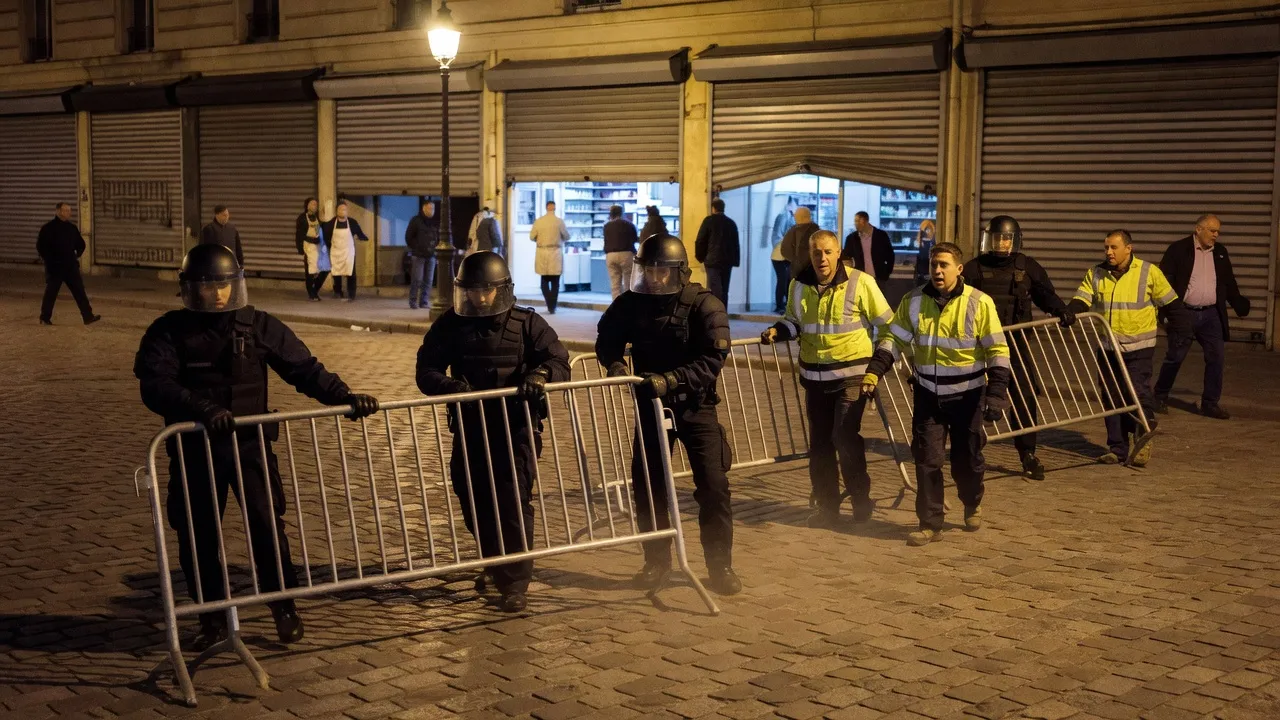
The newspapers emphasize the extent of the violence. According to The Daily Star, around half a million people demonstrated on Saturday against the rising cost of living, after four weeks of mobilization launched by high school students demanding better conditions in their institutions. Masked groups attacked law enforcement, set fire to town halls and public buildings, looted stores, and burned vehicles. According to the Ministry of the Interior, cited by the newspaper, nearly 2,400 people were arrested on Saturday and almost 1,000 police officers and gendarmes were injured. TBS News relays the Federation of Commerce, which estimates that nearly 3,000 businesses were affected.
The political aspect takes center stage. Interior Minister Laurent Nuñez, who acknowledged that the police "had lost control," presented his resignation; the Élysée indicates that Emmanuel Macron refused it, "given the necessity for continued leadership of law enforcement," while acknowledging "failures in anticipation and intelligence." TBS News also reports that Lecornu accuses far-left groups of wanting to sow trouble before the presidential election, which Jean-Luc Mélenchon asks him to prove, or else "apologize."
The two titles put the episode into a broader context: a France shaken six months before the presidential election, under pressure from a weak economy and growing debt. The Daily Star notes that other European countries, where rising prices also spark anger, are watching the situation with concern, with more limited clashes erupting in Milan and Belgium. It mentions the "yellow vests" call for a new day of protest next Saturday and the blockade of the Louvre entrance; TBS News cites the unions' call for national strikes on November 5.