
DOMINANT ANGLE
Dhaka is mainly concerned about the oil shock: the Ukrainian strike on the Moscow refinery, combined with an opposition-free vote, revives the fear of a surge in fuel prices that is already spreading beyond Russian borders.
Dominant angle identified — does not reflect unanimity of this country’s media
KEY POINTS
- 01
More than 1,600 Ukrainian drones have been intercepted since Saturday, including around 450 targeting Moscow, according to Mayor Sergei Sobyanin.
- 02
Two people have died in the Moscow region after drone strikes that notably hit the capital's refinery.
- 03
Ukrainian attacks have already put a significant part of Russian refining capacity out of service, causing shortages of petroleum products and higher fuel prices, according to TBS News.
ANALYSIS
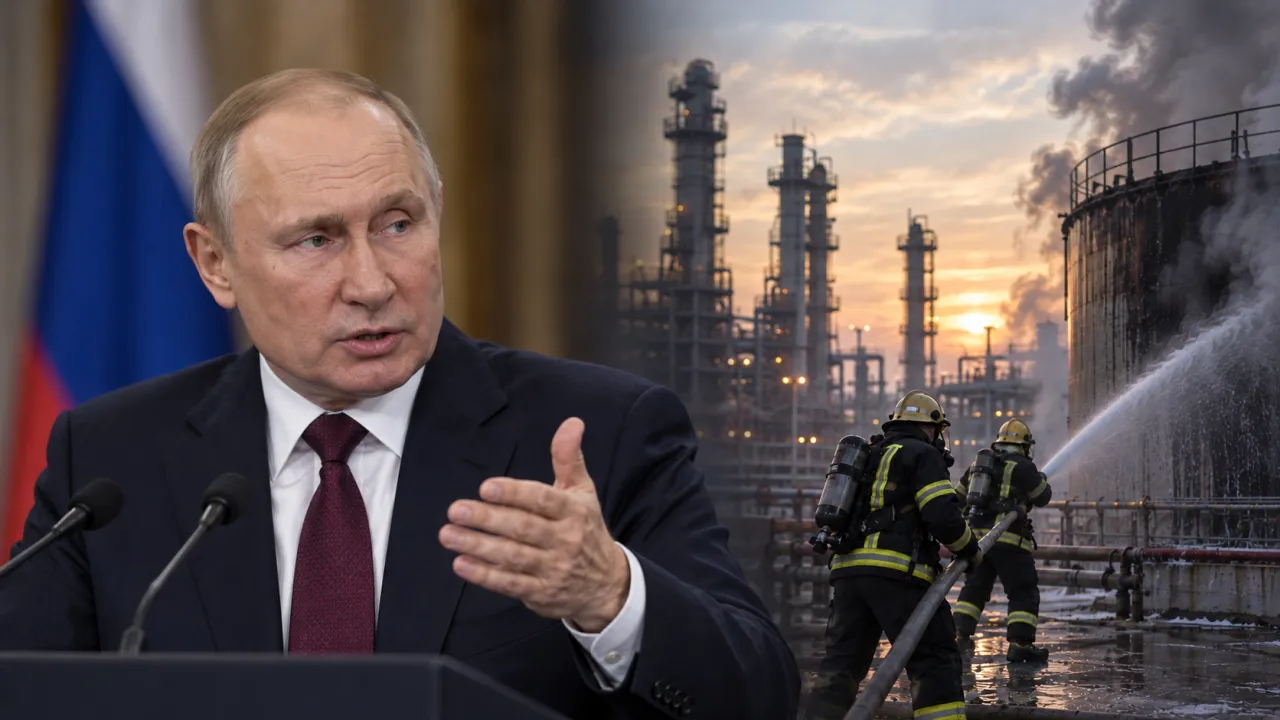
Dhaka, September 21, 2026. For the Bangladeshi press, the news that grabs attention behind the announced victory of United Russia is less about the vote tally than the smoke rising on Sunday, September 20, 2026, above the Moscow refinery. The Daily Star and TBS News, citing the same figures from Mayor Sergei Sobyanin, report that over 1,600 Ukrainian drones have been intercepted since the previous day, including about 450 targeting the Russian capital, in what Moscow describes as the largest drone attack ever carried out on its soil. Several devices reached the perimeter of the Moscow refinery, damaging a facility already targeted several times; an apartment was also hit. Sobyanin claims that "the unprecedented attack was clearly planned to disrupt the elections" and that "the adversary did not succeed." Two deaths are reported in the Moscow region.
What the Dhaka press highlights is the economic scope of these repeated strikes on Russian energy infrastructure. TBS recalls that Ukrainian attacks have already put a significant part of the country's refining capacity out of service, causing shortages of petroleum products, rising fuel prices, and long lines at gas stations across the eleven Russian time zones. The Moscow refinery targeted on Sunday alone processed several million tons of crude oil per year. Both articles emphasize that these strikes continue despite the announcement, the previous day, by US President Donald Trump that Moscow and Kyiv had agreed to stop targeting each other's energy infrastructure - an agreement immediately contradicted by the facts.
On the election itself, the Bangladeshi coverage remains subdued: United Russia is expected to retain its dominance in the Duma, in a vote presented by Vladimir Putin as a test of support for the war. None of the articles in the pool mention any credible opposition on the ballots. For a net fuel-importing country like Bangladesh, it is the issue of Russian oil supply and its impact on global prices, rather than the electoral outcome, that structures the narrative.
SOURCES (2)
- The Daily StarMEDIUM
- TBS NewsMEDIUM