
DOMINANT ANGLE
Israel gauges the electoral victory of United Russia in light of the escalation promised by Vladimir Putin, between increased mobilization, threat to NATO, and decline of Russian influence in Syria in the face of the United States.
Dominant angle identified — does not reflect unanimity of this country’s media
KEY POINTS
- 01
According to Western intelligence sources cited by The Telegraph and relayed by the Jerusalem Post, Vladimir Putin is preparing to intensify the war after the Duma election, through increased mobilization and heightened strikes on Ukraine and its European allies.
- 02
The toll of Russian losses is estimated at 500,000 dead since the start of the conflict, according to the same intelligence sources cited by the Jerusalem Post.
- 03
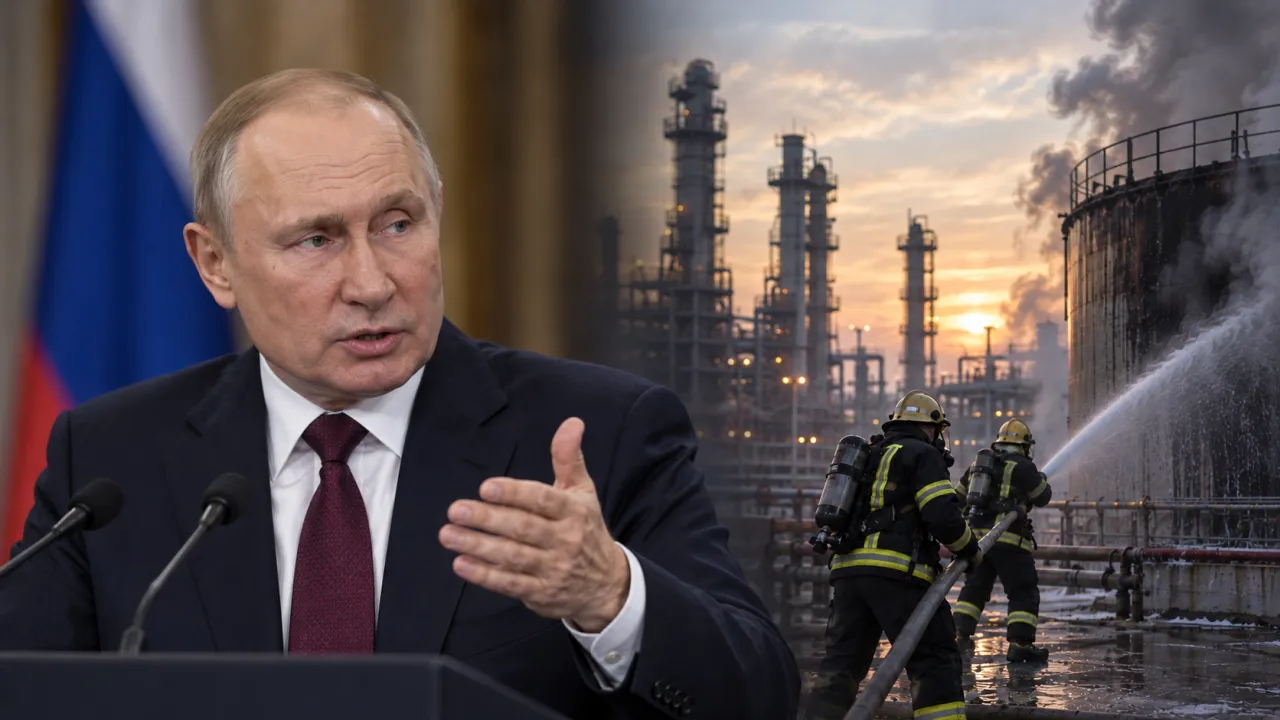
On the night of the last day of the election, Ukraine carried out a large-scale attack on Moscow, damaging an oil refinery, according to local information relayed by Arutz Sheva.
ANALYSIS
Jérusalem, September 21, 2026. For the Israeli press, the announced victory of United Russia in the State Duma is overshadowed by a broader picture: that of a Kremlin choosing escalation over the negotiating table. The Jerusalem Post, citing Western intelligence sources relayed by The Telegraph, reports that Vladimir Putin "is preparing to intensify the war with Ukraine" following the election, through an acceleration of mobilization, an increase in the volume of conscripts, and reinforced strikes against Ukraine and its European allies. The newspaper emphasizes the cost already paid by Moscow: an estimated 500,000 Russian deaths since the start of the conflict, a figure that the government nonetheless refuses to make its strategy waver.
On the ground, Arutz Sheva confirms that Ukraine carried out, on the night preceding the closing of the vote, a large-scale attack against Moscow, damaging an oil refinery according to local information. The episode, which occurred on the last day of the legislative vote, illustrates for the Israeli press the simultaneity of the two files: internal political legitimation on one hand, energy vulnerability on the other.
The Jerusalem Post broadens the scope to Europe: defense officials fear "a concentrated incursion into NATO territory" after CIA Director John Ratcliffe's visit to the Kremlin last month to warn Moscow against any attack targeting a member country. German Foreign Minister Johann Wadephul mentions a "broader pattern of Russian hybrid operations in Europe," while his Interior Ministry colleague, Alexander Dobrindt, asserts: "We are not at war, but we are the daily target of a hybrid war."
In the background, a third article from the pool sheds light on another front: Syria, where four Russian ships supplied the Tartous facilities at the beginning of September, under an agreement redefining the Russian military presence, while representatives of about fifty American companies discussed investment and energy in Damascus. For Israel, which borders this disputed area of influence, this overlap between Russian military pressure and American economic penetration directly affects the regional security equation, much more so than the result of the Russian legislative election itself, which is never quantified in this corpus.