
DOMINANT ANGLE
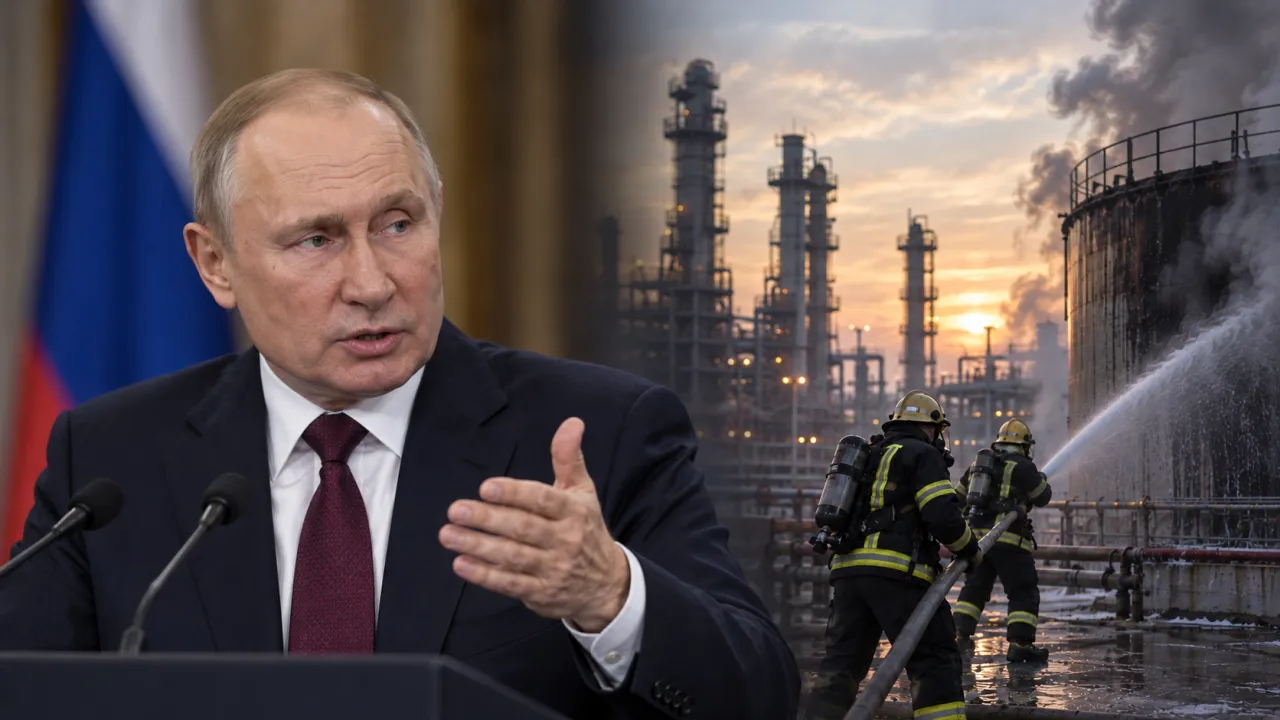
Islamabad is particularly mindful of the energy cost of the drone attack on Moscow — a refinery was hit, leading to fuel shortages — more so than the unsurprising outcome of the Russian vote.
Dominant angle identified — does not reflect unanimity of this country’s media
KEY POINTS
- 01
Moscow Mayor Sergei Sobyanin reported over 1,600 drones shot down since Saturday, including 450 targeting the capital
- 02
The Moscow refinery processed 11.6 million tonnes of oil in 2024, producing 2.9 million tonnes of gasoline and 3.2 million tonnes of diesel (Business Recorder)
- 03
Around 400 people, including 70 children, were evacuated from a damaged building in the Moscow region, according to Daily Times
ANALYSIS
Islamabad, September 21, 2026. For the Pakistani press, which largely reproduces Reuters dispatches, Sunday's event is first and foremost read through its energy cost rather than its electoral outcome. The United Russia party is expected to maintain its dominance in the Russian Parliament, the first election since the outbreak of war in February 2022, in a climate where "most anti-war candidates have been excluded from the ballot," according to ARY News, which recalls that two figures from the liberal Iabloko party have received lengthy prison sentences. Turnout exceeded 50% in the early afternoon, according to the Central Election Commission cited by Interfax.
But it's the Ukrainian strike, presented as the largest ever launched on Moscow, that structures the Pakistani narrative. Mayor Sergei Sobyanin reported over 1,600 drones shot down since Saturday, including 450 targeting the capital. "The unprecedented attack had clearly been planned to disrupt the elections. The adversary did not succeed," he said, a phrase almost verbatim repeated by several Pakistani titles. Two deaths were recorded in the Moscow region — a 74-year-old man and a 44-year-old woman, according to Daily Times — and around 400 people, including 70 children, were evacuated from a damaged building.
The angle retained by Islamabad remains economic: the Moscow refinery, which processed 11.6 million tons of oil in 2024 and produced 2.9 million tons of gasoline and 3.2 million tons of diesel, has been hit again. Business Recorder emphasizes that Ukrainian strikes have "put a significant part of Russia's refining capacity out of service, causing fuel shortages, price hikes, and long lines in several regions." President Volodymyr Zelensky claims to have targeted sites that finance the Russian "war machine" using Flamingo and Pelican missiles produced in Ukraine.
Notable fact reported by ARY News: these strikes on energy infrastructure continue despite the announcement, last Monday, by Donald Trump of an agreement between Kyiv and Moscow to put an end to them — an agreement whose content remains vague and which both sides have apparently ignored.
SOURCES (4)
- The Nation PakistanMEDIUM
- ARY NewsMEDIUM
- Daily TimesMEDIUM
- Business RecorderMEDIUM