
DOMINANT ANGLE
Pretoria sees the Russian vote as a demonstration of strength without real opposition, marred by the largest drone attack by Ukrainians ever launched on Moscow.
Dominant angle identified — does not reflect unanimity of this country’s media
KEY POINTS
- 01
Turnout exceeded 50% by early afternoon in Moscow, according to the Interfax agency citing the Central Election Commission, despite reported cyberattacks on Saturday.
- 02
Drone strikes killed two people in the Moscow region and two others in the occupied part of Kherson, including an election official, according to Mayor Sergei Sobyanin.
- 03
Kremlin spokesman Dmitry Peskov accuses European governments of portraying Russia as an "external enemy" to justify increased military spending, according to SABC News.
ANALYSIS
Pretoria, September 21, 2026. The South African press reports that Sunday, September 20, 2026, was the day when two Russian narratives collided: one of an unsurprising electoral victory for United Russia, the party supporting Vladimir Putin, and another of a Ukrainian drone attack presented by Moscow as the largest ever suffered by the Russian capital.
According to the dispatch reported by TimesLIVE and Business Day, the vote for the State Duma - the first since the large-scale invasion of Ukraine began in February 2022 - took place in a landscape where "most anti-war candidates have been excluded from the ballot". The Yabloko party, the only liberal formation still in the running and credited with single-digit scores in recent years, had hoped to capture a war fatigue, but its candidates fear the consequences of their presence on the lists. Turnout exceeded 50% in the early afternoon in Moscow, according to the Interfax agency citing the Central Electoral Commission; electoral authorities claim that the three days of voting took place without a hitch, despite reported cyberattacks on Saturday.
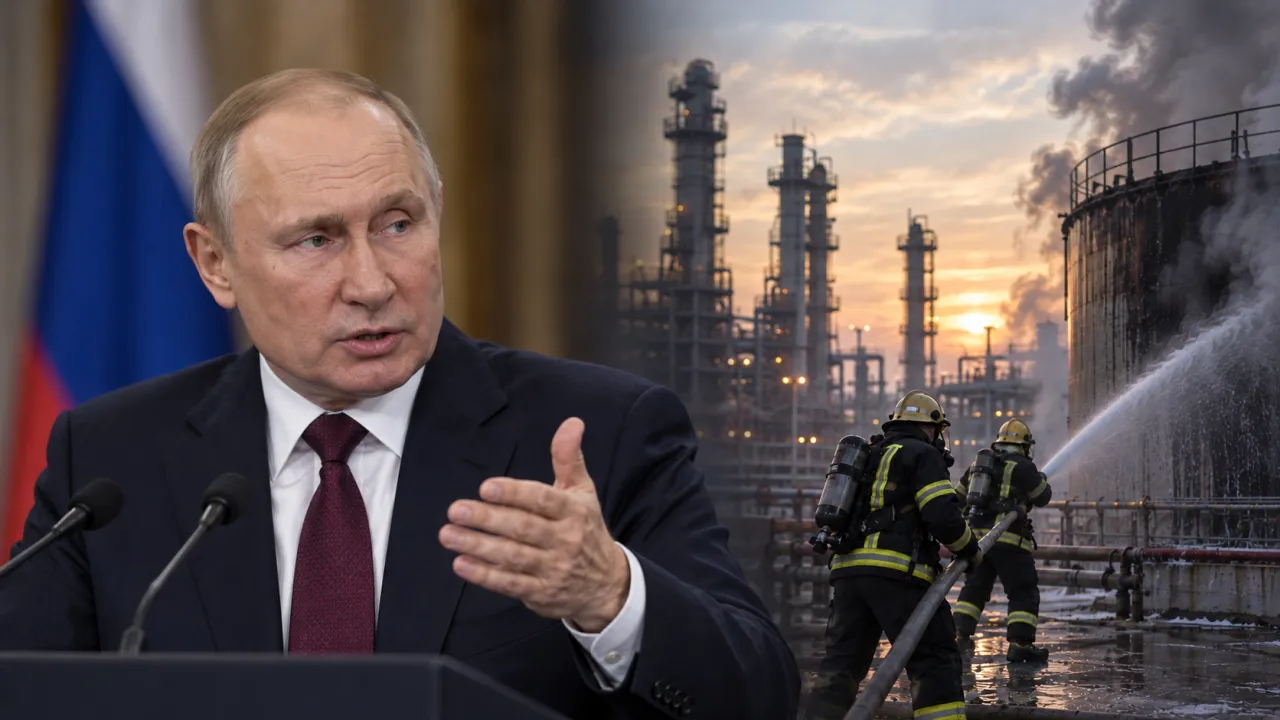
The Mayor of Moscow, Sergei Sobyanin, described the Sunday drone attack on Telegram as the "largest ever repelled", stating that it had been "manifestly planned to disrupt the elections" and that "the enemy did not succeed". The strikes killed two people in the Moscow region and two others in the occupied part of Ukraine's Kherson region, including an election official; a facility at the Moscow refinery, already targeted in the past, was damaged.
In the background, SABC News relays diplomatic tensions: Vladimir Putin accuses European leaders of fueling tensions and criticizes NATO expansion, while Kremlin spokesman Dmitry Peskov reproaches European governments for presenting Russia as an "external enemy" to justify increased military spending - echoing the speech on the state of the Union by Ursula von der Leyen, who cited cyberattacks, sabotage, fires, and drones as evidence of Russian hybrid threats.
For the South African press, the Kremlin is likely to present this result as proof of popular support for the war, in a system that its critics deem intolerant to dissent.