
DOMINANT ANGLE
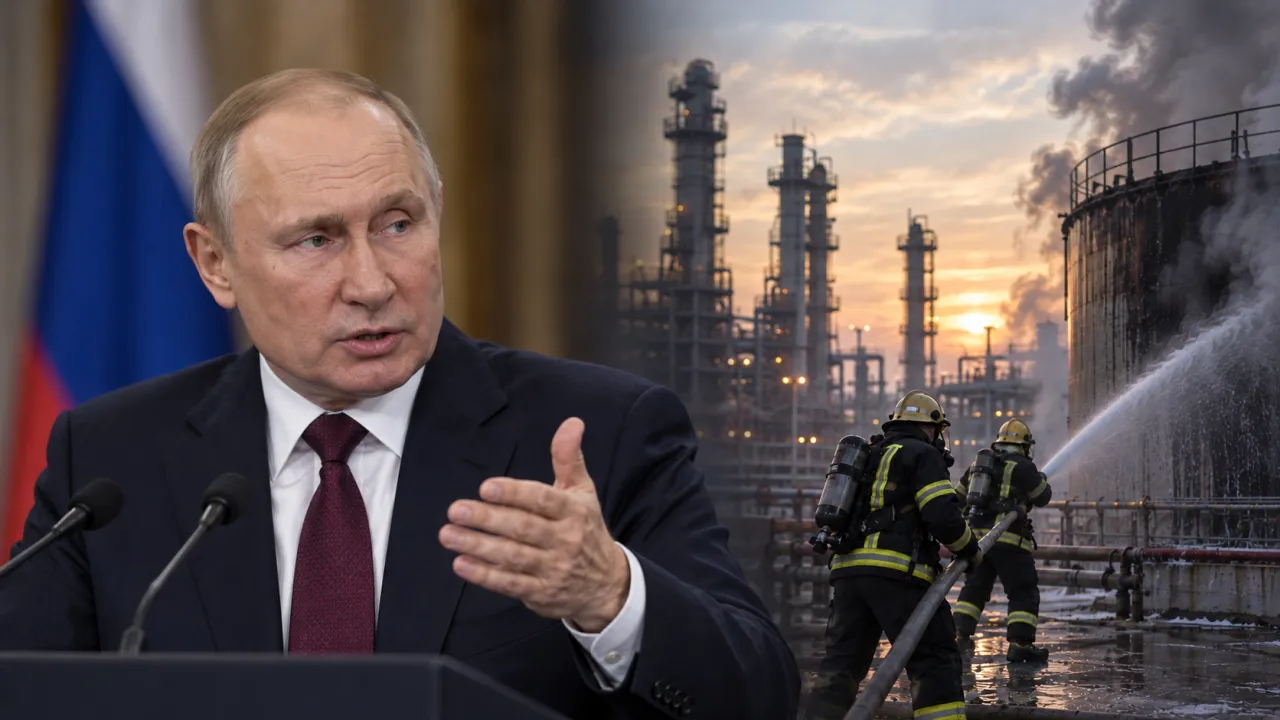
Kyiv claims to have dealt the most severe blow ever to Russia's oil industry, including a ballistic Pelican missile, on the same day the Russian authorities held an election with no real opposition.
Dominant angle identified — does not reflect unanimity of this country’s media
KEY POINTS
- 01
The military claims to have hit the Gazprom Neft refinery in Kapotnya, about 15 km from the Kremlin, damaging the AVT-6 unit and causing a fire.
- 02
Moscow Mayor Sergei Sobyanin says over 1,600 drones have been intercepted since September 19, including 450 targeting the capital.
- 03
The Central Election Commission credits United Russia with 57.5% of the vote after counting 13.88% of the ballots, in an election where the liberal party Yabloko was excluded from the ballot.
ANALYSIS
Kyiv, September 21, 2026. In the night of September 19-20, Ukrainian forces carried out what President Volodymyr Zelensky presents as their most severe strike against the Russian oil apparatus since the start of the war. On social media, he lists the arsenal used: FP-1, RZ-100, MICH-2000, Palianytsia, Vendetta, Liutyi, Bars, Flamingo, Sichnevyi, and, publicly cited, the Pelican ballistic missile. "Our long-range responses had a very clear effect in the Moscow region tonight," he writes, adding that the targeted facilities "represent billions of dollars that fuel the Russian war machine."
The Ukrainian General Staff specifies that it hit the Gazprom Neft refinery in Moscow, Kapotnya district, about 15 kilometers from the Kremlin — three damaged units, including the primary distillation unit AVT-6, causing a large fire. The plant, with a capacity of nearly 12 million tons per year, would supply 40% of Moscow's fuel and 70% of the regional demand for gasoline and kerosene. Alpha drones from the SBU would have traveled over 500 kilometers to pierce the Russian air defense. Zelensky thanks the SBU, the unmanned system forces, the special operations forces, the HUR, and the SZRU for this joint operation, and calls on Moscow to "choose peace" rather than strengthening its air defenses at the expense of other regions.
The Mayor of Moscow, Sergei Sobyanin, claims to have intercepted over 1,600 drones since September 19, including 450 targeting the capital — a figure he presents, without proof according to Ukrainian media, as an attempt to disrupt the vote. The Russian Ministry of Defense announces in response that it wants to intensify its strikes on targets in Kyiv, which has already been targeted almost daily this autumn.
This strike comes on the last day of a vote in the Duma that Ukrainian media describes as an election without real opposition: United Russia is credited with 57.5% of the vote by the Central Election Commission, with polling stations open even in the occupied territories of Donetsk, Luhansk, Zaporizhzhia, Kherson, and Crimea. In occupied Kherson, a local journalist describes a "handful" of voters in front of improvised backdrops. The head of the Russian Central Election Commission, Ella Pamfilova, mentions a "massive and intense" cyberattack against electronic voting, without any established link to Kyiv.
SOURCES (3)
- Kyiv PostMEDIUM
- Ukrainska Pravda ENMEDIUM