China — news through its media
Stories followed in this country, with their framing set against the rest of the world.
253 subjects found
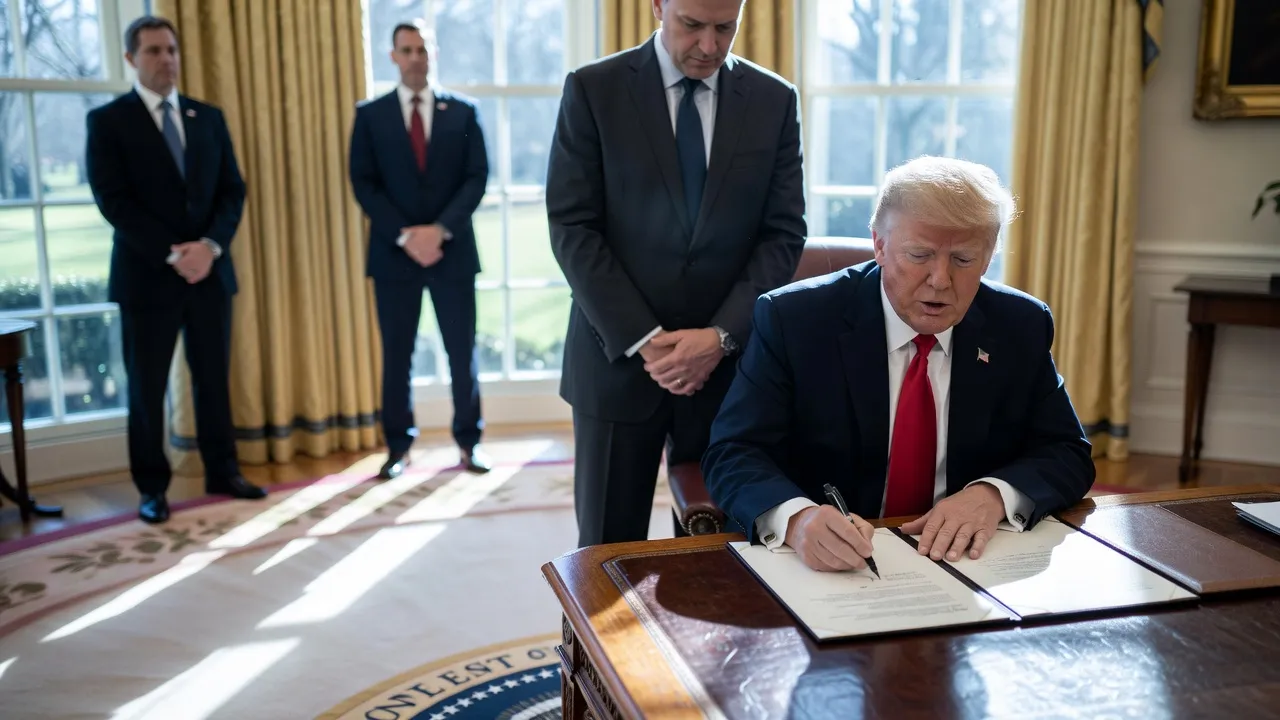
Trump narrows birthright citizenship and bans 'birth tourism'
Five weeks after the Supreme Court struck down his first executive order, Donald Trump signed two more on 6 August 2026: one denies automatic citizenship to children of four categories of non-citizen parents, the other bans 'birth tourism'. Fourteen countries read it from very different vantage points — a constitutional precedent for some, a direct threat to their nationals for others.


 +10
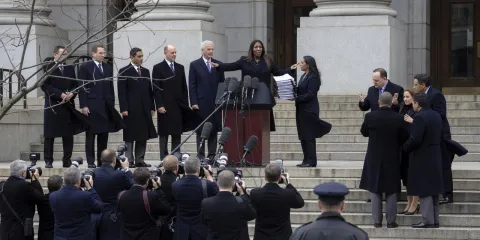
Twenty-Five US States Sue Over Trump's New Tariffs
Led by Letitia James, twenty-five states have petitioned the Court of International Trade to block tariffs of 10% to 12.5% covering nearly 99% of American imports. Nine countries tell their own exposure: the "tarifaço" in Brasília, 87% rejection in Santiago, flowers and copper in Bogotá.

 +5
Trump Gives Iran a "Last Chance" as Tehran Denies Any Talks Are Under Way
Donald Trump says he called off a strike and opened talks with Iran, calling them a "last chance before decapitation". Tehran denies it: its only acknowledged channel is Omani mediation over the Strait of Hormuz, where a cargo vessel was struck. Twenty-one countries read the same ultimatum, between taking it seriously and weariness at a familiar cycle.


 +17
Trump suspends US strikes on Iran
Donald Trump says he and Israel have agreed to suspend a large-scale strike on Iran, at the request of Tehran and other Middle Eastern countries, conditional on a deal reopening the Strait of Hormuz. Eleven countries read the pause differently: a retreat, a trap, or a diplomatic opening.

 +7
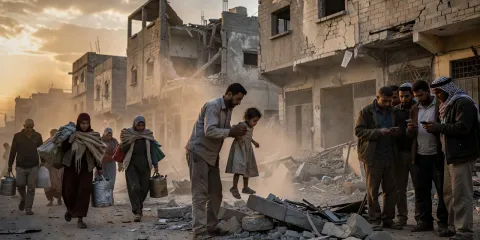
Hamas Ties Disarmament to an Israeli Withdrawal, Testing Trump's Deal
A day after Donald Trump announced a disarmament deal, Hamas has made it conditional on a prior withdrawal of the Israeli military and says Israel must first approve the text. Trump speaks of an "understanding" with Israel while conceding implementation will be complex. Riyadh welcomed the deal and Doha was thanked for mediating, but the Israeli military struck Gaza again. Ten countries measure the gap between the announcement and the ground differently.

 +6
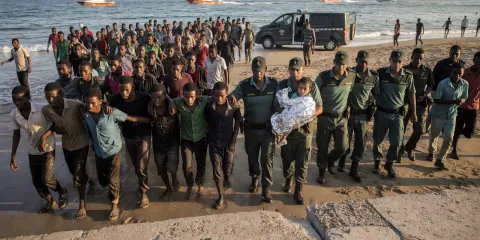
60,000 Migrants Cross into Ceuta in a Single Day as Italy Suspends Schengen with Spain
In twenty-four hours, up to 60,000 migrants crossed from Morocco into the Spanish enclave of Ceuta, leaving 34 to 57 dead. Madrid says most have been returned to Morocco. Italy suspended the Schengen agreement with Spain, France tightened its border and Donald Trump blamed Madrid. Eleven countries read the same episode as a humanitarian crisis, a failure of border control, or a test of leverage with Rabat.


 +7
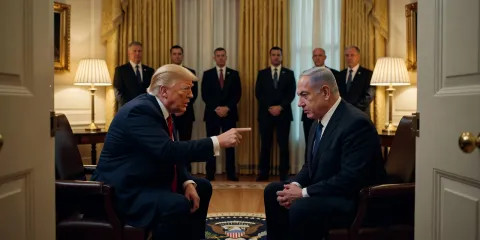
Trump hosts Zelensky and Netanyahu at the White House: Patriots for Kyiv, friction over Iran
On July 28, 2026, Donald Trump separately received Ukrainian President Volodymyr Zelensky at the White House, who requested 300 Patriot missiles before winter and a revival of talks with Russia, then Israeli Prime Minister Benjamin Netanyahu, hosted for ninety minutes. Trump publicly aired his irritation over Iran, a sign of cooling ties between Washington and its Israeli ally, as the wars in Ukraine and Iran converge.


 +5
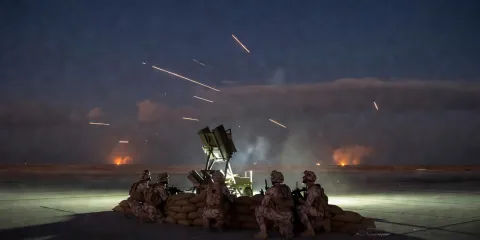
The United States strikes Iran, joint US-Saudi strikes in Iraq as the war widens
On July 30, 2026, after a brief lull, the United States launched a massive wave of strikes against dozens of targets in Iran, retaliating for Iranian missile fire on American bases in Jordan. The same day, US and Saudi forces jointly struck pro-Iranian militias in Iraq for the first time, killing at least twenty. Riyadh's entry and the threat to the Strait of Hormuz mark a regional escalation.
+8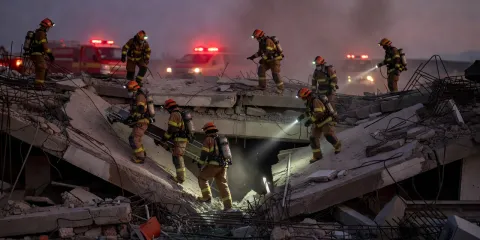
Magnitude 7.1 earthquake in southwestern Japan: a shopping mall collapses in Kumamoto
A magnitude 7.1 earthquake struck Kumamoto Prefecture on July 28, killing at least 13 people and partly collapsing a shopping mall where dozens remain missing. A tsunami warning was lifted, thousands of residents were evacuated, and Toyota halted three plants in the south of the country.
+6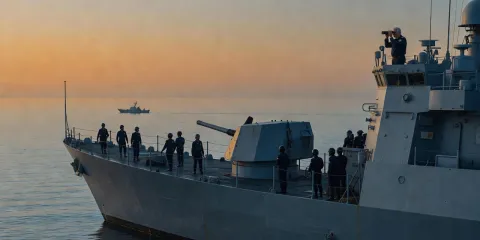
The United States and Iran halt their strikes: a pause for talks
After thirteen nights of U.S. bombing, Donald Trump orders a pause that Iran says it reciprocates by halting its reprisals. Tehran denies any direct negotiation despite Qatari and Pakistani mediation, while oil prices retreat and the Strait of Hormuz stays tense.
 +11
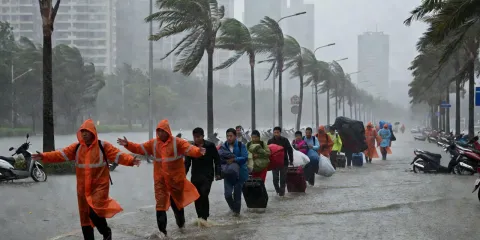
Typhoon Noul slams China's Guangdong, forcing mass evacuations
Typhoon Noul, described as the most powerful of 2026, made landfall on 26-27 July in China's Guangdong province, forcing the evacuation of several hundred thousand people (up to 710,000 by some accounts), grounding flights and halting trains in Shenzhen, Guangzhou and Hong Kong, and bringing torrential rain and flooding. Authorities raised the alert to its highest level.

 +7
Understand global stakes from every perspective.
718 subjects · 75 countries · 8174 perspectives