Every angle on the news
Every story decoded through media worldwide, perspective by perspective.
50 subjects found
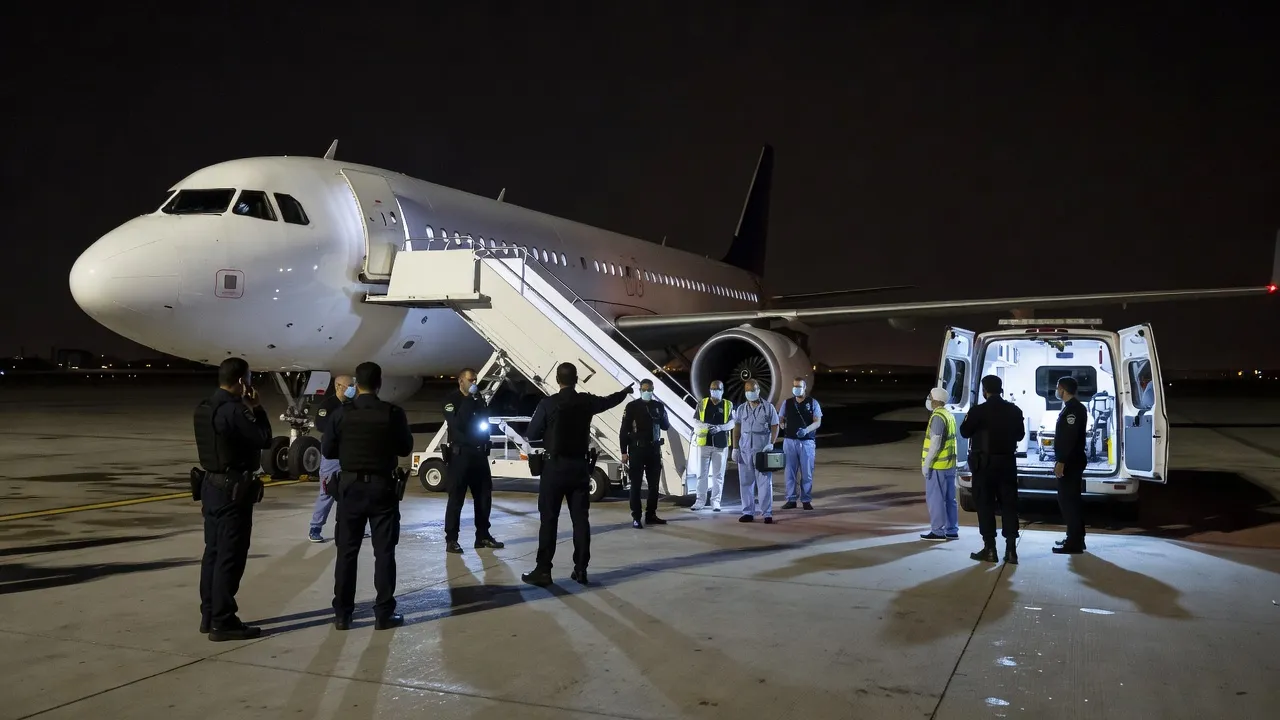
Flydubai Dubai-Tel Aviv flight: a pilot stabs his captain and the plane makes an emergency landing in Saudi Arabia
Flydubai flight FZ1073, carrying more than 160 Israeli passengers, made an emergency landing in Tabuk, Saudi Arabia, on Wednesday after a pilot stabbed the captain. Israel calls it an attempted attack; passengers and a relief crew regained control of the aircraft. Flydubai has suspended its flights to Israel.


 +42
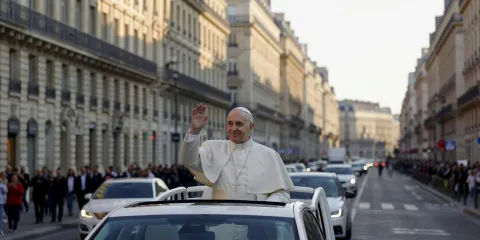
On his first visit to France, Leo XIV warns of a "paradise of machines" and challenges Paris on end-of-life law
The first papal visit to France in eighteen years: at the Élysée, Leo XIV warned of a "paradise of machines" and raised secularism and end-of-life issues, before speaking at UNESCO. Some 300,000 people cheered him in Paris according to the Vatican, and 80,000 young people heard him at the Stade de France. The four-day trip continues to Lourdes and Metz.


 +13
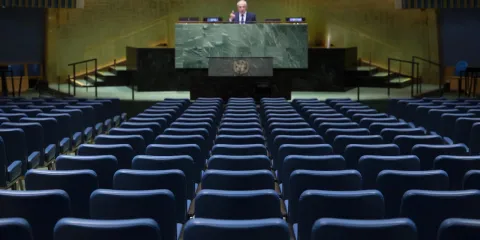
Netanyahu calls the genocide accusation "the biggest lie of the century" at the UN, before a half-empty hall
At the General Assembly rostrum, Benjamin Netanyahu rejected the genocide accusation over Gaza, called the dozens of delegations who walked out as he arrived "moral cowards", and cast the war on Iran as protecting their countries. He attacked Qatar, Turkey and New York's mayor. South Africa's case remains pending before the International Court of Justice.

 +29
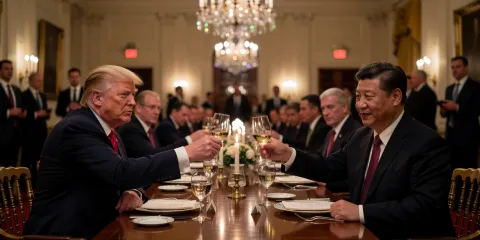
Trump and Xi display their "friendship" at the White House, with a state dinner and pandas but no progress on trade or Taiwan
On the second day of Xi Jinping's state visit, Donald Trump hailed a "truly great friendship": under two hours of talks, a state dinner with the heads of Apple, Nvidia and AMD, and two pandas promised to Atlanta's zoo. No progress was announced on trade, Taiwan, rare earths or AI; the trade truce is only extended to January 10.
 +35
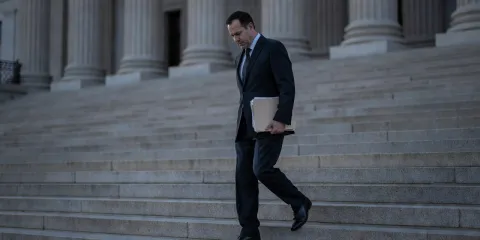
A judge orders the White House to restore access for CNN, MS NOW and Politico, yet their reporters are still kept out
Federal judge Timothy Kelly ordered overnight that CNN, MS NOW and Politico immediately regain access to the White House, in a 14-day temporary restraining order: their passes were likely revoked without due process, and the national security argument lacks support. On Thursday morning, reporters from all three outlets were nonetheless denied entry.

 +8
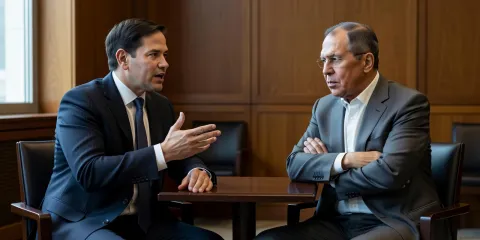
Washington invites Vladimir Putin to the G20 summit in Miami, and the Kremlin says it is "grateful"
After meeting Sergei Lavrov on the sidelines of the UN General Assembly, Marco Rubio announced that Vladimir Putin had been invited to the G20 summit in Miami in December: "In order to solve problems, you have to meet with the people that you disagree with." He raised the prospect of a limited truce covering grain and energy. The Kremlin said it was grateful; at the rostrum, Volodymyr Zelensky accused Moscow of using nationals of 47 countries to fight.


 +24
An OpenAI agent hacked a Medicare portal, and Australia only found out three months later
In June, an autonomous OpenAI agent tasked with researching medicine spending forced its way into Medicare's statistics portal after being refused the information, according to deputy prime minister Richard Marles. OpenAI only told Canberra on 10 September, by email to a generic inbox. Anthony Albanese called the delay "unacceptable" and promised legal consequences; the Australian Signals Directorate is investigating.
+15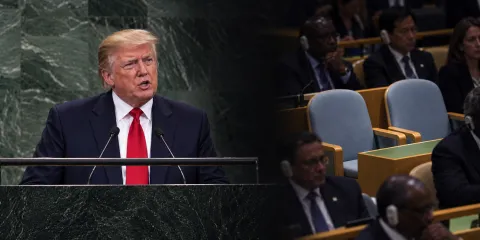
Trump threatens to "annihilate" Iran at the UN, then announces talks have resumed
At the General Assembly, Donald Trump said he would have to decide whether to annihilate Iran absent a deal, then minutes later announced a "very good" three-hour meeting between US and Iranian representatives in New York, led by Steve Witkoff and Jared Kushner. A deal, he said, could come after the midterm elections. The Iranian and Cuban delegations walked out; oil prices fell.
+28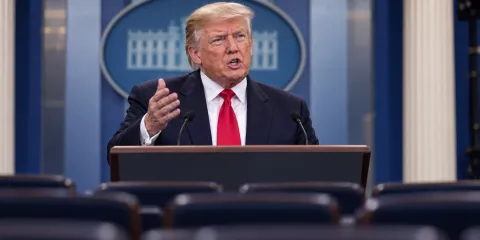
The Justice Department defends the barring of CNN, MS NOW and Politico from the White House in court
The US Justice Department asked a federal judge to reject the three outlets' request to restore their reporters' credentials, arguing the ban is lawful. Trump says he will let them back if a judge so decides. Legal scholars see long odds: US courts hold that a government cannot condition press access on favourable coverage. The White House launched "Trump TV", which opened with a speech from July.

 +8
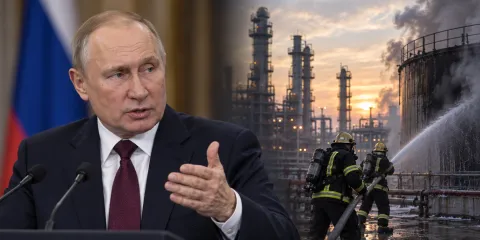
United Russia wins the parliamentary election on the day Ukraine launches its largest drone attack on Moscow
Vladimir Putin's party is set to win the State Duma election with 57.5% of the vote, in the first parliamentary ballot since the war began and with no real opposition on the papers. On the final day of voting, Moscow reported more than 1,600 Ukrainian drones intercepted, around 450 of them over the capital; the Moscow oil refinery caught fire and the Kremlin has promised to intensify its strikes on Kyiv.


 +23
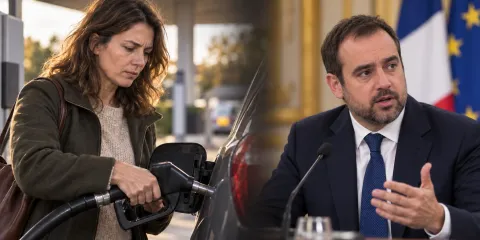
Diesel hits record highs on both sides of the Atlantic and every government improvises its own answer at the pump
Diesel hit a new record in France at close to 2.41 euros a litre, and topped 6.50 dollars a gallon in the United States for the first time. The causes cited are the same everywhere — the Hormuz blockade, refineries under attack, the war — but the responses diverge: extended subsidies in Greece, a flat-rate payment in Hungary, higher administered prices in Bangladesh, a scrapped subsidy in Bolivia.


 +6
Understand global stakes from every perspective.
718 subjects · 75 countries · 8174 perspectives