
DOMINANT ANGLE
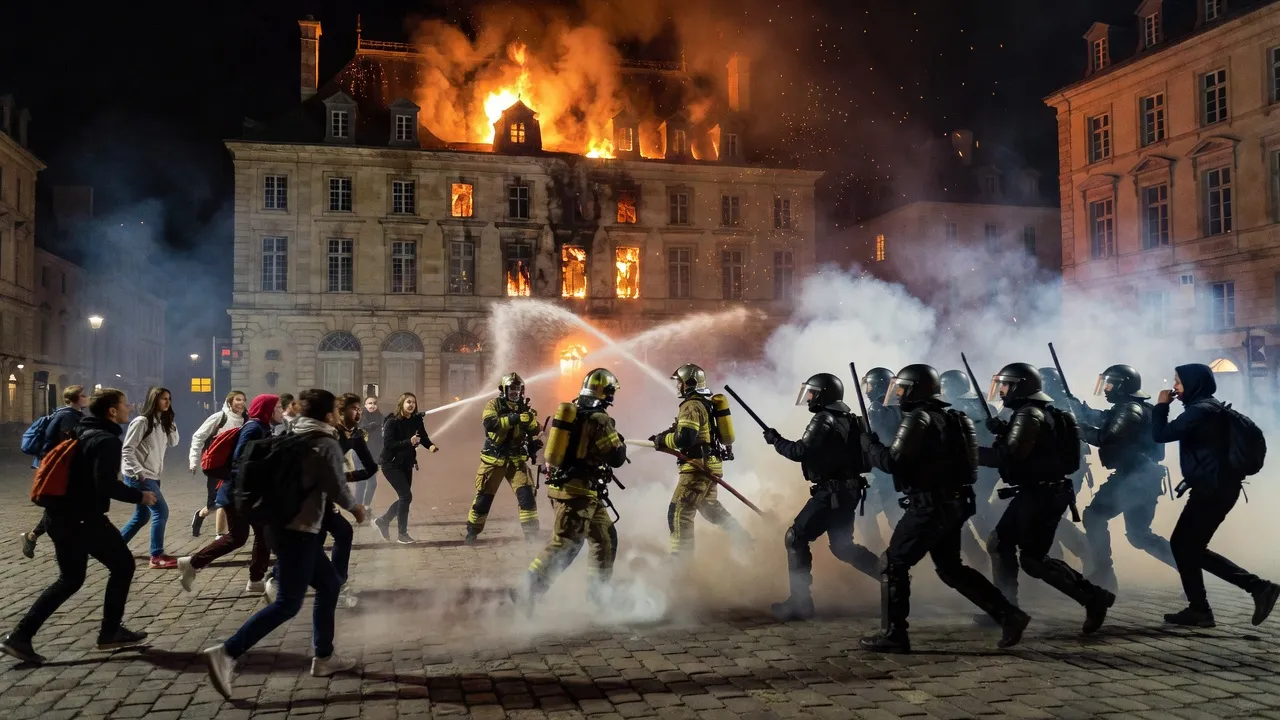
Canberra focuses first on the flames: the Australian press highlights the town hall of Limoges on fire, the looting and the arrests, more than the social unrest at the origin of the movement.
Dominant angle identified — does not reflect unanimity of this country’s media
KEY POINTS
- 01
Around 550,000 protesters according to Laurent Nuñez, 800,000 according to the CGT; about 400 people arrested.
- 02
The city hall of Limoges was set on fire and the roof collapsed; Marseille and Lille affected, the tourism office of Lyon set on fire.
- 03
Sébastien Lecornu says the government will not be "intimidated" and blames the far left a few months ahead of the presidential election.
ANALYSIS
Canberra, 18 October 2026. The Australian press opens with images: protests against the high cost of living and the state of schools, on Saturday, 17 October, which "turned" into riots. SBS talks about "some of the most destructive unrest in years", The Age and the Sydney Morning Herald about a "new flare-up of violence" that will weigh on the national election scheduled in a few months.
The figures are presented from the start: around 550,000 protesters according to Interior Minister Laurent Nuñez, 800,000 according to the CGT, including 110,000 in Paris, a procession deemed "largely peaceful". Nuñez announces around 400 arrests; SBS cites a previous tally of 272 arrests from the ministry.
The account details the damage. In Limoges, the city hall was set on fire, the roof collapsing onto the lower floors; the local administration says it is "largely lost". In Marseille, protesters in black entered the city hall shouting "We're taking the Bastille" and tagged the anarchist symbol; in Lyon, the tourist office was set on fire. ABC also reports broken windows at the headquarters of CNews and Europe 1, luxury stores and supermarkets looted, tear gas and a water cannon on the Place de la République.
On the political side, the quotes come from officials. Emmanuel Macron: "There is no place for violence in our Republic", the perpetrators will be "pursued and punished". Prime Minister Sébastien Lecornu asserts that the government will not be "intimidated" and targets those who want to make these violent acts a "warm-up" before the presidential election. Nuñez describes extreme left-wing groups as "extremely violent and radical", joined by looters.
The voice of the protesters is brief. SBS reports that they attribute the violence to troublemakers and cite the price of fuel and violence against high school students. PerthNow notes the return of the yellow vests. The European context is mentioned in one sentence: more modest marches in Belgium, Portugal, and Italy, and in Albania, rallies against corruption.
The electoral calendar (presidential election in April) serves as a backdrop: ABC concludes on the risk of a campaign dominated by law and order.
SOURCES (4)
- ABC NewsMEDIUM
- PerthNowMEDIUM
- SBS News AustraliaMEDIUM