
DOMINANT ANGLE
Brasília is first to grasp the outbreak: the Brazilian press highlights tear gas, invaded city halls and arrests at the forefront of a mobilization against the high cost of living.
Dominant angle identified — does not reflect unanimity of this country’s media
KEY POINTS
- 01
Around 550,000 people demonstrated and at least 400 were arrested in France on Saturday, October 17 (Veja).
- 02
In Marseille and Lille, protesters invaded city halls; in Marseille, a bust of Marianne was toppled (Veja).
- 03
The movement emerged in mid-September in high schools in poor suburbs north of Paris, with over three weeks of blockages, before expanding to the cost of living (G1, Estadão).
ANALYSIS
Brasília, October 18, 2026. Brazilian headlines covered Saturday, October 17, in France from the angle of public order. G1 (Globo) reported on the police using "gás lacrimogêneo" and clashing with protesters in several cities, in acts that were among the "most violent" in the country in recent years. According to cited authorities, 140 demonstrations had brought together 32,800 people by noon, outside of Paris.
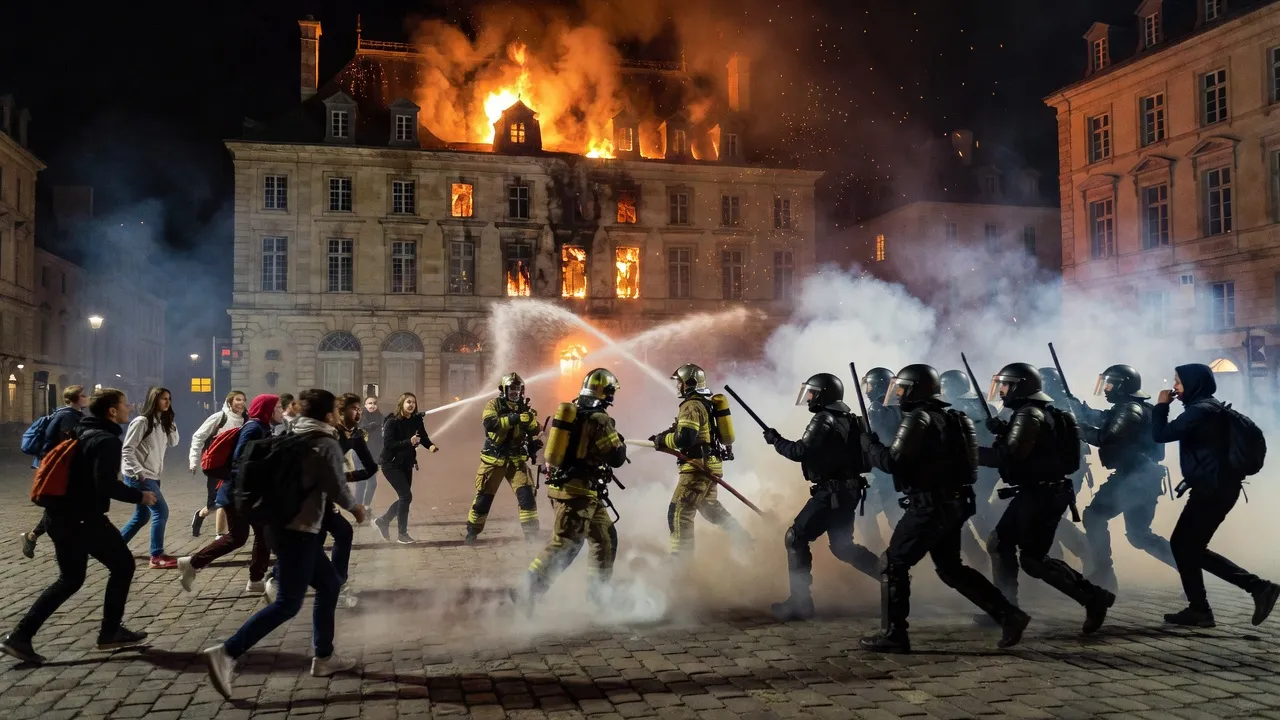
Veja highlighted the most striking figure: around 550,000 people in the streets and at least 400 arrests. The weekly magazine described scenes of chaos: in Marseille and Lille, protesters invaded city halls; in Marseille, they overturned a bust of Marianne, a symbol of the Republic. In Paris, the Place de la République, the starting point of the processions, saw clashes, with police responding with tear gas and water jets to objects thrown by masked protesters. The Champs-Élysées had been closed to demonstrations.
The account traced the origin of the movement. Estadão recalled that the mobilization began in mid-September in high schools, with more than three weeks of blockages, before joining a broader protest against the rising cost of living. G1 specified that students from the poor northern suburbs of Paris initially demanded more teachers and better buildings, and then added criticism of inequalities, public spending, and purchasing power. The 2018 yellow vests were cited as a reference; Estadão mentioned calls on social media to "revive" them.
The voices of protesters gave a social face to this anger. Florine Pigny, a 36-year-old tattoo artist, spoke of a "point of convergence of many revolts, all legitimate". Franck, a civil servant in Guéret, said that "nothing is left at the end of the month: prices are rising, but not salaries". Estadão quoted the CGT, which demanded higher salaries and pensions, lower prices, and protection of public services.
On the government side, Emmanuel Macron had called on Friday for calm and respect for people and property, recalling the constitutional right to demonstrate, and then promised on X to punish "those who committed acts of vandalism". Interior Minister Laurent Nuñez had announced hundreds of actions and more than 80 marches. G1 noted that the government attributed the violence to groups of "ultragauche".
SOURCES (3)
- G1 Globo MundoMEDIUM
- VejaMEDIUM
- EstadãoMEDIUM