
DOMINANT ANGLE
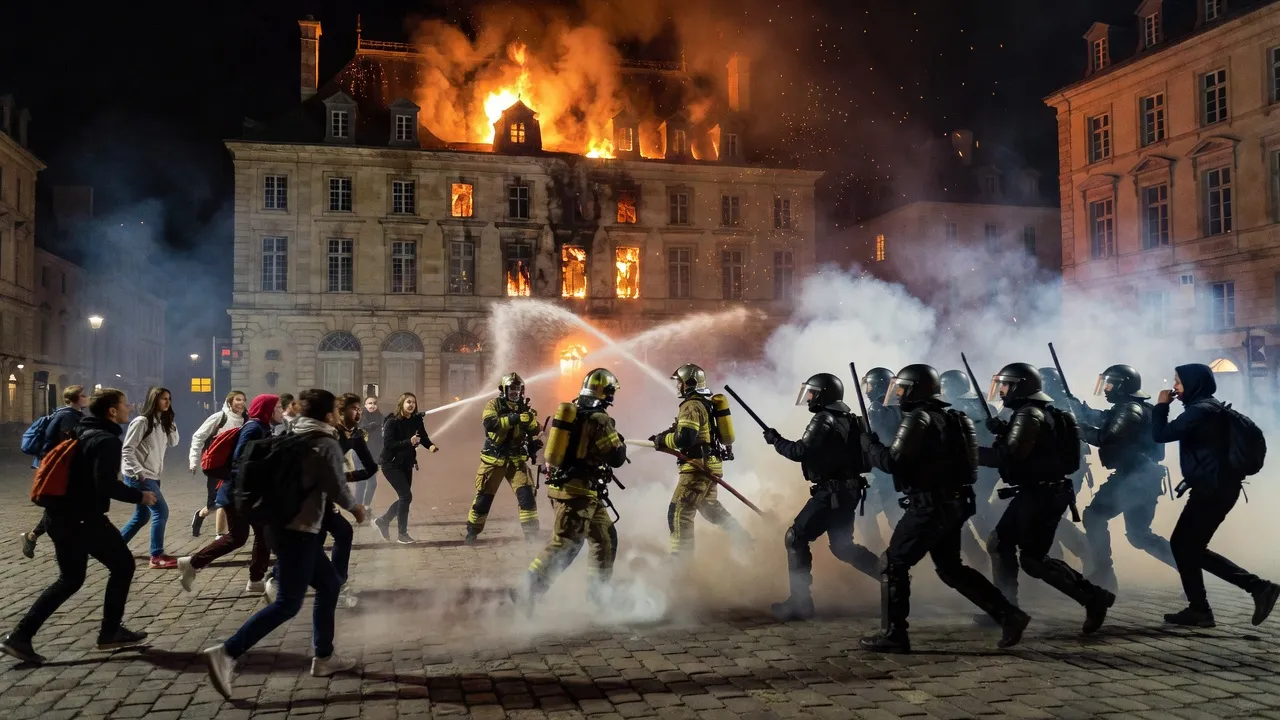
Pretoria is particularly concerned about the security situation: tear gas and police charges in French cities, with the public debt and the end of Macron's term in the background.
Dominant angle identified — does not reflect unanimity of this country’s media
KEY POINTS
- 01
According to French authorities cited by TimesLIVE, 140 demonstrations and 32,800 people were recorded outside of Paris by mid-day.
- 02
The movement was born last month in high schools in poor suburbs north of Paris, around the lack of teachers and rundown facilities.
- 03
SABC News notes that the French state's borrowing costs are at their highest level in over twenty years.
ANALYSIS
Pretoria, October 18, 2026. The South African press is treating Saturday, October 17, in France as an agency dispatch on urban violence, with an economic thread in the background. TimesLIVE headlines about tear gas and clashes in French cities; SABC News talks about a police charge against protesters in Paris.
The two media outlets use the same phrase: it's about "some of the most violent protests in years," born out of anger over the cost of living and the state of public services. They recall the origin of the movement, which appeared last month in high schools in the poor suburbs of northern Paris, where the lack of teachers and the dilapidation of facilities have fueled a broader claim about inequalities, public spending, and the standard of living.
TimesLIVE details the situation: according to French authorities, 140 demonstrations gathering 32,800 people had been recorded outside of Paris by mid-day. The Ministry of the Interior reports violence in several cities, including damage in Marseille and attacks targeting the police, media, and public buildings. The authorities attribute the unrest to what they describe as the "ultra-left." In Marseille, the mayor indicates that the city hall has been vandalized and that police reinforcements are being sent after exchanges with the Prime Minister and the Minister of the Interior.
In Paris, the police presence is massive around the Champs-Élysées and the Arc de Triomphe, which are excluded from the routes of the two authorized marches. Protesters in high-visibility vests block streets, reminiscent of the Yellow Vests movement from Emmanuel Macron's previous term. TimesLIVE gives the floor to a protester, Lola: "We're fighting because the cost of living is too tough, because the price of fuel is too high."
SABC News adds an economic layer: Emmanuel Macron, who called for calm on Friday, is entering the final stretch of his term in a fragmented political landscape and under increasing economic pressure. The efforts to reduce public debt have not reassured investors, and the state's borrowing costs are at their highest level in over twenty years.
Neither of the two articles provides a national total of participants nor mentions a city hall fire; the narrative remains focused on public order and the budgetary context.