
DOMINANT ANGLE
Canberra notes the link between Navi Pillay's Nobel Prize and the US sanctions against the ICC, and particularly retains the reactions of the capitals: Washington, Jerusalem, Oslo, and the allies who criticize the measure.
Dominant angle identified — does not reflect unanimity of this country’s media
KEY POINTS
- 01
The 2026 Nobel Peace Prize was awarded on Friday, October 9, to Navi Pillay, 85, former judge of the ICC and the International Criminal Tribunal for Rwanda (ABC News).
- 02
US sanctions prohibit transactions with the ICC after a six-month grace period; Washington had already targeted 13 judges and prosecutors (The Age, PerthNow).
- 03
Japan, Canada, the United Kingdom, and several European countries have criticized the sanctions, according to ABC News.
ANALYSIS
Canberra, October 10, 2026. Australian media are treating the 2026 Nobel Peace Prize and US sanctions against the International Criminal Court as a single sequence of events. On Friday, October 9, the Norwegian committee, through the voice of its president Jørgen Watne Frydnes, distinguished Navanethem "Navi" Pillay, 85 years old. ABC News recalls that she sat on the ICC, the High Court of South Africa, and the International Criminal Tribunal for Rwanda, that she was the first non-white woman on this High Court, and that she chaired the UN inquiry commission whose 2025 report concluded that Israel had committed genocide in Gaza. Israel described this report as "scandalous". PerthNow quotes the committee's statement, which says that international law is "under enormous pressure" and that "when force prevails over law", stability is undermined.
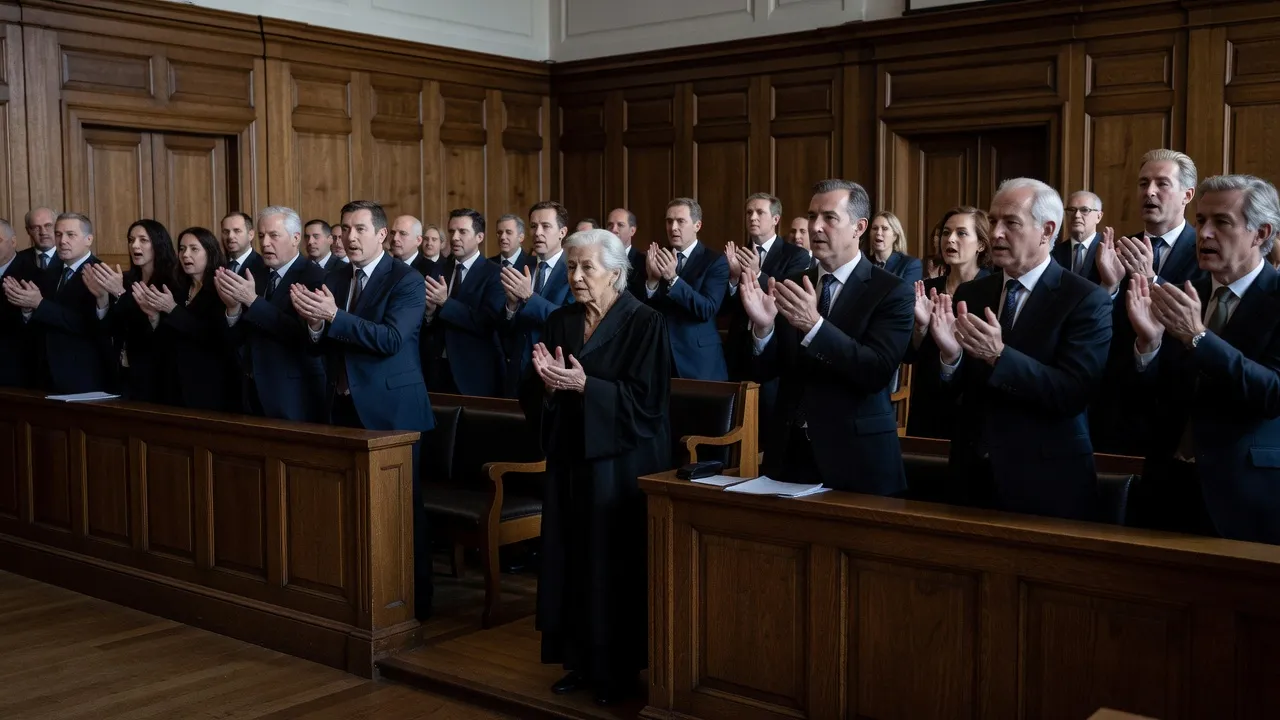
The Australian narrative also retains the scene from Nuremberg, where Navi Pillay attended a forum on international law. To an ovation, she joked: "as a lawyer and judge, I still want to verify this information", then proposed sharing the prize with Donald Trump if the applause was even greater (SBS).
The US aspect occupies the rest of the coverage. The Age and the Sydney Morning Herald, which reproduce a common dispatch, write that the Trump administration is "escalating its war" against the ICC: prohibited transactions with the Court after a six-month grace period, companies exposed to sanctions. They specify that the State Department had been preparing the measure for months, but that Marco Rubio's announcement came just hours after the Nobel Prize. PerthNow reproduces the State Department's phrase: "Either the ICC will end its threats, or we will end the ICC". Washington had already sanctioned 13 judges and prosecutors. The Court denounced an "unprecedented step". According to ABC, Japan, Canada, the United Kingdom, and several European countries have criticized the sanctions.
The political reactions complete the picture. The Israeli Ministry of Foreign Affairs wrote on X that if there were a prize for lying, Navi Pillay would be the "favorite", and Benjamin Netanyahu's office stated that the Nobel Committee "has lost its moral compass". Donald Trump, during a meeting in Syracuse, spoke of a "mystery person" and an "indelible stain" on Norway. ABC emphasizes that he covets the prize and that Netanyahu had proposed him for this edition. The UN Human Rights Office, for its part, welcomed a choice that shows that "more dedication" is needed for human rights.