
DOMINANT ANGLE
Seoul is particularly mindful of the clash of schedules: a Nobel Prize awarded to a judge of international justice, followed by American sanctions against the ICC just hours later.
Dominant angle identified — does not reflect unanimity of this country’s media
KEY POINTS
- 01
Navi Pillay, 85, received the Nobel Peace Prize on Friday, October 9, in Oslo for her work in support of international law (Korea Times).
- 02
The Trump administration sanctioned the ICC a few hours after the announcement, with a six-month grace period and exemptions for telecommunications and software (Korea Times).
- 03
The Nobel Committee states it will not comment on the genocide qualification in Gaza, which Israel rejects as "distorted and false" (Korea Herald).
ANALYSIS
Seoul, October 10, 2026. The South Korean press is treating the Nobel Peace Prize awarded to Navi Pillay and the sanctions against the International Criminal Court as a single narrative, that of international law under pressure. The Korea Times, which reprints an agency dispatch, announces that the 85-year-old South African jurist was honored on Friday, October 9, in Oslo "for her efforts in favor of international law and justice." It recalls that she was a judge at the ICC from 2003 to 2008, that she was the UN High Commissioner for Human Rights, and that she sits as an ad hoc judge at the International Court of Justice in the case of the genocide targeting Burma.
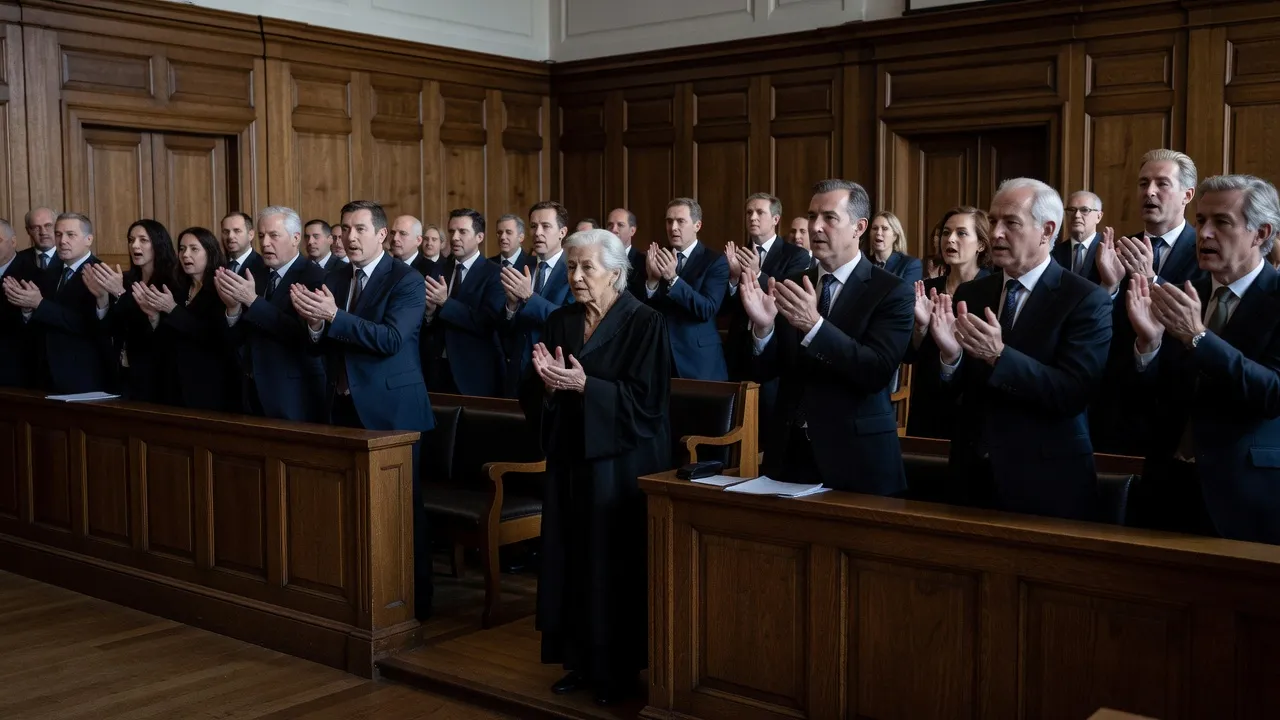
The Korea Herald, via AFP, quotes the chairman of the Nobel Committee, Jørgen Watne Frydnes, who says Pillay was "decisive" in pursuing war crimes, crimes against humanity, and genocide. The daily also notes her joke during the ovation in Nuremberg: "If you applaud a little more, I might share this prize with Trump." It specifies that the committee does not take a position on the qualification of genocide in Gaza, the conclusion of the UN commission of inquiry she chaired, which Israel considers "distorted and false."
The American aspect occupies the second half of the coverage. The Korea Times indicates that the Trump administration imposed sanctions on the ICC a few hours after the announcement, with a six-month grace period and exemptions for telecommunications, software, and pensions. Marco Rubio presented these measures as intended to prevent the Court from pursuing Americans. The ICC sees this as an "attack on the rule of law" and calls on its 125 member states to defend it; the daily adds that Washington is placing itself in "diplomatic collision" with its European allies.
KBS World chooses the angle of the laureate. From the Nuremberg Nazi trial room, Pillay dedicates her prize to "all survivors of international crimes" and pleads for a legal order based on "principle rather than selectivity." The channel recalls that Donald Trump last month called the ICC an "out-of-control institution" and that Rubio mentioned a "rogue court."
The coverage remains factual and very close to the dispatches: it contains neither a Korean editorial comment nor a reaction from the Seoul government in the provided articles.
SOURCES (3)
- Korea TimesMEDIUM
- KBS WorldMEDIUM