
DOMINANT ANGLE
Paris comes down in favour of the law: the French press makes the Nobel Prize of Navi Pillay and the American sanctions against the ICC, which fell on the same day, a duel between the rule of law and power.
Dominant angle identified — does not reflect unanimity of this country’s media
KEY POINTS
- 01
The 2026 Nobel Peace Prize was awarded on Friday, October 9, to Navi Pillay, 85, former president of the ICTR (1999-2003), judge at the ICC (2003-2008), and UN High Commissioner for Human Rights (2008-2014).
- 02
Washington announced sanctions against the ICC just hours after the Nobel; Marco Rubio called the Court a "rogue tribunal", with a six-month deadline before their application according to Sud Ouest.
- 03
The Ministry of Foreign Affairs hailed a "figure in the fight against apartheid", and is among the European states that have ensured "staying united" behind the Court.
ANALYSIS
Paris, October 10, 2026. The 2026 Nobel Peace Prize was awarded on Friday, October 9, to South African jurist Navanethem "Navi" Pillay, 85, "for her efforts to promote peace and international law," according to the Nobel Committee meeting in Oslo. The French press first retraces her career: a lawyer of Indian origin under apartheid, the first woman judge at the High Court of South Africa in 1995, president of the International Criminal Tribunal for Rwanda from 1999 to 2003, judge at the ICC from 2003 to 2008, and then UN High Commissioner for Human Rights from 2008 to 2014. Le Monde and RFI recall that she chaired the UN commission of inquiry that accused Israel of committing genocide in Gaza, and that she regrets being labeled "anti-Semitic".
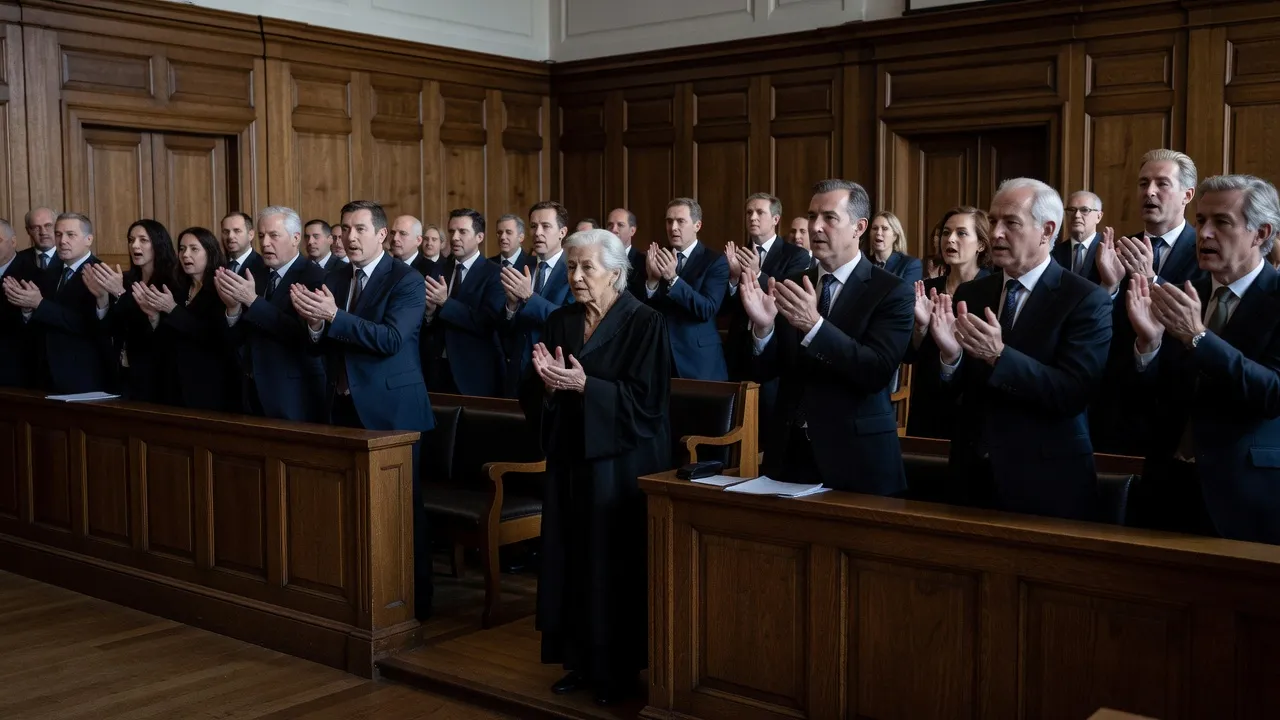
The narrative emphasizes the scene in Nuremberg. Pillay learned the news in the courtroom where the Nazi leaders were tried and warned against a world where "it is power, and not law, that determines which suffering counts." Her joke, "If you applaud a little louder, I might share the prize with Trump," is picked up by HuffPost, Sud Ouest, and Le Monde. Donald Trump later called the decision "shameful and embarrassing" during a meeting, according to BFMTV, while the Israeli government denounced an anti-Israeli choice.
The second sequence takes up just as much space. A few hours after the announcement, Washington announced sanctions against the ICC for "defending American sovereignty and its citizens against the threat posed by the Court." Marco Rubio spoke of a "rogue court" and a cut in its resources; according to Le Monde and Sud Ouest, the measures come with a six-month deadline before application. The Court sees this as an "attack on the rule of law" and warns that "history will judge this moment"; its president, Tomoko Akane, assures that she will continue to exercise her mandate.
The national angle is clear. The Quai d'Orsay hailed a "figure in the fight against apartheid" whose Nobel rewards her commitment to international criminal justice. L'Obs and Sud Ouest note that France, Germany, Denmark, Italy, the Netherlands, and the United Kingdom, along with Canada and Japan, have assured they will "remain united" behind the Court. The European Union says it is "ready to take all necessary measures" for the Court to continue its work, and the UN High Commissioner considers the sanctions "unacceptable". French headlines thus present the same day as one where international law is both honored and attacked.
SOURCES (5)
- 20 MinutesMEDIUM
- Sud OuestMEDIUM
- BFMTVMEDIUM