DOMINANT ANGLE
Quito is dissecting the cascade of reactions from capitals: a Nobel Prize awarded to Navi Pillay, immediately followed by Washington's sanctions against the ICC, becomes a test of strength between Oslo, Washington, Jerusalem and the UN.
Dominant angle identified — does not reflect unanimity of this country’s media
KEY POINTS
- 01
Navi Pillay, 85, received the 2026 Nobel Peace Prize on October 9, according to El Comercio and Primicias.
- 02
The United States announced sanctions against the ICC a few hours after the prize announcement; the Court denounces an unprecedented measure that adds to the designations of 13 judges and prosecutors.
- 03
Volker Türk called the sanctions "unacceptable", and Germany, France, the United Kingdom, and Switzerland expressed their rejection, according to Primicias.
ANALYSIS
Quito, October 10, 2026. Ecuadorian media are treating the 2026 Nobel Peace Prize more as a diplomatic event than as a tribute. Primicias headlines that "Donald Trump and Benjamin Netanyahu reject Navi Pillay" while the UN congratulates her designation. The newspaper notes that the prize, announced on Friday, October 9, by the Norwegian committee, "has generated various reactions among leaders and political actors worldwide".
The portrait of the laureate occupies an important place. El Comercio recalls that she is 85 years old, was born in Durban on September 23, 1941, into a family of Tamil immigrants, and opened her own law firm in 1967, becoming the first non-white woman to do so in the province of Natal, according to Infobae. She was a judge at the appeals chamber of the ICC from 2003 to 2008, presided over the International Criminal Tribunal for Rwanda, and was the UN High Commissioner for Human Rights from 2008 to 2014. Primicias adds her denunciations of the repression of protest movements in the Arab world, particularly in Libya and Syria.
The Israeli aspect is presented with caution. Both newspapers recall that the UN commission of inquiry she chaired concluded in September 2025 that there was a genocide in Gaza. El Comercio specifies that "the commission does not speak on behalf of the UN" and that Israel rejects this conclusion. Primicias indicates that the State of Israel criticizes the nomination.
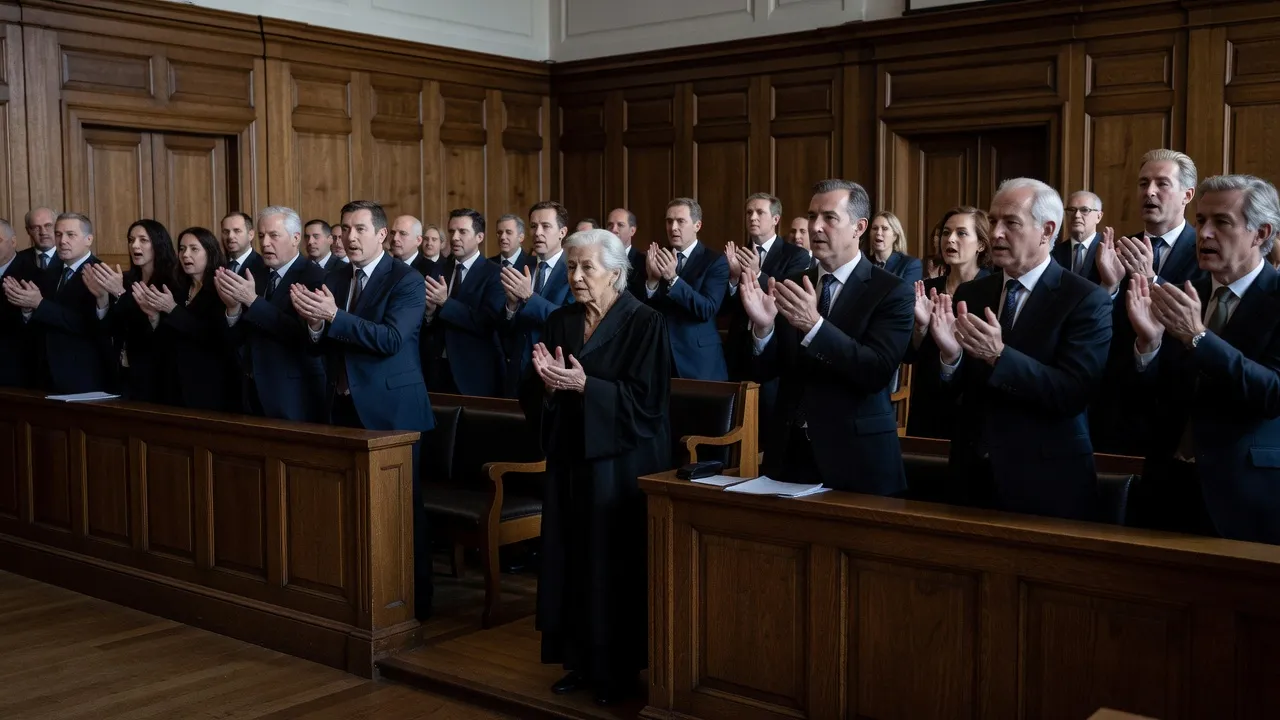
The Nobel Committee, cited by El Comercio, wanted "to send a reminder": judges and international law institutions are under political attack, and a system where war criminals are held accountable is a prerequisite for a peaceful world. The Nuremberg anecdote is repeated: Navi Pillay joked in front of the ovation, according to a video published on X by the Secretary-General of Amnesty International.
The other axis is Washington's response. A few hours after the announcement, the United States announced sanctions against the ICC. According to Primicias, the Court sees this as an "unprecedented" measure that adds to the designations targeting 13 independent judges and prosecutors, and "an attempt to hinder the course of justice". Volker Türk, UN High Commissioner for Human Rights, considers these sanctions "unacceptable". Germany, France, the United Kingdom, and Switzerland have expressed their rejection of the Trump government's measure. Ecuadorian coverage does not offer a national reading and remains focused on international actors.
SOURCES (2)
- PrimiciasMEDIUM
- El Comercio ECMEDIUM