
DOMINANT ANGLE
Stockholm comes out in favor of international law: the Nobel for Navi Pillay and the American sanctions against the ICC are treated as the same test for the global legal order, where Sweden reaffirms its support for the Court.
Dominant angle identified — does not reflect unanimity of this country’s media
KEY POINTS
- 01
The Norwegian Nobel Committee distinguished Navi Pillay, 85, on Friday, October 9, "for her efforts on behalf of peace and international law" (Dagens Nyheter).
- 02
Minister of Foreign Affairs Maria Malmer Stenergard wrote that support for the ICC, its independence and integrity would continue.
- 03
Marco Rubio announced sanctions to "cut off resources" to the ICC, a few hours after the award; Netanyahu welcomed them, the UN and EU criticized them (Aftonbladet, DN).
ANALYSIS
Stockholm, October 10, 2026. The Swedish press reports that the Nobel Peace Prize was awarded on Friday, October 9, to South African jurist Navanethem "Navi" Pillay, 85, "for her efforts in favor of peace and international law," according to the Norwegian committee's motivation.
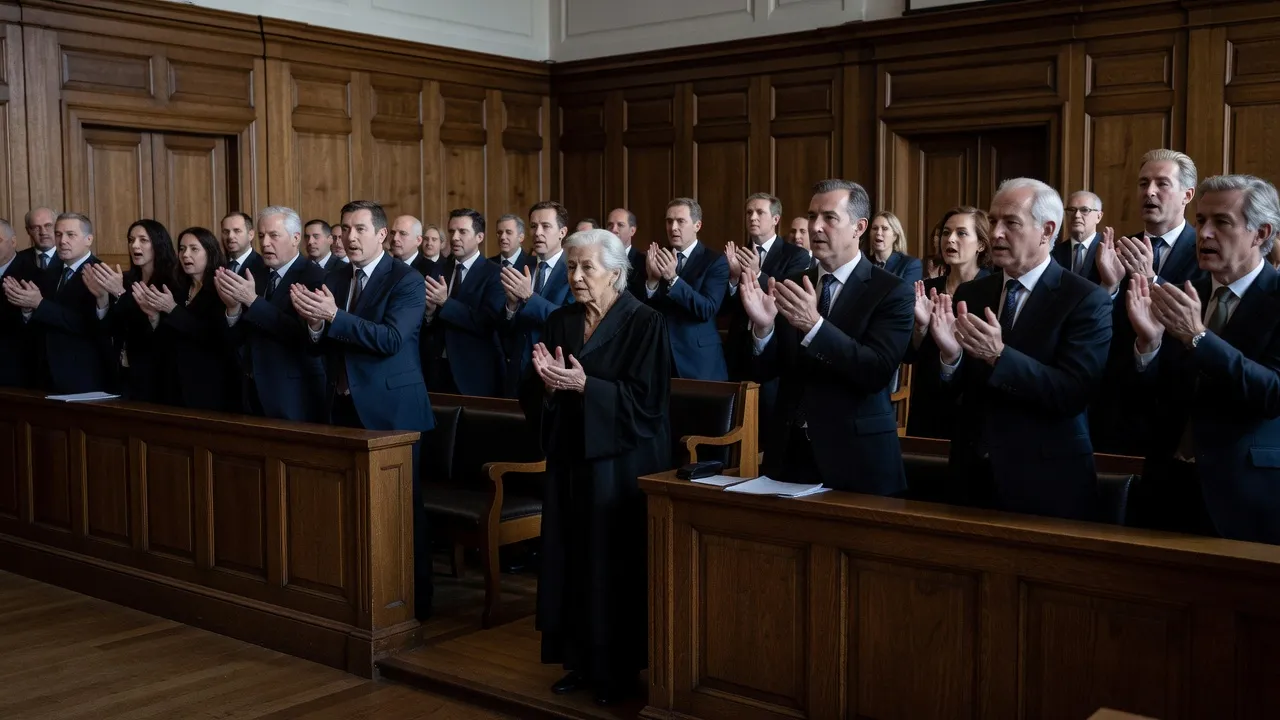
The dailies trace her career: a humble childhood in Durban, studies at Harvard, a career as a lawyer opposed to apartheid and having defended political prisoners, including Nelson Mandela, then the presidency of the Rwanda criminal tribunal, the post of UN High Commissioner for Human Rights, and the presidency, until 2025, of the UN commission of inquiry into the occupied Palestinian territory. The committee's president, Jørgen Watne Frydnes, says she was "decisive" in pursuing war crimes, crimes against humanity, and genocide. Pillay, reached in Nuremberg where she was attending a legal conference, dedicates the prize to survivors and all those who defend international justice. A video shows her joking: "If you applaud again, I might share the prize with Trump."
The public radio convenes Swedish voices. Mark Klamberg, professor of international law at the University of Stockholm, who worked in the same department as her at the ICC, sees this as a reminder that international justice remains a "ongoing but incomplete" process. Hanna Gerdes, from Civil Rights Defenders, welcomes a prize that means "no one is above the law." Former Foreign Minister Jan Eliasson mentions a person "of great integrity, strong and tenacious." Ekot's correspondent, Daniel Alling, anticipates a "controversial" choice, Israel likely having objections.
The second part then dominates: Aftonbladet and DN report on the sanctions announced by Washington against the ICC, just hours after the Nobel Prize. Marco Rubio denounces a "rogue court" that needs to be "cut off from resources." The ICC speaks of "an attack on the rule of law," the European Commission says it is "deeply" critical, Antonio Guterres declares himself "deeply concerned," and Volker Türk judges the sanctions "unacceptable." Benjamin Netanyahu welcomes them, estimating that the ICC is "a political body." Swedish Foreign Minister Maria Malmer Stenergard writes on X: "Sweden will continue to support the ICC, its independence and integrity."