DOMINANT ANGLE
La Paz is deciphering Navi Pillay's Nobel Peace Prize through its effect on Donald Trump: the Bolivian press is focusing on the reaction of the American president and the parallel with Venezuela.
Dominant angle identified — does not reflect unanimity of this country’s media
KEY POINTS
- 01
Navi Pillay received the Nobel Peace Prize on Friday, October 9, for her work in favor of international law, according to La Razón.
- 02
She chaired the UN commission that concluded last year to an Israeli genocide in Gaza, a commission that does not speak on behalf of the UN.
- 03
Donald Trump calls the Nobel Committee "corrupt", says Pillay is an unknown, and invokes Venezuela: "to the victor goes the spoils", according to El Deber.
ANALYSIS
La Paz, October 10, 2026. The Bolivian press is covering the 2026 Nobel Peace Prize from two angles: the portrait of a jurist and Washington's reaction.
La Razón reports that South African Navi Pillay, a former judge of the International Criminal Court, won the prize on Friday, October 9, for her work in favor of international law, at a time when, according to the jury, justice is "under attack". The newspaper recalls her career: an Indian-origin lawyer under apartheid, she defended activists, including Nelson Mandela, and obtained fundamental rights for political prisoners. She then went through the International Criminal Tribunal for Rwanda and the ICC, and was the UN High Commissioner for Human Rights from 2008 to 2014.
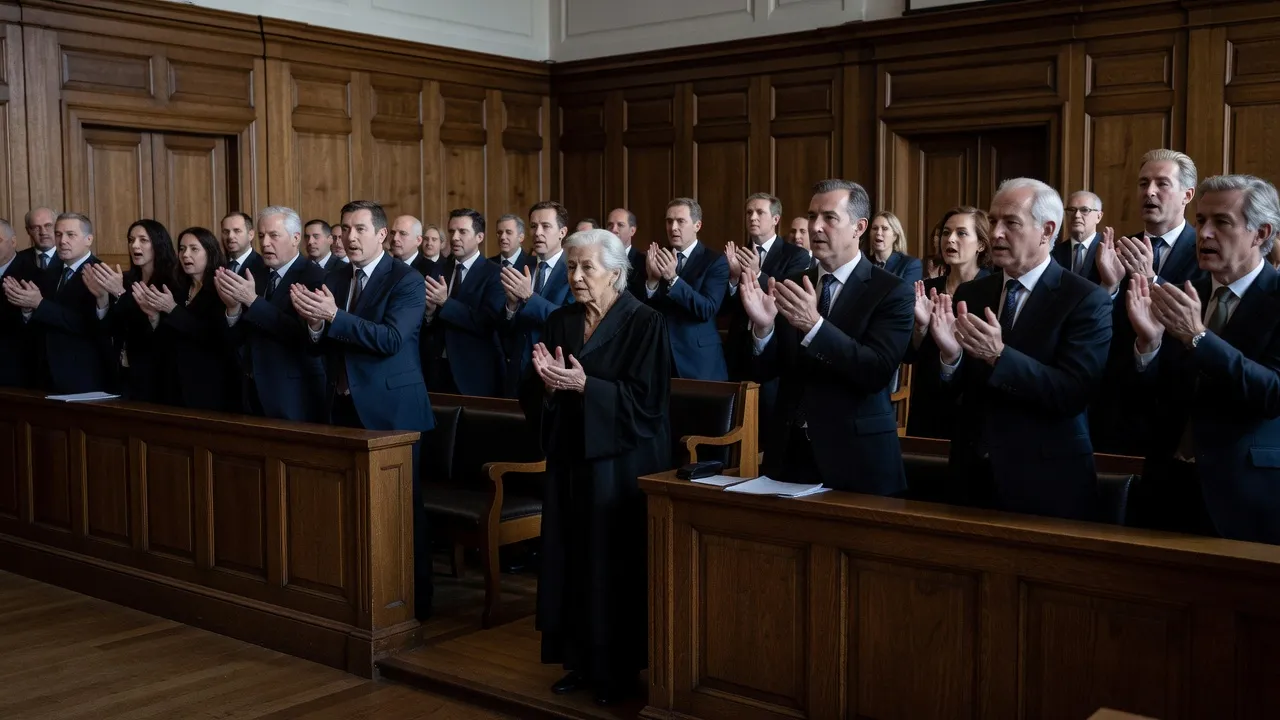
La Razón also emphasizes that she chaired the commission of inquiry mandated by the UN Human Rights Council on the Palestinian territories and Israel. This commission, the daily specifies, does not speak on behalf of the UN and concluded last year that Israel had committed genocide in Gaza. For the newspaper, this is one of the reasons why this Nobel Prize could irritate the American president, who has repeated how much he wanted to receive it. Pillay joked: "If you applaud a little louder, maybe she'll share the prize with Trump". Her first reaction was to think it was a joke: "As a lawyer and judge, I still want to check".
El Deber publishes a portrait presenting her as one of the major figures in the defense of international justice. It recalls that she sat as an ad hoc judge at the International Court of Justice in the case of Gambia against Myanmar, under the Genocide Convention, and that she chairs the International Commission against the Death Penalty, based in Madrid.
The same newspaper reports on Trump's response, who calls the Nobel committee "corrupt" and claims that Pillay is an unknown. It recalls that Venezuelan María Corina Machado, last year's laureate, offered her medal to him, and that the American president took the opportunity to highlight the US intervention in Venezuela, with the phrase "to the winner goes the spoils".
The articles in the corpus do not detail the US sanctions against the ICC or the reactions of the Court's member states. The Bolivian narrative remains focused on the duel between the laureate and the White House.